.svg)


Tile Size Guide: Small, Medium, Large Format, Slabs
ByNabiya Naqvi

Thu , May 21 , 2026

Read Time: 5 Min


 Copied!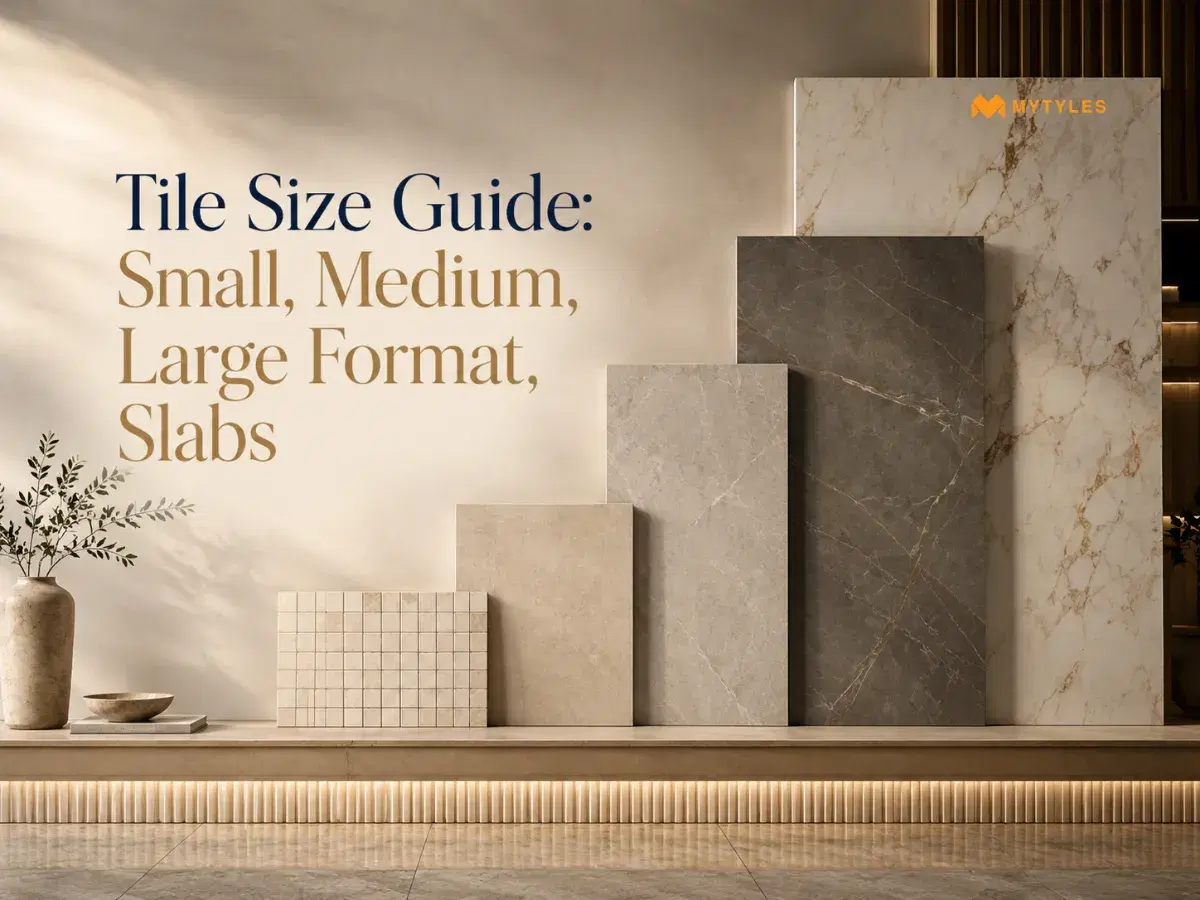
The size of your tiles is the key element in defining the aesthetics and mood of contemporary homes. It is one of the most important factors that affect the spatial arrangement. The right tile size can dramatically change the perception of the space and transform ordinary areas into premium ones. Whether you go for small intricate mosaic tiles, balanced medium-sized tiles, or seamless large-format tiles. This tile size guide will help you make the right choice for your interiors.
Why Tile Size Matters More Than You Think
Usually, people give priority to the designs, patterns and even colors, but the tile size is often ignored. If the dimensions are off, the same space can appear entirely different. Generally, tile sizes are considered in terms of length and width, but they also include other factors. The edge length, overall area, and grout lines together create the full picture. For example, large tiles have fewer joints, which gives seamless floors and walls, whereas small tiles with more grout lines add an element of grip to the floors. The tile dimension also affects cutting, alignment, material wastage, and installation time. It is essential to choose the correct size for better-looking spaces and easy installation.
Understanding Small, Medium, Large Format, And Slab Tiles
Choosing a tile design is easy, but selecting the right tile size can be difficult. They influence the utility and the whole appearance of the space. So, a better understanding of each tile size helps to know their dimensions and purpose. The tile size chart below breaks down the key differences among all the different sizes:
| Tile Type | Common sizes | Best Suited For | Visual Impact | Maintenance |
|---|---|---|---|---|
| Small Tiles | Up to 300x300 mm | Bathrooms, backsplashes, accent walls | Detailed and decorative look | More grout lines require regular cleaning |
| Medium Tiles | From 300x300 mm to 600x600 mm | Bedrooms, kitchens, and living rooms | Balanced and versatile | Easier to maintain than small tiles |
| Large Format Tiles | 600x1200 mm and above | Open space layout, commercial areas | Seamless and spacious feel | Fewer grout lines, easy maintenance |
| Slab Tiles | 1200x2400 mm and larger | Luxury interiors, countertops | Premium and ultra-modern | Minimal grouts, low maintenance |
Standard Tile Sizes For Floors And Walls
The tile size is important in defining the layout of the space. The proper size of a tile should always match the size of the room and interior design theme to ensure that the interior is balanced and comfortable.
Standard Tile Sizes For Floors
In floor tile applications, larger tiles tend to be the better choice, as they provide cleaner surface appearance. The ideal tile size is dependent on the room size and purpose. The 300×300 mm tile size is an excellent choice for compact bathrooms where more grip is required. The 600×600 mm is a suitable size for living rooms, bedrooms, and kitchens. And the large 600×1200 mm tiles work well for covering the floors of open spaces or large living areas.
Standard Tile Sizes For Walls
Tile sizes for walls come in two sizes, including compact and elongated, depending on the style and design of the wall. Tiles for bathrooms and kitchen walls often use 300×450 mm small-format tiles. The 300×600 mm size is good for featured walls, as they give a neat look with minimum grout lines. The large tiles add a touch of elegance and modernity to the interiors when used as backdrops in living areas or bedrooms. Vertical tiling is also used for creating extra space in narrow spaces.
How To Choose The Right Tile Size For Your Space
.webp)
Tile size shapes the room. The right tile size has the ability to change the appearance of the space. It can make the compact rooms look cluttered or spacious. So, here we have summarised each tile size for better understanding:
When To Choose Small Tiles
Small tiles are referred to as '200x200 mm' and '300x300 mm'. They complement the intricate designs and patterns of the tiles. So, to add a designer feel to your space, prefer these for featured walls, kitchen backsplashes, shower niches, and bathrooms. More joints in these tiles give better grip and manage water flow on the floors of wet areas such as bathrooms.
When Medium Tiles Work Best
Medium tiles are the most popular of all tile sizes. They can be easily used on floors and walls. Offering balance to spaces, including bedrooms, living areas, and dining areas. 600x600 mm tiles have a versatile function. They give seamless surfaces as compared to small tiles, so they don’t look too busy or too intricate and create visually balanced interiors.
Why Large Format Tiles Are So Popular
Large-format tiles have gained popularity recently. The modern tile size trends are minimal and seamless. So, this format of tiles matches the minimalist style. In addition, large tiles like a 600x1200 mm tile create a sense of continuity in spaces with fewer grout lines. You can’t see any break in design, which looks visually impressive. But these tiles break easily because of their large size, so you need an expert installer for a perfect application
Where Slab Tiles Work Best In Modern Homes
Slab tiles have a dimension of 1200 x 2400 mm. These tiles can be applied to the floors and walls, as well, creating a clean and uninterrupted look to the room. Minimal grout lines aid in easier maintenance. They can come in a variety of designs, and they can be made from marble-patterned tiles or stone-finish porcelain slabs.
How To Choose The Right Tile Size For Each Room
Tiles in several sizes allow you to use them in any space. But that does not mean we can use all tile sizes for all applications. So, here we have summarised the best tile sizes for specific areas to help you make a wise decision:
| Space | Best tile size | Recommendation |
|---|---|---|
| Living Room | 600×600 mm, 600×1200 mm | Large-format to medium-sized tiles are suitable for living rooms because they minimise grout lines and create a more open look. |
| Bedroom | 600x600 mm | Medium-sized tiles give balance to bedrooms without making them look busy. |
| Dining Room | 800 x 800 mm | Large tiles give continuity to the dining floors, creating a clean, organised layout. |
| Kitchen Floor | 600x600 mm | Medium-format tiles are practical for kitchen floors, as they are easy to maintain and work well in both compact and spacious layouts. |
| Bathroom | 300x300 mm | Small-format tiles are preferred for bathroom floors because additional grout lines help improve grip in wet areas. |
| Balcony | 300x300 mm | Smaller tiles are commonly used in outdoor areas as they provide better grip and adapt easily to surface slopes. |
| Commercial Spaces | 600x1200 mm | Larger tiles are often selected for commercial interiors because they create a seamless appearance and reduce visual interruptions. |
| Featured Walls | Small Patterned Tiles | Small-sized patterned or textured tiles work well on feature walls by adding movement and visual interest without covering the entire space. |
Perfect Tile Size For Every Room
Tile size is one of the most important decisions that you need to make while designing your space. It influences the room layout, maintenance effort, and long-term durability. Tile sizes come first among the other features of tiles; they determine the final appeal and transform the spaces. The right tile size is a balance of aesthetics, room proportions, and practicality. Small tiles are for detailing, large tiles for a modern feel, medium-sized tiles are versatile, and slab tiles are for added luxury. You can choose any format, depending upon the dimensions of your space, from MyTyles' vivid collection. We have a premium collection in many finishes, materials, and sizes. So, visit our website or the Bengaluru Experience Centre for a better understanding of sizes.
Expert Reviewed by Biren Agrawalla
Biren Agrawalla, the Founder of MyTyles with over 10 years of experience across tile, retail, and home decor. Driven by a passion for tiles and a deep understanding of customer behaviour, he has spent his career transforming how people discover and buy tiles online. Biren combines practical retail insight with modern digital solutions to make tile shopping smarter, more intuitive, and design focused. At MyTyles, he champions a customer first approach, ensuring every experience from browsing to buying is reliable, seamless, and inspiring.

What Are The Different Tile Sizes Available For Home Interiors?

Tile sizes are generally categorised into small, medium, large-format, and slab tiles. Small tiles include mosaics and formats under 300 mm; medium tiles range between 300 and 600 mm; large-format tiles go beyond 600 mm; and slabs can cover entire walls or floors. Each size serves different design and functional purposes depending on space, layout, and visual preference.
Why Does Tile Size Matter In Interior Design?
Tile size plays a key role in defining the visual scale and flow of a space. Smaller tiles create texture and detail, while larger tiles reduce grout lines and make spaces appear more seamless and open. Choosing the right size helps balance proportions, enhance lighting, and improve the overall aesthetic and functionality of the area.
When Should You Use Small Tiles Instead Of Large Tiles?
Small tiles are best used in areas that require grip, detail, or flexibility, such as bathroom floors, backsplashes, or curved surfaces. They are ideal for adding patterns and visual interest. Use them when you want to highlight specific zones or create decorative accents, especially in compact or detailed design layouts..
Where Are Large-Format Tiles And Slabs Most Effective?
Large-format tiles and slabs work best in spacious areas like living rooms, open-plan spaces, and bathroom walls. They minimise grout lines, creating a clean and seamless look. Slabs are especially effective for feature walls, countertops, and luxurious interiors where a bold, uninterrupted surface enhances the overall visual appeal.
What Are Standard Tile Sizes?
Standard tile sizes vary with application area and design style. Wall tiles are commonly available in sizes like 300x600 mm and 600x1200 mm, while floor tiles often come in 600x600 mm, 800x800 mm, and larger formats. Small mosaic tiles are popular for bathrooms and feature walls, whereas large-format tiles are preferred for living rooms, bathrooms and kitchen walls to create a cleaner and more seamless appearance.
Which Tile Size Is Best For Making Small Spaces Look Bigger?
Large-format tiles are often the best choice for making small spaces appear bigger because they reduce the number of grout lines and create a continuous surface. Light-colored tiles in larger sizes enhance this effect by reflecting more light. However, the layout and placement also play a crucial role in achieving a spacious look.
How Do I Choose Between Small, Medium, Large Tiles, And Slabs?
Choosing the right tile size depends on room size, purpose, design style, and maintenance needs. Small tiles suit detailed areas, medium tiles offer versatility, large tiles create openness, and slabs deliver a premium, seamless finish. Consider lighting, layout, and functionality to ensure the selected tile size enhances both aesthetics and usability

ABOUT THE AUTHOR
Nabiya Naqvi
I am Nabiya Naqvi, a postgraduate in chemical sciences who found her true calling in content writing. My writing journey began with a love for creative expression, which gradually grew into a professional path. With a strong interest in interiors and home decor, I enjoy creating content that makes design ideas easy to understand and relatable. I combine creativity with my passion for beautiful living spaces, helping readers discover how tiles and textures can transform a home.