.svg)


15 Seamless Backsplash Tile Ideas for the Invisible Kitchen Look in Indian Homes
ByAditi Bardhan

Wed , Aug 19 , 2026

Read Time: 5 Min


 Copied!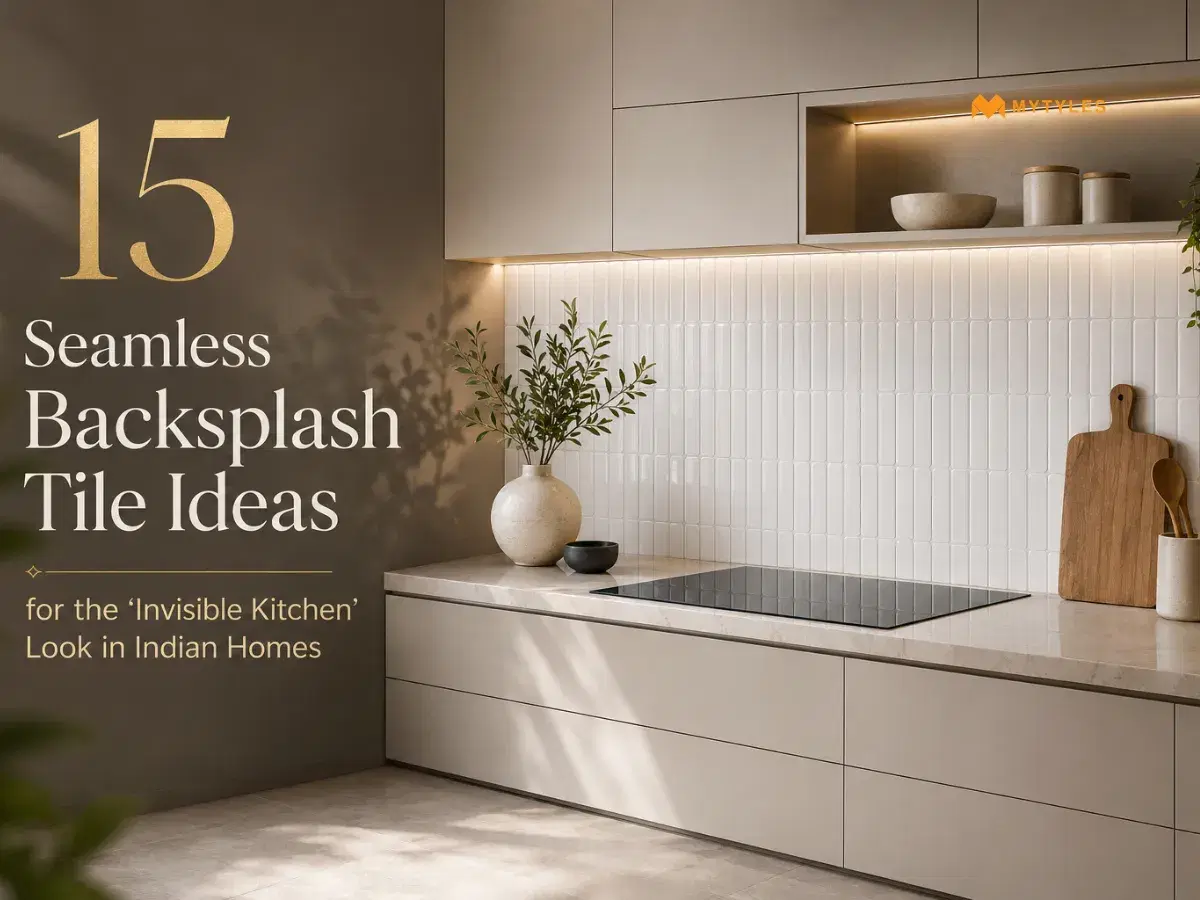
Walk into a kitchen where every surface blends together, and you'll notice something different. Your eyes don't stop at the wall behind the hob. Instead, the cabinets, countertop, and backsplash seem to flow into one another. The room feels open, even if it isn't very large. That's the idea behind the "invisible kitchen". The kitchen backsplash isn't hidden. It simply doesn't demand attention.
This modern Indian kitchen design has become popular because it suits the way many homes are planned today. Apartments often have open kitchens connected to the dining or living room, so busy walls can make the entire space feel cluttered. However, appearance is only one part of the decision. Indian cooking usually means oil splatters near the hob, steam around the chimney, and regular wiping with a damp cloth. Choosing the right material makes those daily jobs much easier.
If you're collecting backsplash tile ideas, these designs will help you build a kitchen that feels quieter, cleaner, and easier to maintain.
Countertop and Backsplash in One Continuous Surface
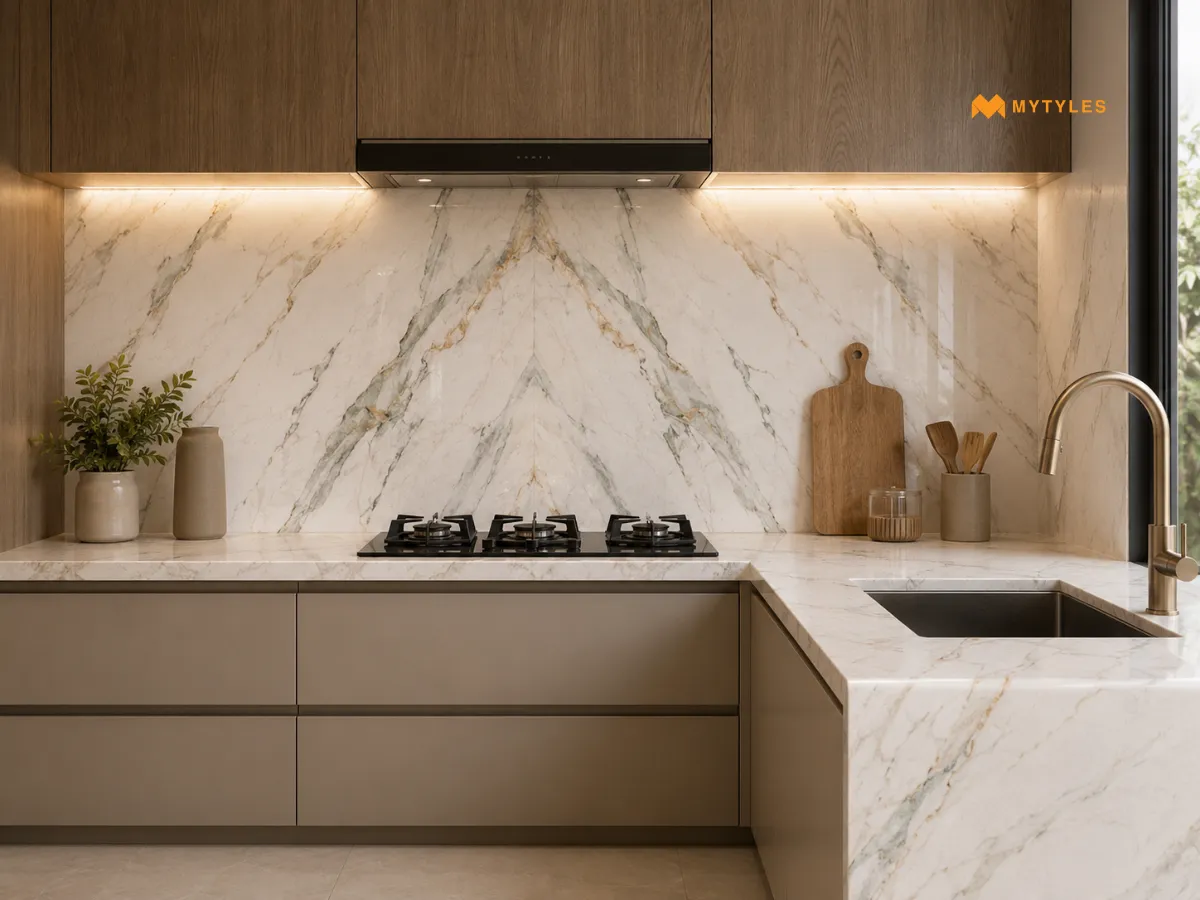
One of the simplest ways to create an uninterrupted look is by extending the countertop material onto the wall. Instead of introducing another finish, the surface continues upward, making the cooking area feel connected. This approach has become common with porcelain slabs, quartz, and marble-look stone because they are available in large sizes with very few joints.
Fewer joints also mean fewer places where cooking grease tends to settle over time. Recent modular kitchen tile trends continue to favour this countersplash style because it creates a clean visual line across the workspace.
Floor-to-Ceiling Backsplash for a Luxury Statement
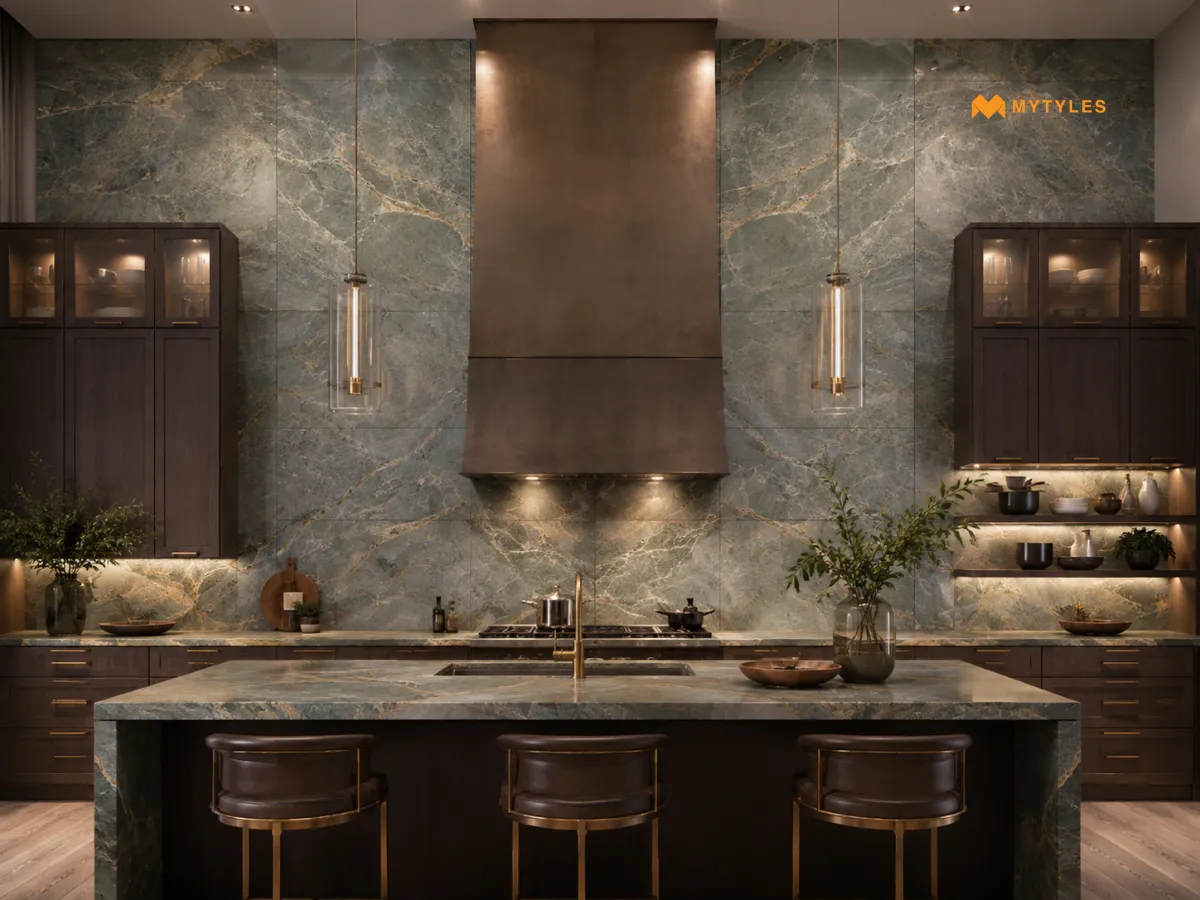
Many kitchens stop the backsplash just below the upper cabinets. Taking the tile all the way to the ceiling changes the room completely. The wall feels taller, and the cabinets no longer break the design into separate sections. This style also works well if you have floating shelves or a decorative chimney because the entire background stays consistent.
A luxury kitchen backsplash doesn't have to rely on expensive patterns. Often, a single material used across the full wall creates a stronger effect than mixing several finishes together.
Full-Height Backsplashes That Blend into the Cabinets
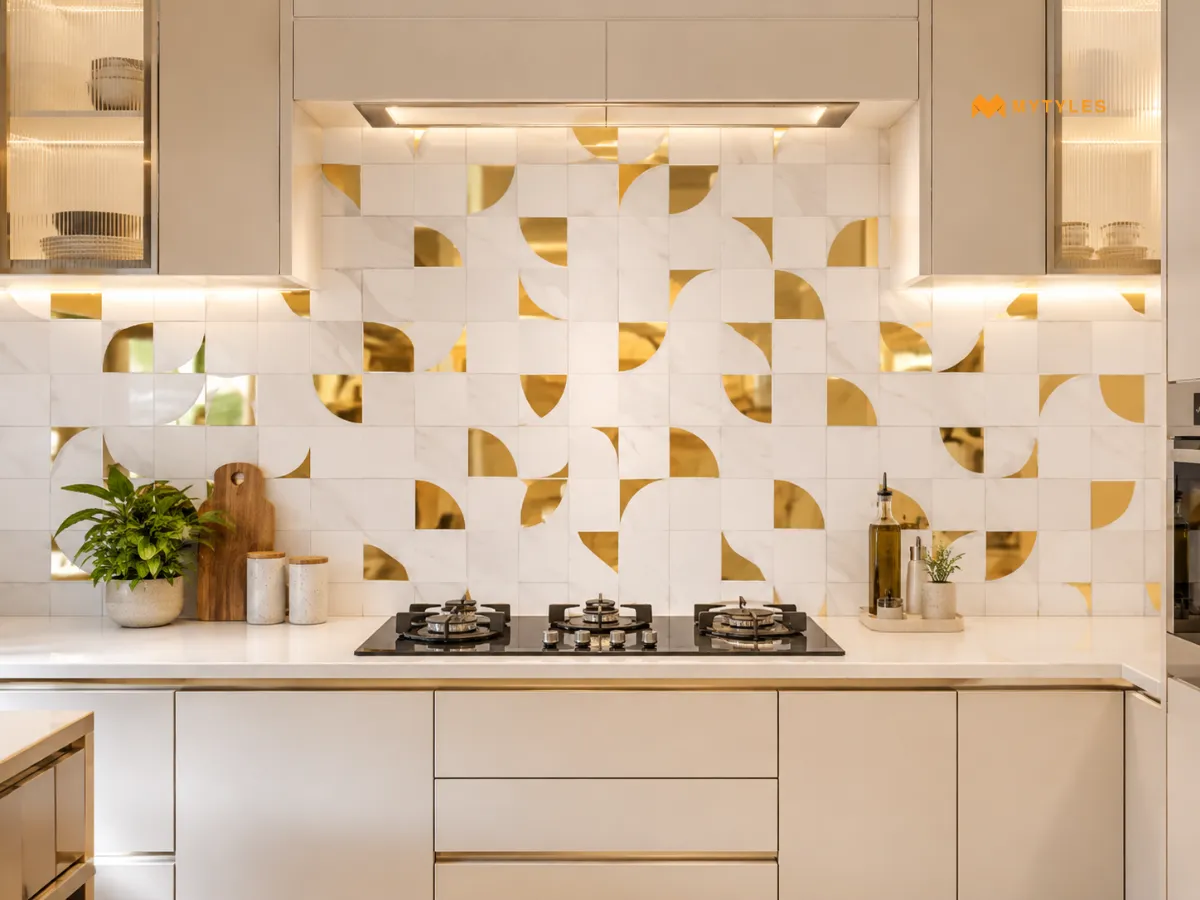
Some kitchens feel busy because every surface introduces a new color. Cabinets in one shade, a different countertop, patterned tiles, and contrasting grout can make even a large kitchen look crowded. A simple way to avoid that is by choosing kitchen wall tiles that sit close to the cabinet color.
Soft beige with oak cabinets, warm white beside ivory shutters, or muted grey alongside ash laminates creates a gentle transition instead of a sharp contrast. Using full-height kitchen wall tiles in a similar color family helps the eye move across the room without stopping at every surface.
Fluted Backsplash Tiles for a Soft Modern Finish
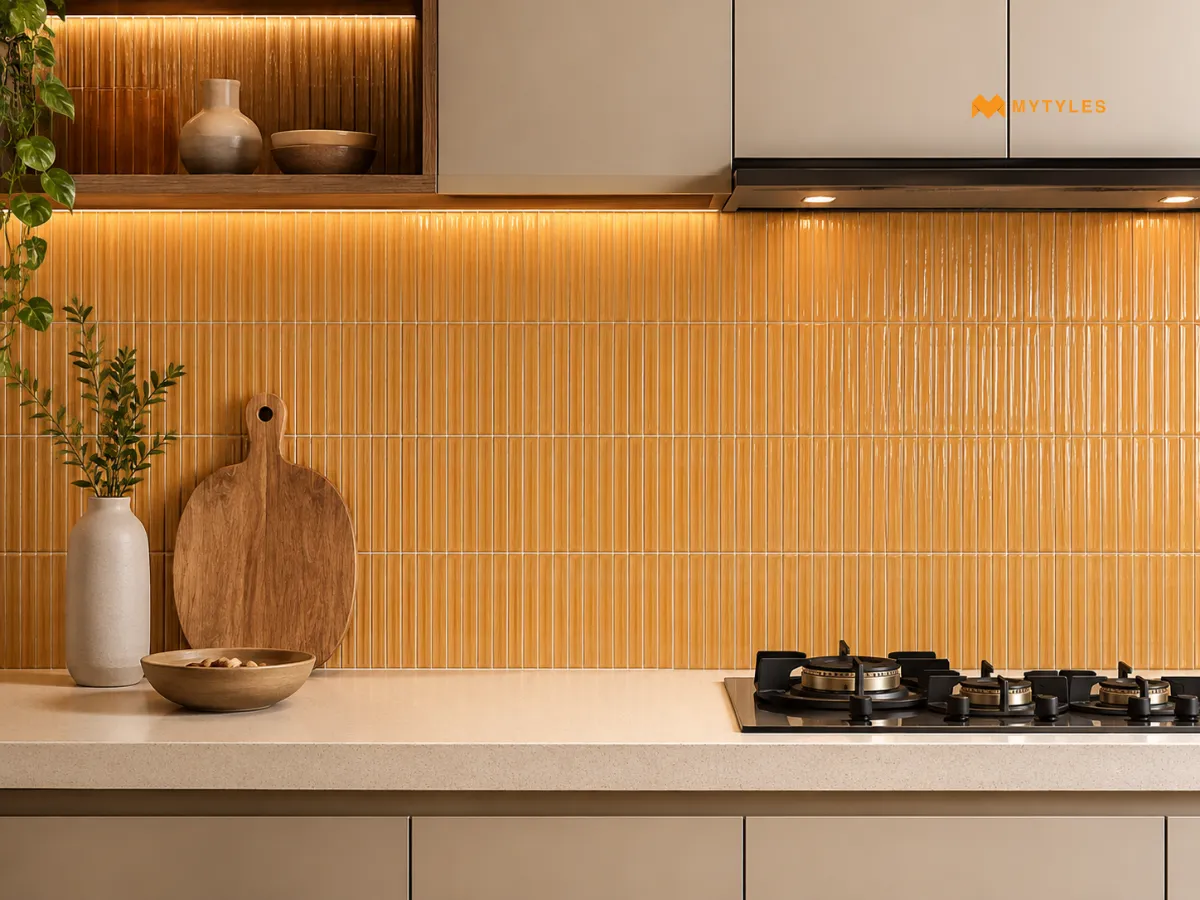
Fluted tiles are a good choice if you want a backsplash with a little texture but don't like bold patterns. The light is gently trapped in the narrow vertical grooves, adding depth to the wall without making it the focal point of the kitchen. They pair particularly well with flat-panel cabinets and neutral colors such as white, greige or beige.
If you're planning a kitchen backsplash tile design, choose tiles with shallow grooves around the cooking zone, as they're easier to wipe after daily use. Fluted backsplashes continue to appear in modern kitchens because they add quiet detail while keeping the overall design simple and uncluttered.
Soft Marble-Look Tiles That Never Go Out of Style
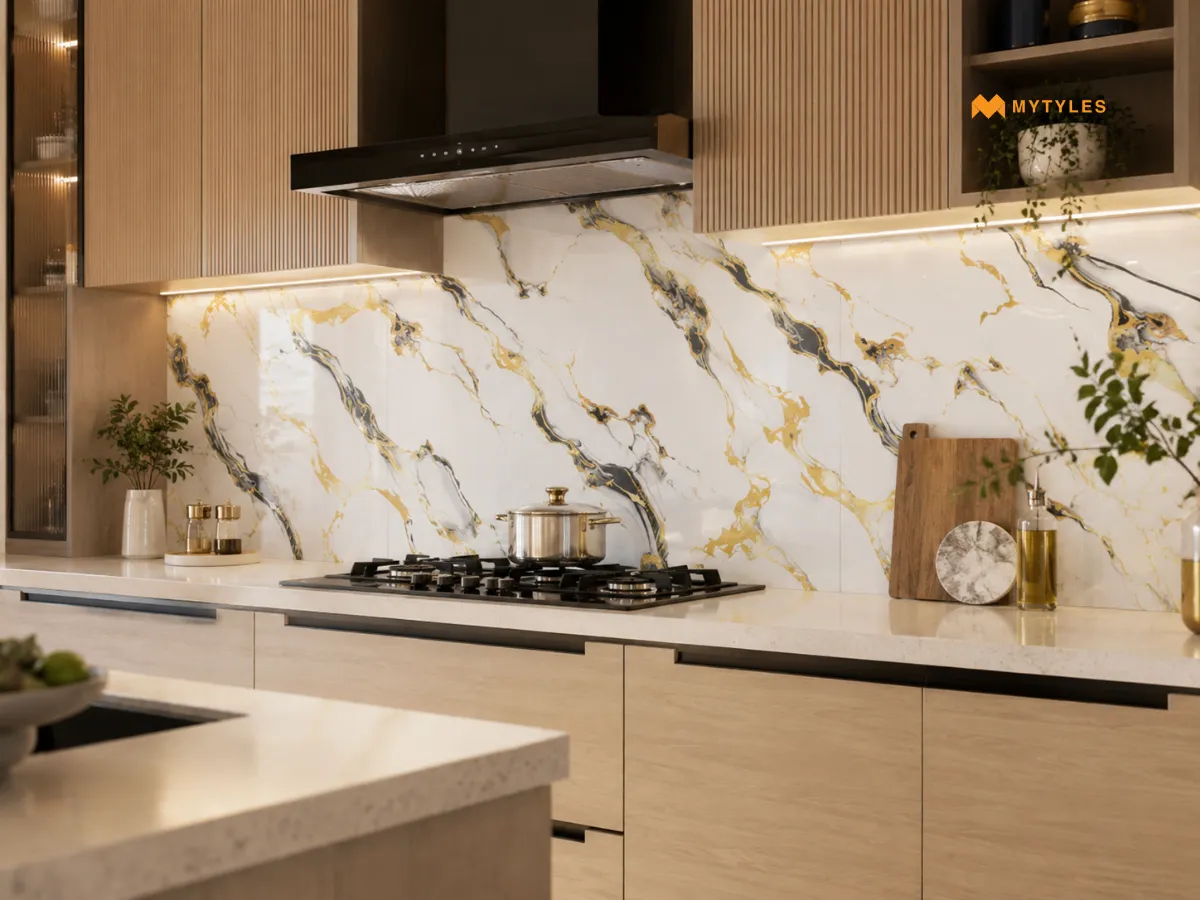
Natural marble looks beautiful, but porcelain alternatives are easier to maintain. Light veining gives the wall enough movement without making it feel crowded. Soft white, ivory, or warm grey patterns work well with wood, laminate, and acrylic cabinets.
Many homeowners choose marble-look backsplash tiles because they pair easily with white, wood, charcoal, and beige cabinetry. The pattern stays subtle enough to suit changing interior styles, so you won't feel like replacing it after a few years.
Warm Stone-Inspired Backsplashes for Earthy Interiors
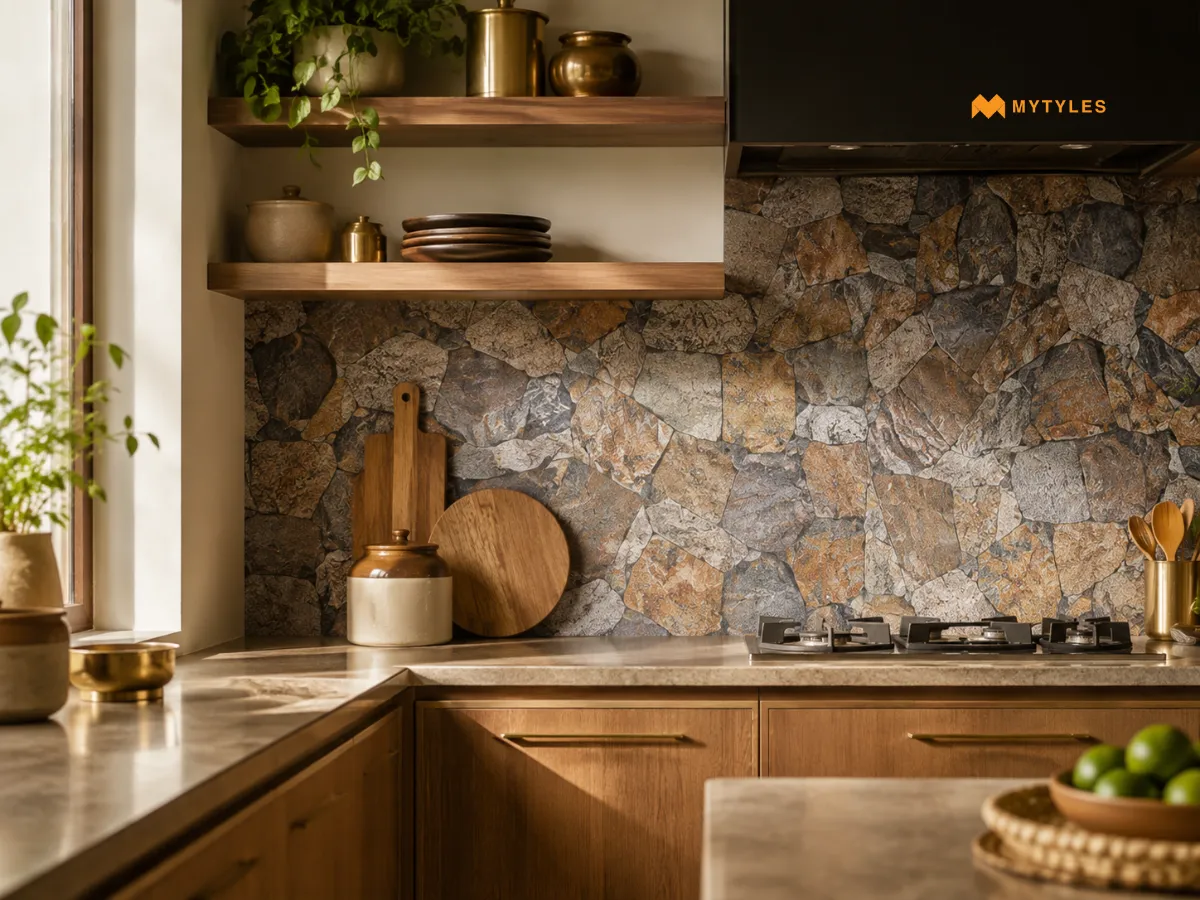
Not every kitchen needs a bright white wall. Soft limestone, sandstone, and travertine-inspired finishes make the room feel warmer without adding bold colors. They also work nicely with wooden shelves, brass handles, and natural lighting.
If you're exploring stone-look backsplash tiles, pay attention to the texture. Earthy colors are also forgiving. Dust and light marks don't stand out as quickly, which makes them practical for family kitchens.
Seamless Terrazzo Tiles for Contemporary Homes
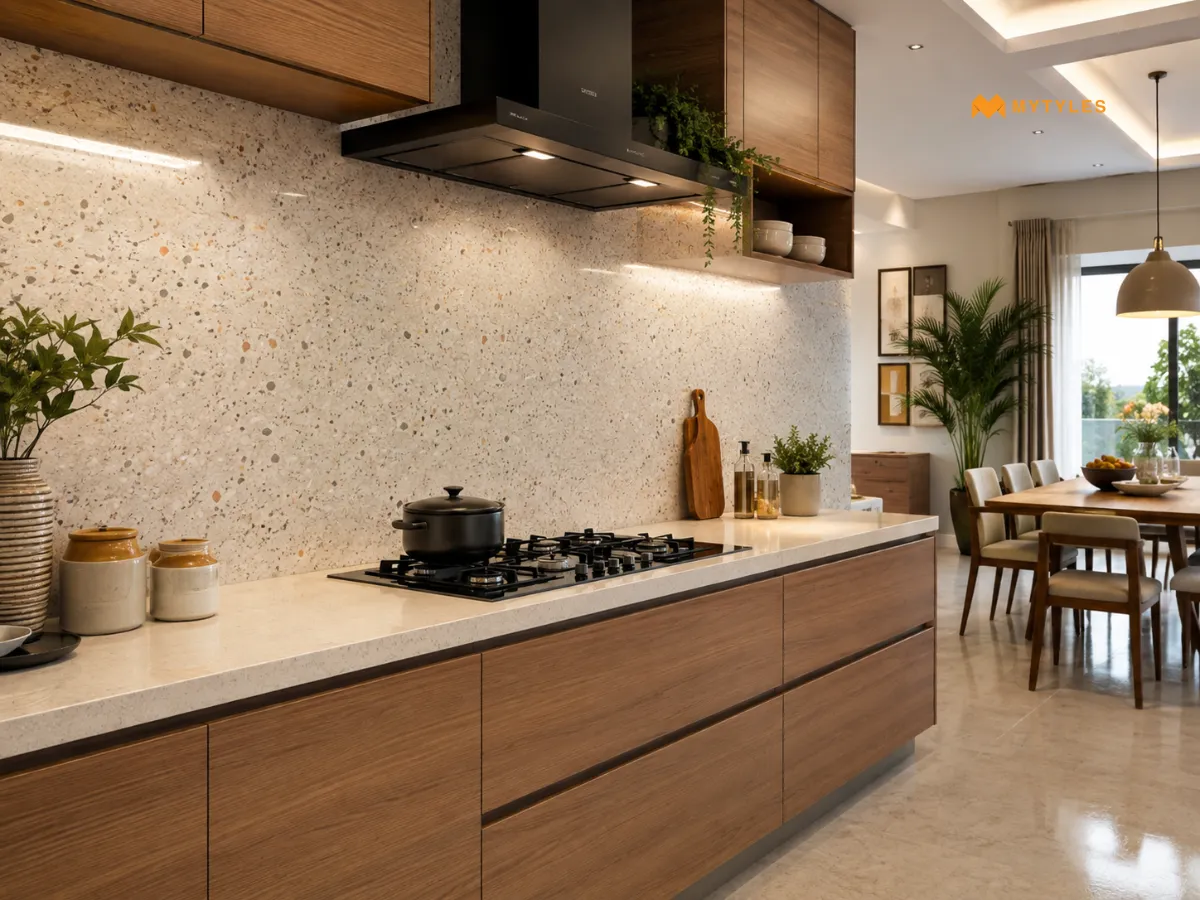
Terrazzo has changed a lot over the last few years. Older designs often had large colorful chips that became the main feature of the room. Newer collections use smaller stone fragments with softer backgrounds, making the surface feel much calmer.
These terrazzo backsplash tiles for modular kitchen layouts work especially well when the kitchen opens into the dining room. The pattern adds interest without distracting from the rest of the space.
All-White Backsplashes for a Bright, Airy Kitchen
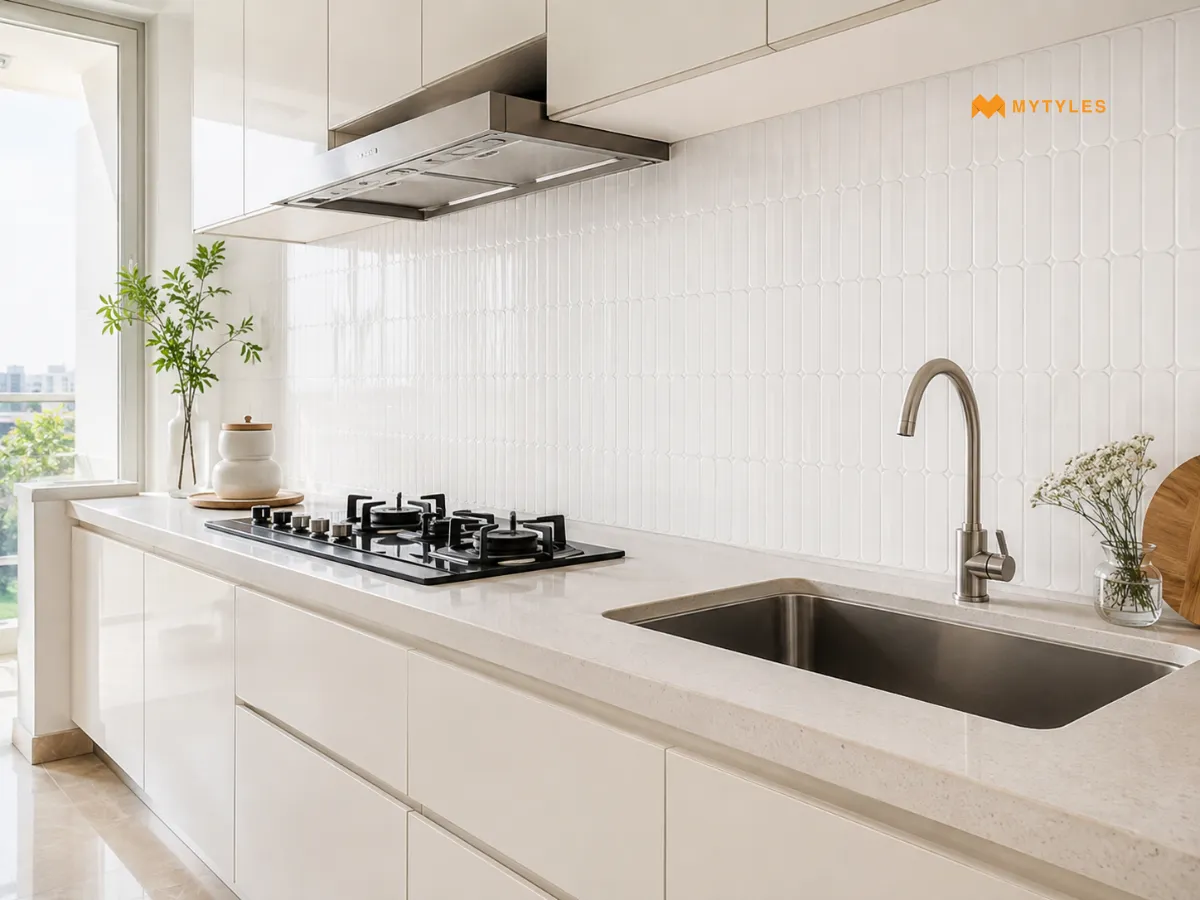
Many apartment kitchens depend on one window for natural light. A darker wall can sometimes make the cooking area feel smaller than it really is. White reflects available light, helping brighten corners around the hob and sink. Using white backsplash tiles is one of the easiest ways to make a compact kitchen feel more open.
The effect becomes stronger when you match the grout with the tile instead of creating dark grid lines across the wall. If you're planning an open kitchen design, white also blends easily with nearby dining or living spaces without drawing too much attention.
Greige and Beige Tiles for a Calm Minimalist Look
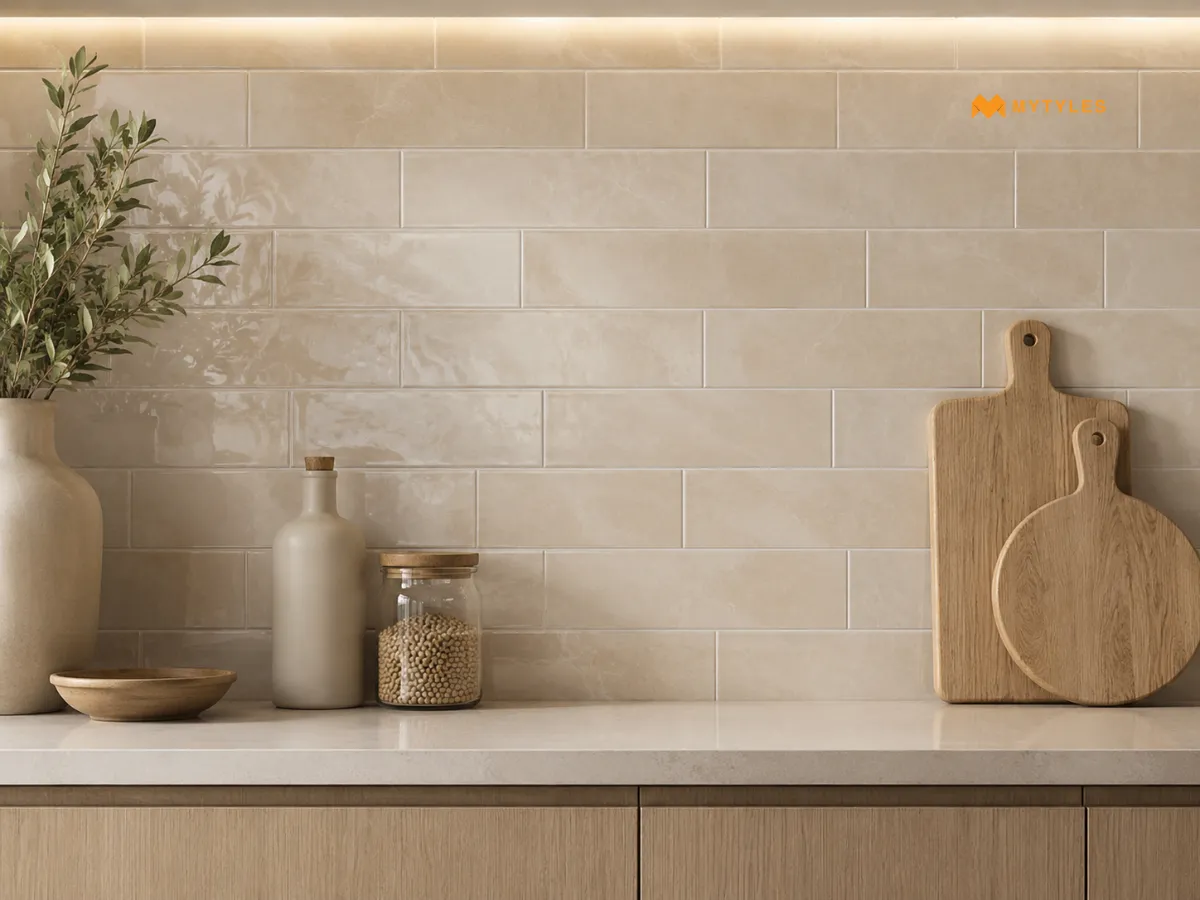
Pure white isn't the only neutral worth considering. Greige, sand, and warm beige create a softer background while hiding everyday dust a little better. These shades also look comfortable beside wooden cabinets and warm LED lighting.
For anyone planning a minimalist kitchen backsplash, muted colors usually feel more relaxed than bright whites. If you like warm interiors, beige backsplash tiles are easier to pair with natural wood than cooler grey tones.
Matt Backsplashes That Feel Modern and Elegant
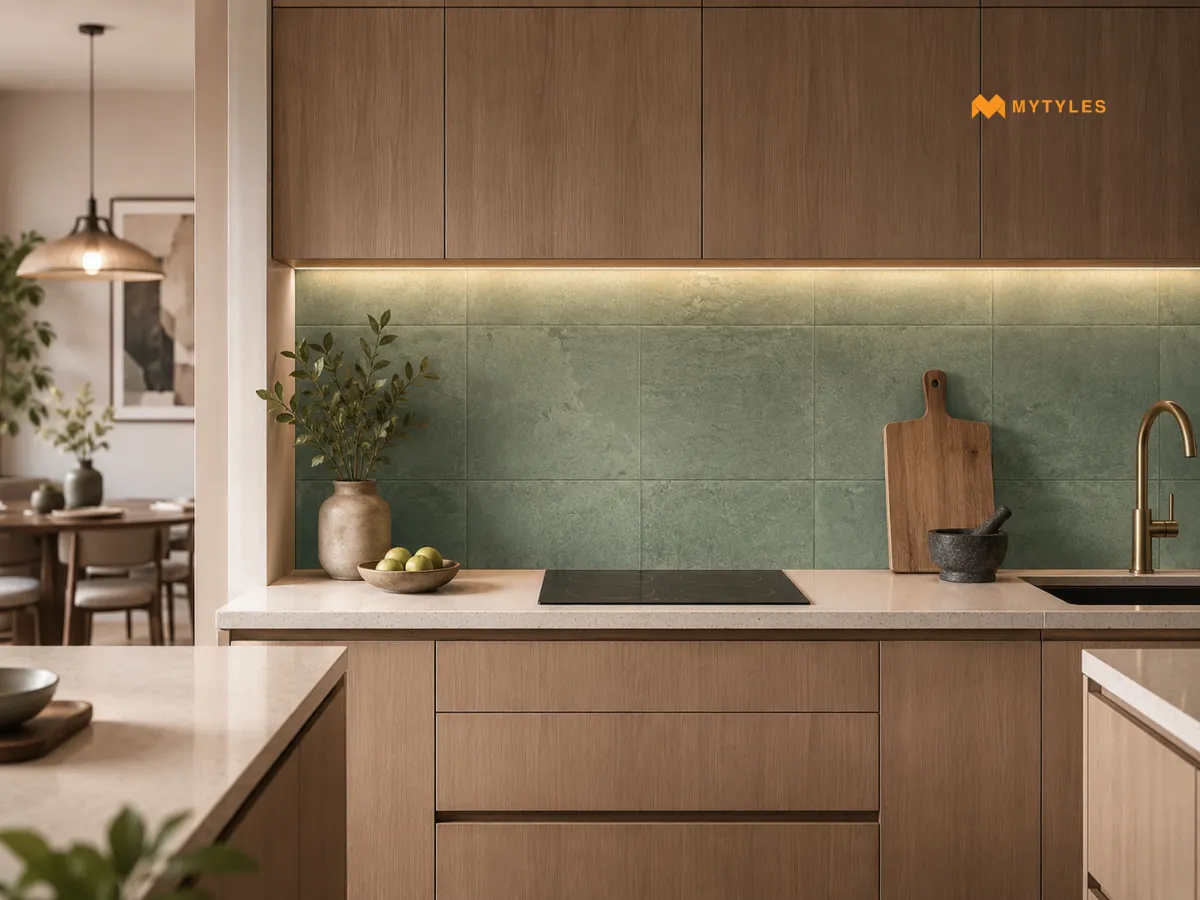
Glossy walls are easy to wipe, but matt finishes have their own appeal. They reduce glare from under-cabinet lighting and give the wall a softer appearance. Fingerprints are often less noticeable as well. Many homeowners choose matt kitchen tiles in open-plan homes where the kitchen remains visible from the dining area.
High-Gloss Tiles That Make Small Kitchens Feel Bigger
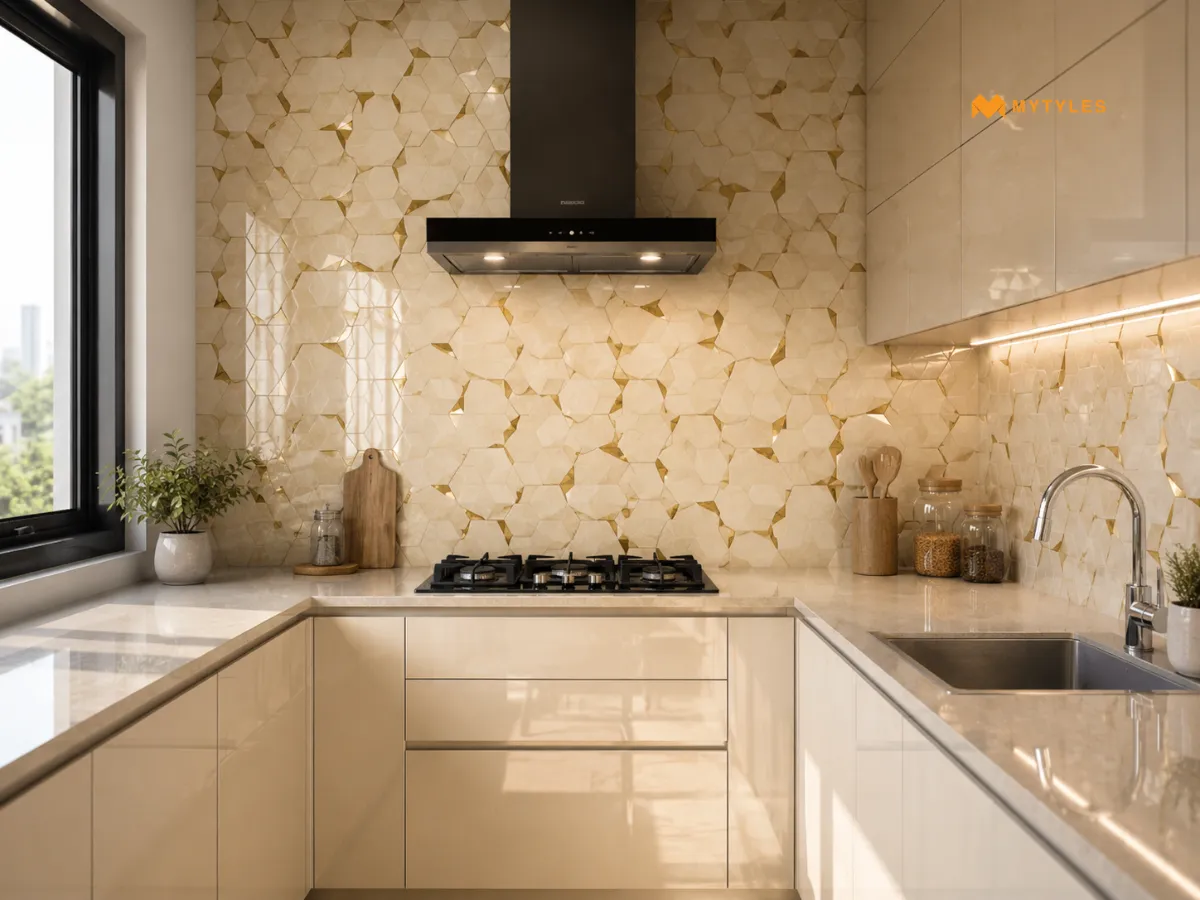
Natural light is limited in many Indian apartments. Reflective surfaces bounce available light around the room, making compact spaces feel brighter. Smooth glossy finishes are also easier to wipe after cooking. If your kitchen receives very little daylight, glossy kitchen tiles can make a noticeable difference without changing the layout.
Subtle Textured Tiles That Add Depth Without Clutter
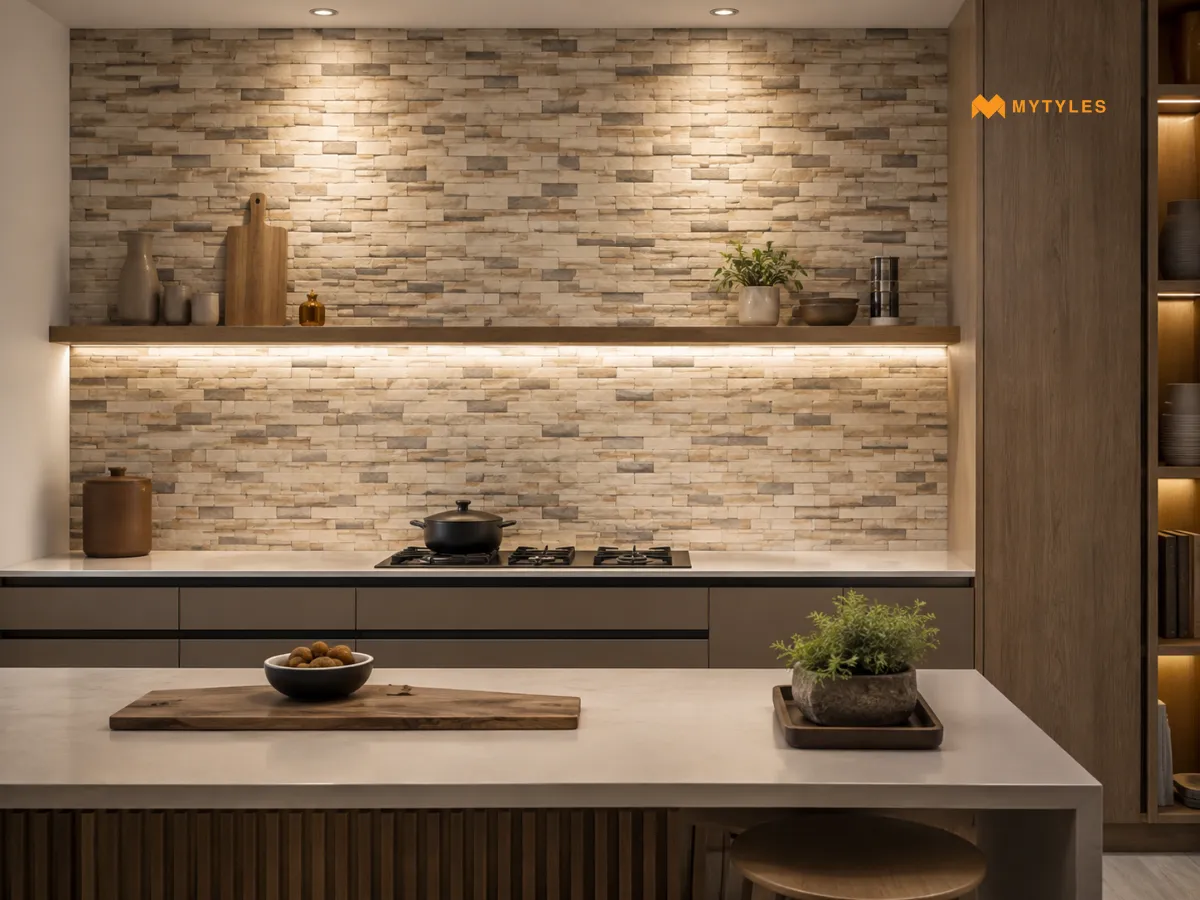
Texture can work, but it should stay understated. Fine linear grooves or gentle stone textures create shadow without becoming the main feature of the room. Deep textures, however, tend to collect grease more quickly in cooking areas. Several homeowners who renovated recently recommend choosing smoother finishes if easy cleaning is a priority.
Subway Backsplash Tiles with Matching Grout
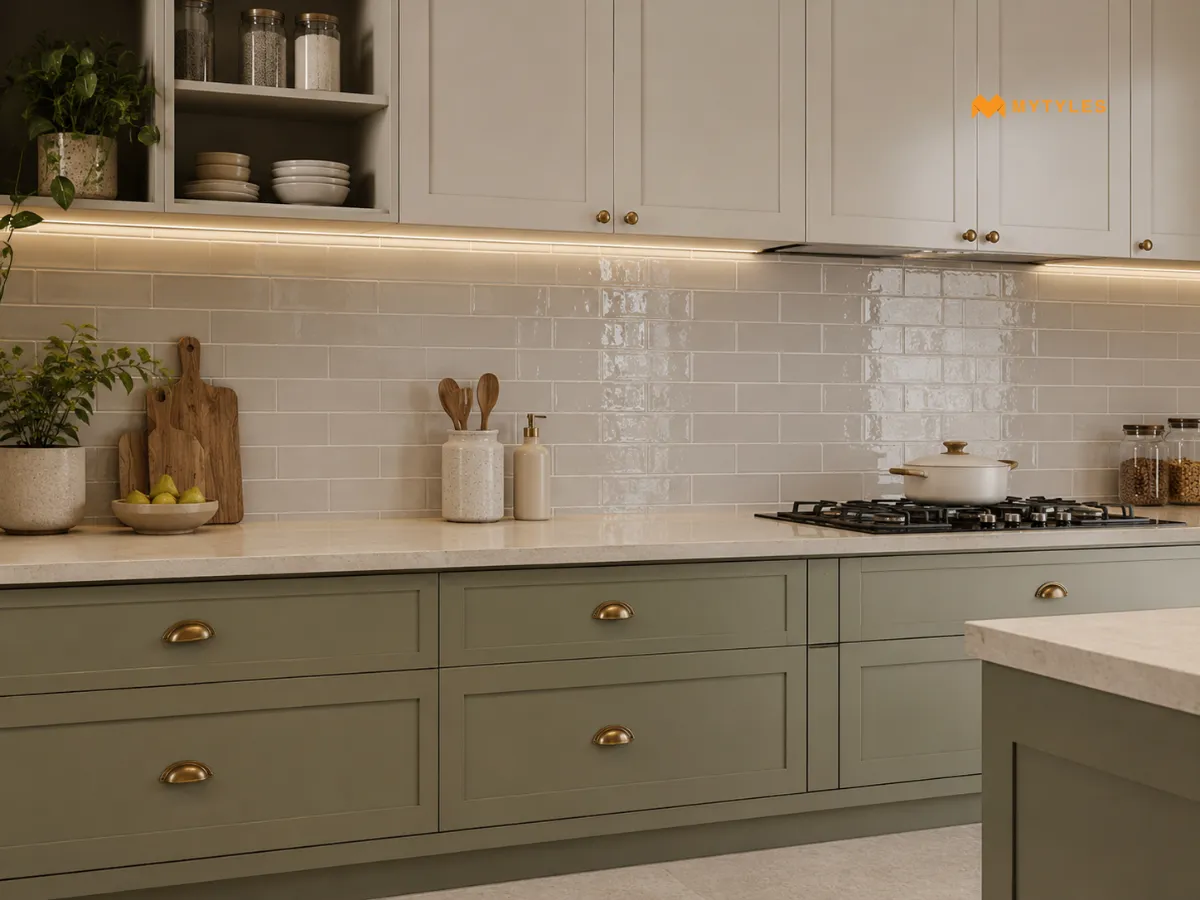
Subway tiles remain popular because they suit almost every cabinet style. The trick is to choose grout that closely matches the tile color. Instead of highlighting every joint, the wall appears softer and more connected. Using subway backsplash tiles with light grout gives the classic pattern a much cleaner appearance than black or dark grey joints.
Geometric Backsplash Tiles for a Modern Accent
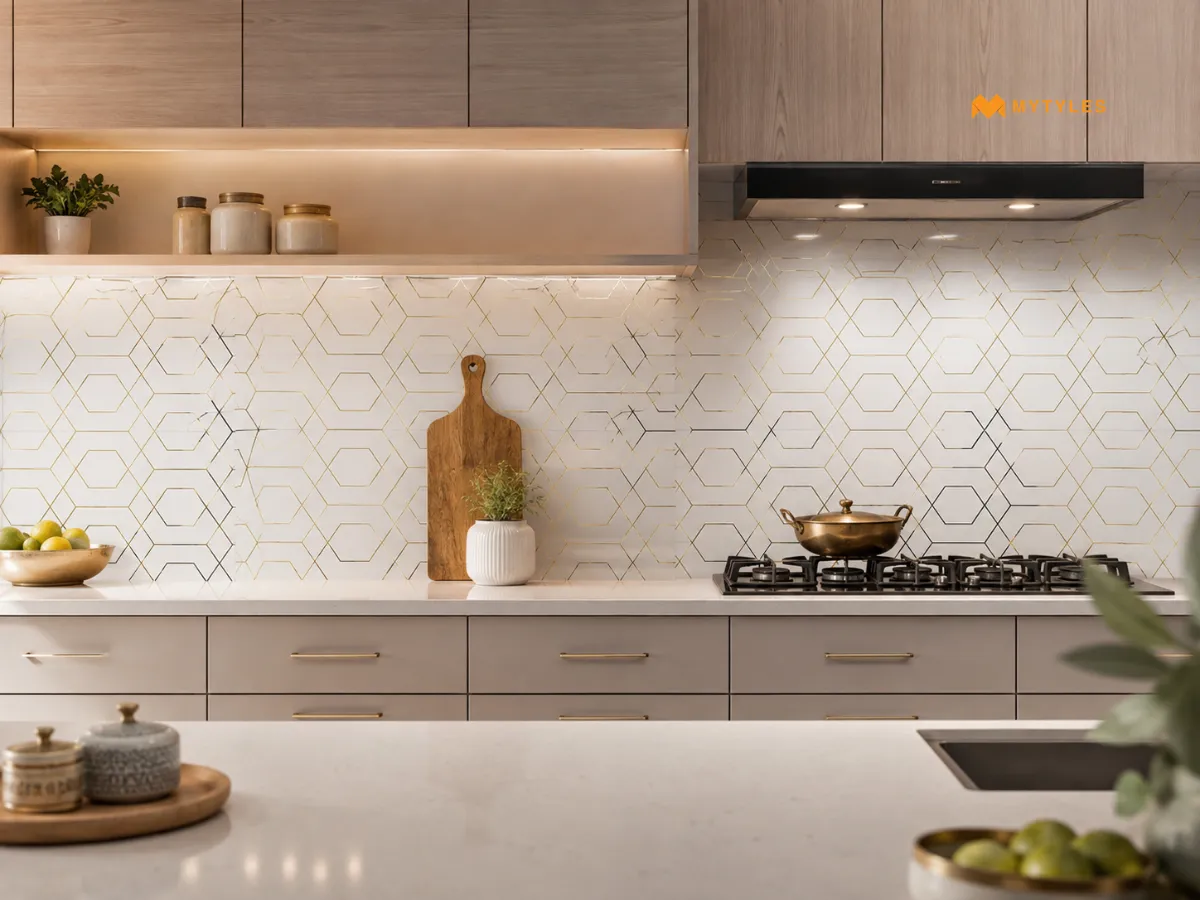
Not every invisible kitchen needs completely plain walls. Small hexagons, diamonds, or linear shapes can introduce a little movement while keeping the overall design simple. The key is to avoid bold colors if the goal is an understated kitchen. Choose geometric backsplash tiles in neutral shades such as white, greige, or light stone. They create interest up close without becoming the first thing people notice when they enter the room.
Moroccan Backsplash Tiles with a Contemporary Twist
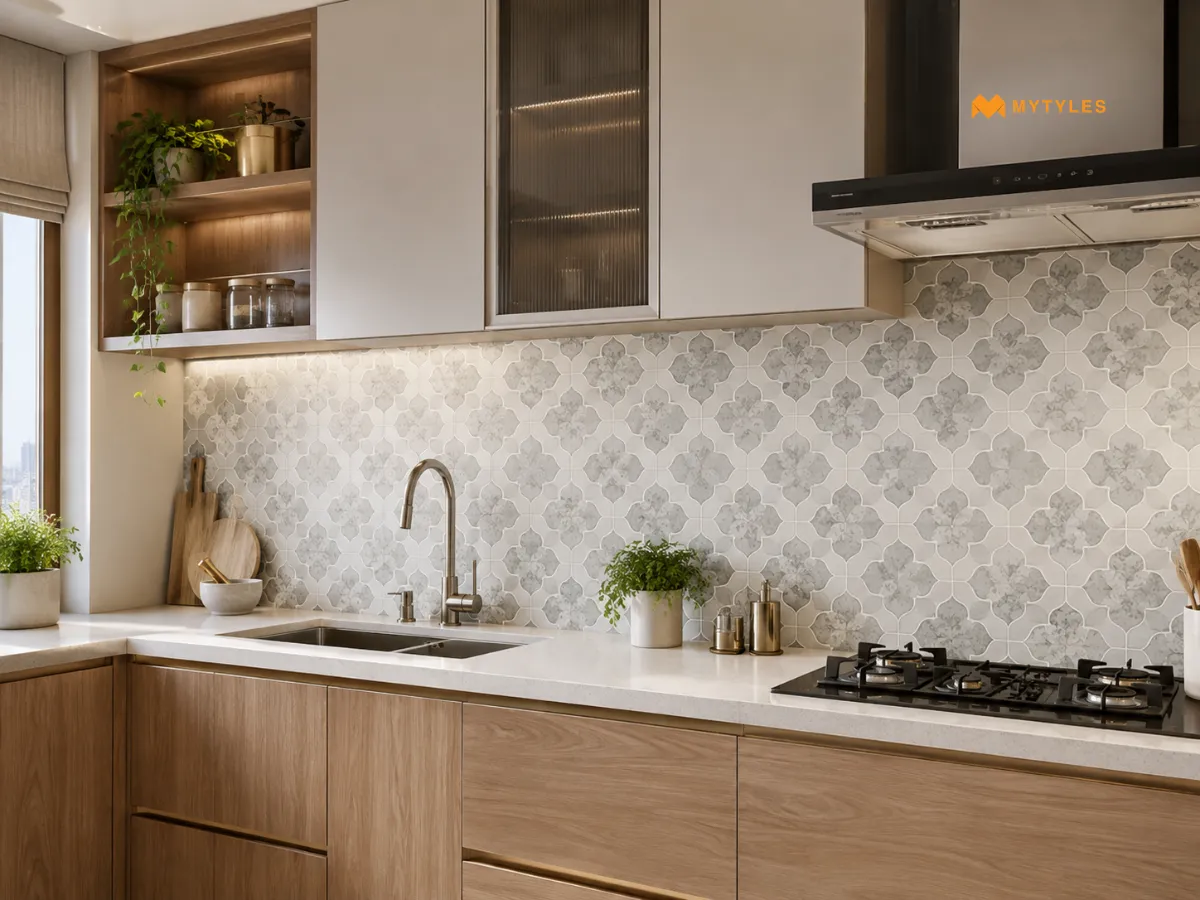
Traditional Moroccan patterns often use bright colors and bold contrasts. A softer version works better if you want a quieter kitchen. Look for cream, sand, sage, or muted grey tones with simple repeating motifs. Modern Moroccan backsplash tiles add personality while still fitting comfortably into today's Indian apartments. Similar patterned designs continue to appear in current kitchen inspiration because they balance character with practicality.
Bring Your Kitchen Design Together
The invisible kitchen look is less about hiding the backsplash and more about reducing visual clutter. Large tiles, light grout, soft colors, and continuous surfaces help the kitchen feel more open without making it look plain.
Before choosing a tile, think about how you cook every day. Heavy Indian cooking usually means frequent wiping around the hob, so smooth surfaces and fewer grout joints are often easier to maintain. Compare different finishes under your kitchen lighting, place samples beside your cabinets and countertop, and check how they look during the day before making the final decision.
Explore thousands of backsplash tile ideas online at MyTyles, or visit a MyTyles Experience Centre to compare colors, finishes, and sizes in person. Seeing full-sized displays can make it easier to choose tiles that suit your kitchen and budget.

What are the best backsplash tiles for kitchen use in Indian homes?

The best choice depends on how you cook and clean. Large porcelain tiles are popular because they have fewer grout lines and are easy to wipe after daily cooking. If you're selecting kitchen tiles for a backsplash, choose a material that handles heat, moisture, and oil splashes without needing frequent maintenance.
Should the backsplash match the kitchen countertop?
It doesn't have to, but keeping both surfaces in a similar color or material creates a cleaner look. This approach works well in a hidden kitchen design where cabinets, walls, and worktops blend together. Matching finishes also reduce visual breaks, especially in smaller kitchens.
Are large-format kitchen tiles better than smaller tiles for backsplashes?
In many kitchens, yes. Larger tiles mean fewer grout joints, so there are fewer places for grease and food stains to collect. They also help create a seamless kitchen design because the wall looks less divided. Proper installation with the right tile adhesive is important for long-lasting results.
Which finish is better for kitchen wall tiles: matt or glossy?
It depends on the kitchen. Grey backsplash tiles or lighter glossy finishes reflect more light and can make compact spaces feel brighter. Matt finishes reduce glare and hide fingerprints more easily. Choose the finish based on your lighting, cooking habits, and how often the wall needs cleaning.
What grout should I use for a kitchen backsplash?
For busy cooking areas, epoxy grout is usually a better option because it resists stains and doesn't absorb oil like cement grout. Pair it with a good-quality tile adhesive and professional installation for better performance. Matching grout color for the backsplash also creates a softer, more uniform appearance.
Which colors work best for a modern Indian kitchen design?
Light neutrals such as white, beige, greige, and soft grey continue to be popular because they make kitchens feel open and are easy to pair with different cabinet finishes. These shades also suit most kitchen wall tile ideas, whether your style is contemporary or traditional.
How do I maintain my backsplash so it looks good for years?
Wipe the wall regularly with a soft cloth and a mild cleaner to remove oil before it builds up. Avoid abrasive scrubbers on polished surfaces. If you're using designer backsplash tiles, follow the manufacturer's care instructions and inspect the grout occasionally so small repairs don't turn into bigger problems.

ABOUT THE AUTHOR
Aditi Bardhan
Aditi Bardhan is a professional content writer with over five years of experience creating SEO-focused, research-backed content across diverse industries. She specialises in the tile and surface materials space, writing for homeowners, architects, interior designers, and trade professionals. Her work combines technical research, design awareness, and a strong understanding of customer needs, helping readers make clearer and more confident choices. Through her content, Aditi simplifies complex material concepts, highlights practical design benefits, and helps brands build trust and authority in the tile and construction industry.