.svg)


Best Wooden-Look Tile Design Ideas for Warm Modern Homes
ByNandana Priya

Sun , Jul 19 , 2026

Read Time: 5 Min


 Copied!
Think of a quiet evening at home, the floor beneath you carrying a warmth that makes the room feel more settled, more comfortable. That feeling often comes down to wood, its grain, texture, and the way it softens a space without much effort.
Real wood can be sensitive to Indian home conditions, especially where humidity, frequent mopping, termite concerns, and daily surface marks are part of regular use. It may also need polishing, refinishing, or other care over time, depending on the wood type and installation area.
Wooden-look tiles bring back that same warmth, grain, and tone, only through a tile surface that generally handles daily life a little better. Read the blog to get seven wooden tile design ideas for each room, along with a few styling notes on what pairs well with wood-look tiles around the home.
Herringbone in Honey Oak for Open-Plan Living Spaces
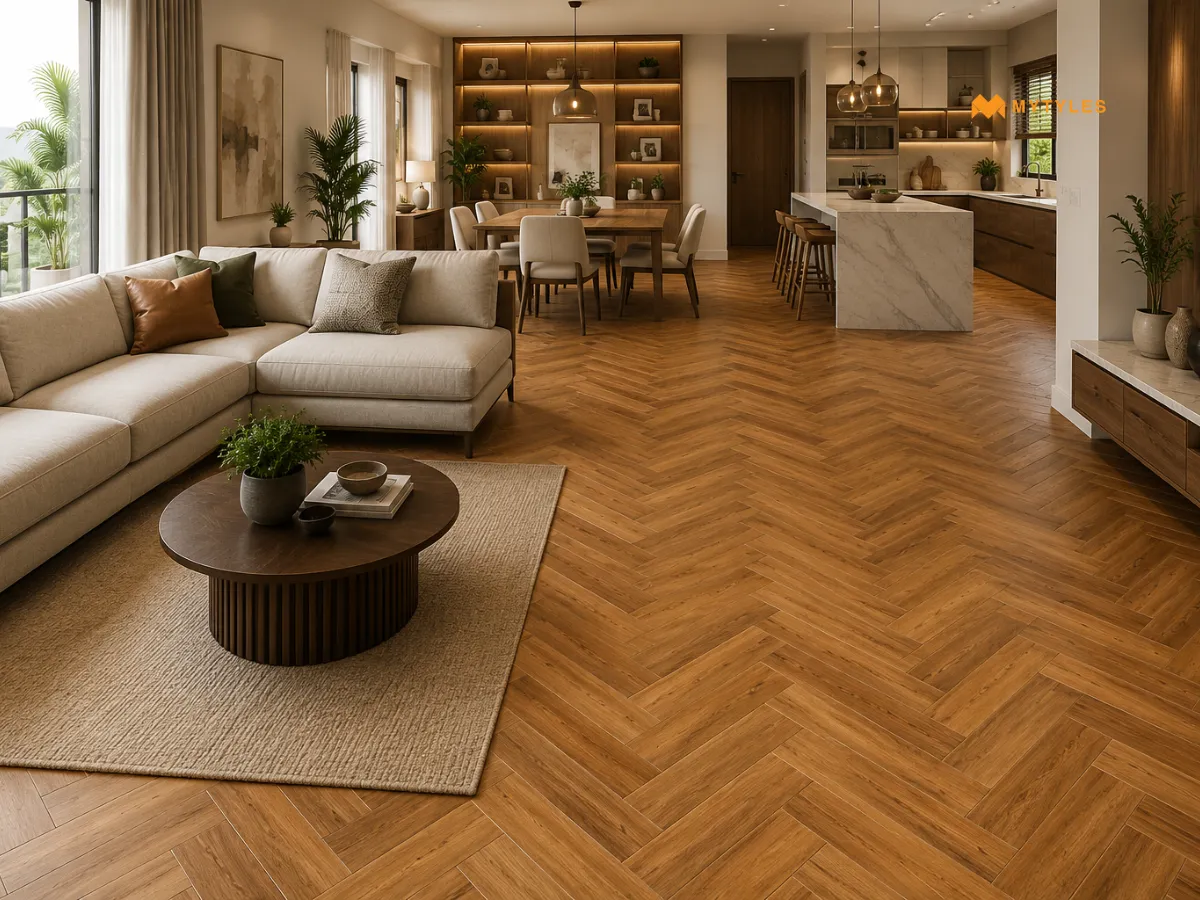
Herringbone has a way of making a floor feel considered, each plank set at an angle against the next, building a zigzag rhythm across the room. It is a pattern that has quietly stayed in style for decades because of the movement it brings to a space.
The honey oak tone brings a layer of warmth to the living room floor tiles. It is a golden undertone that softens the geometry and keeps the look from feeling too formal.
In open-plan living spaces, this combination works well. When a living area flows into a dining or kitchen zone, the angled rhythm of a herringbone wood-look tile layout guides the eye from one zone to another, helping the different zones feel more visually connected.
Wide plank tiles for bedrooms and home offices
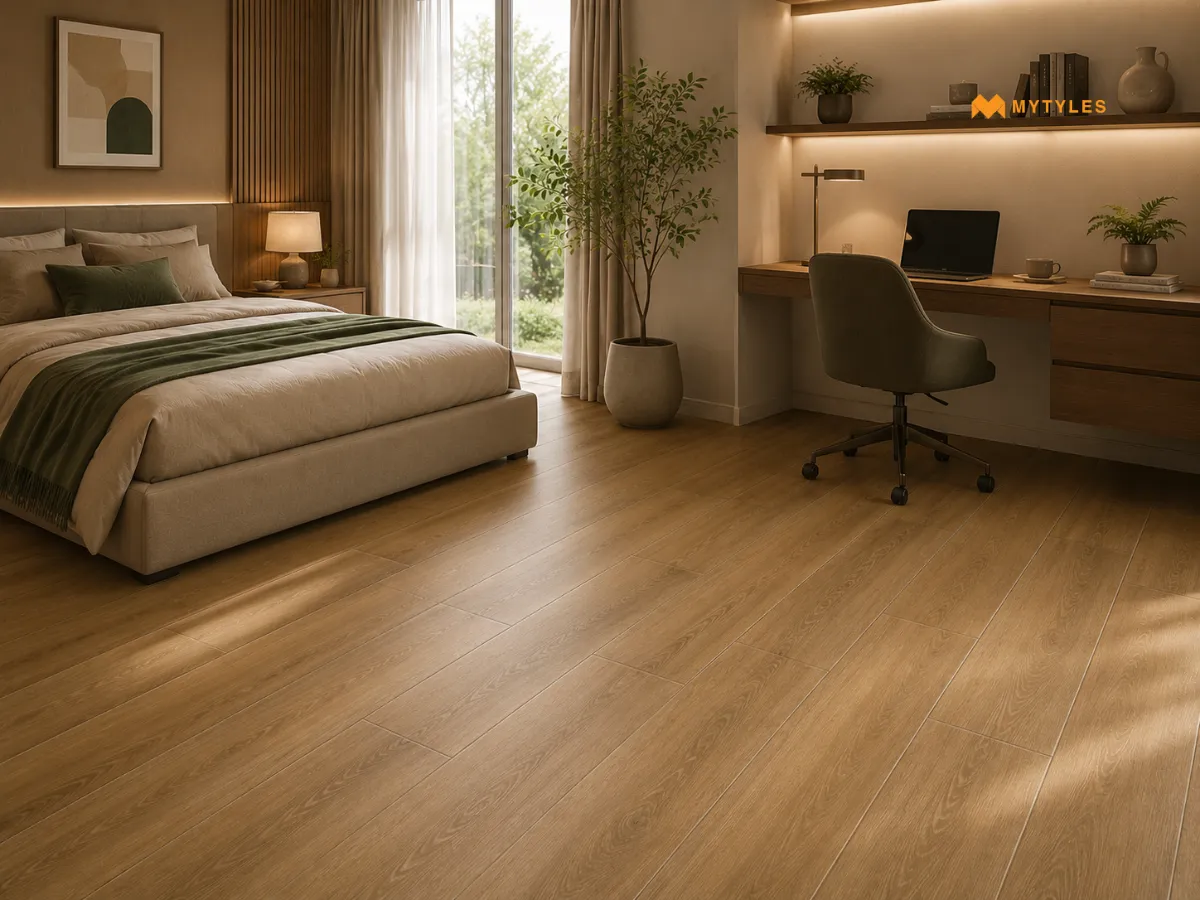
Wide plank tiles have fewer grout lines, longer stretches of surface, and a grain pattern that gives a calm feeling overall. That sense of calm makes wide plank tiles a suitable fit for bedrooms. Fewer grout lines also mean less visual interruption underfoot, something that matters more in a smaller room.
The same quality suits home offices, spaces that have become common in many Indian homes. Here a quieter floor helps the room stay easy to work in through the day. Softer tones such as honey oak in wood-look tiles tend to work well across both rooms.
Chevron Layout for a Statement Entryway
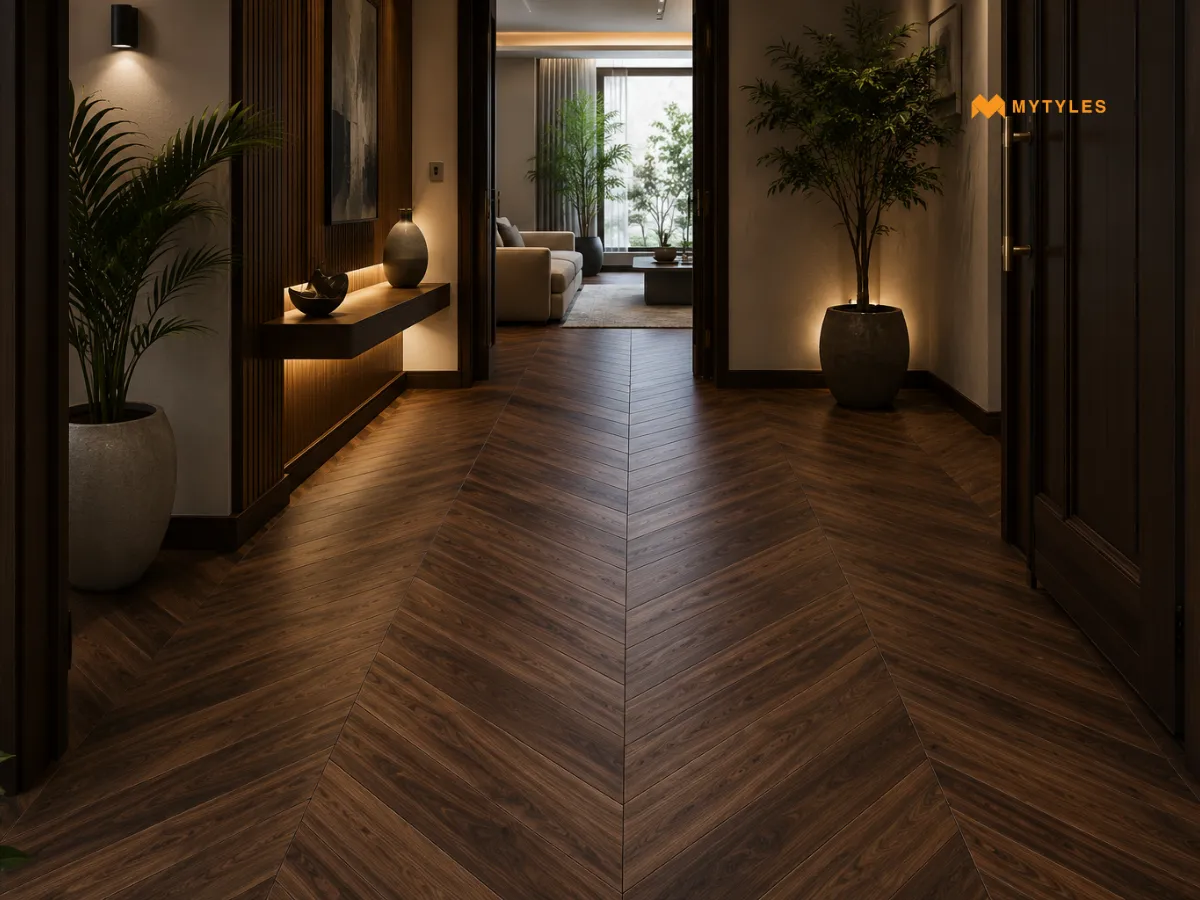
Where herringbone forms a zigzag from offset rectangles, chevron cuts each plank at an angle so they meet in a continuous, unbroken V-like structure. It is a small technical difference that changes the entire feel.
An entryway is essentially a preview of your home, and the chevron wood-look tiles suit this role well. A walnut or deep wood tone tends to hold attention without needing much else around it.
Walnut Tones for a Rustic-Modern Kitchen
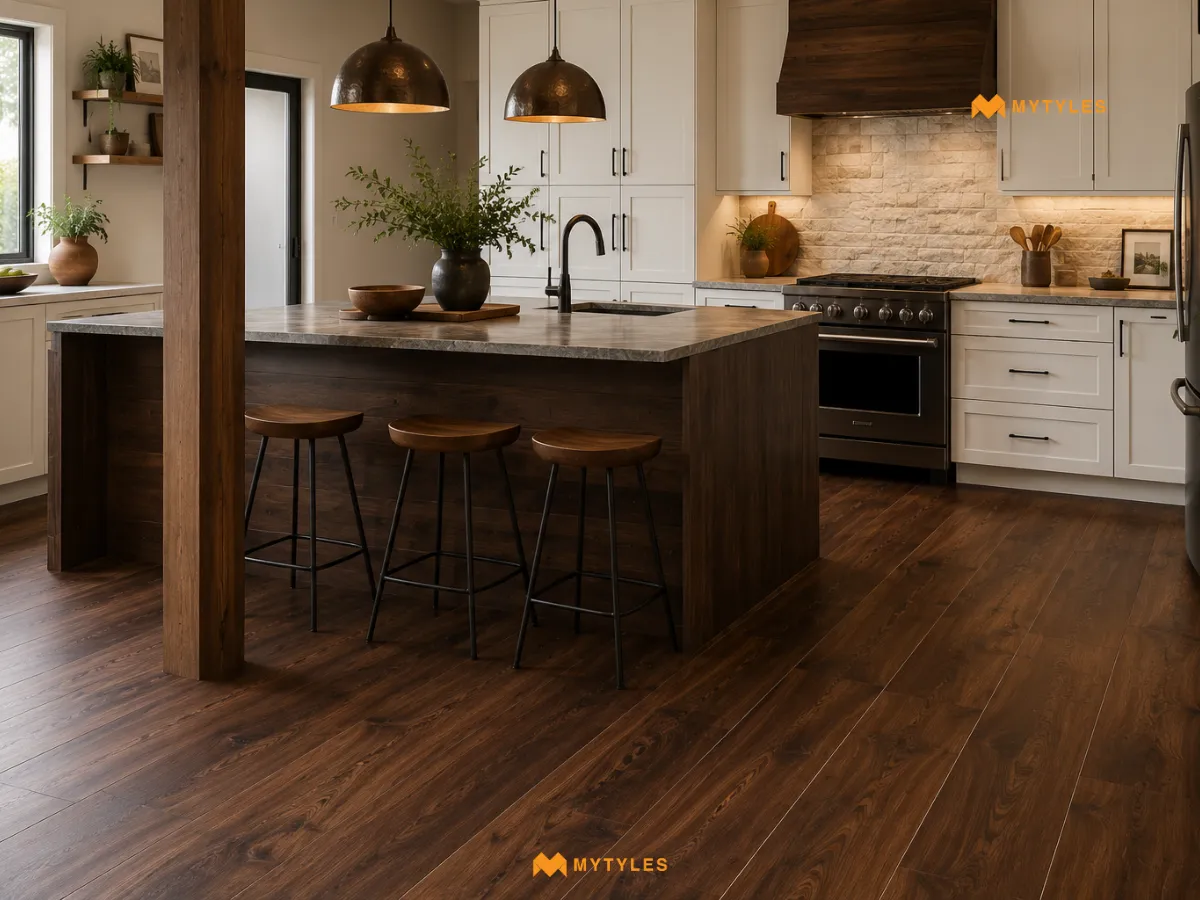
Most kitchens are built around function, but a floor or accent surface still shapes how the room feels day to day. A walnut tone brings a darker grain and richer undertone to the kitchen floor tiles and stands out well when paired with white cabinets.
The dark wood-look tiles can be used across a kitchen floor or along a breakfast counter. They add a rustic edge to the overall look. It suits homes that lean modern but want some warmth built in.
Mixed-Tone Planks for a Layered, Collected Look
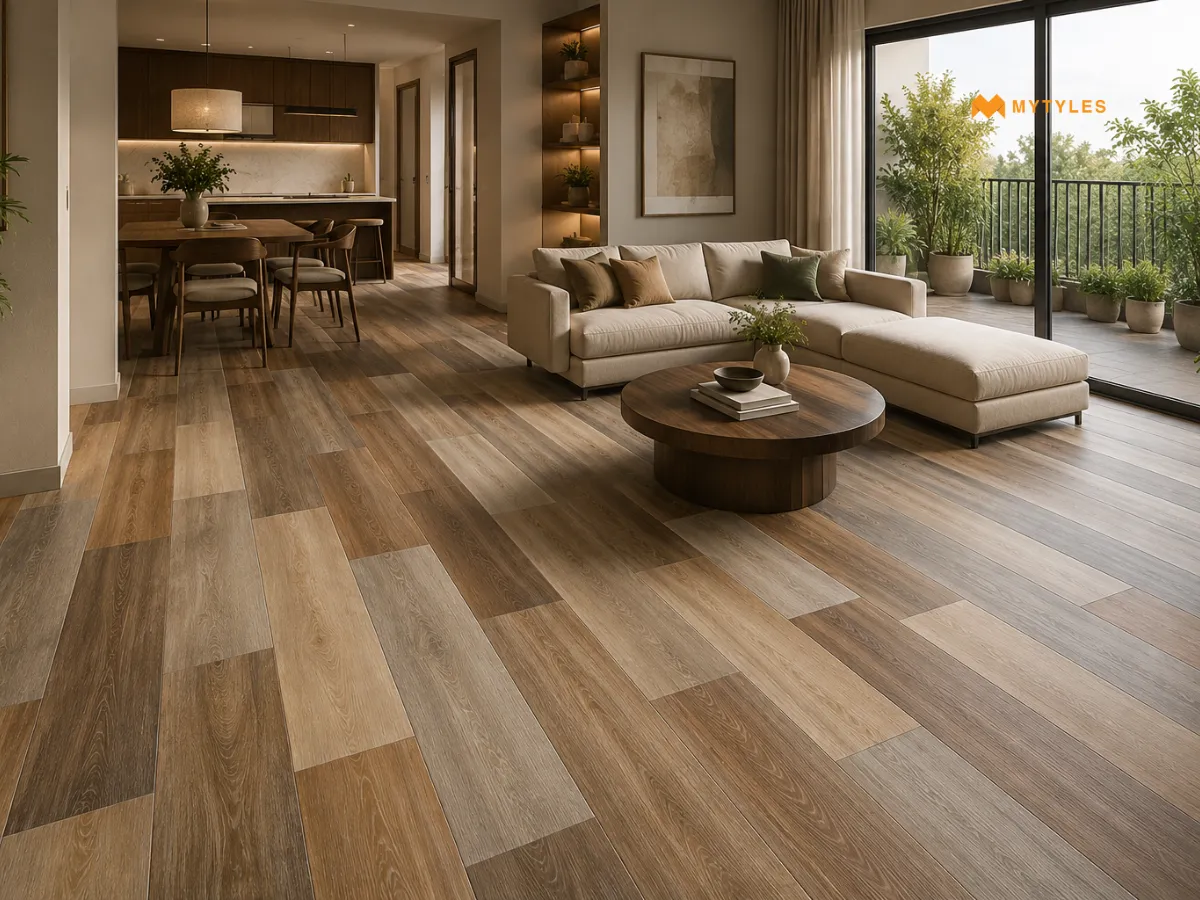
Mixed-tone planks are built around variation rather than uniformity; two or three wood shades, walnut, ash grey, pale oak, laid together so the floor carries more depth than a single tone typically offers.
Open-plan interiors benefit most from this approach. The variation in tone keeps a large, continuous floor from looking flat or repetitive. On a smaller scale, the same blend can work as balcony floor tiles, bringing in a bit of texture without much else needed around them.
Vertical Placement for Bathroom or Shower Walls
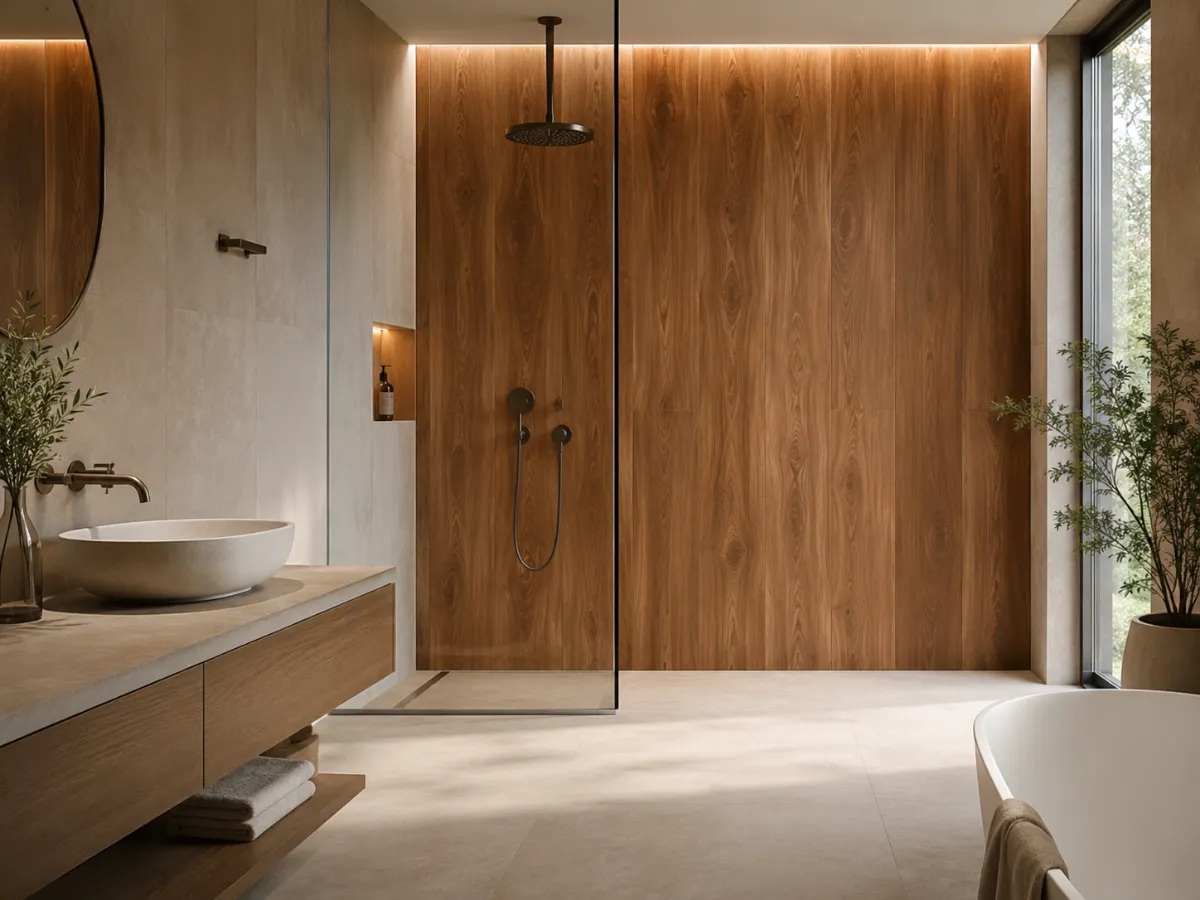
A bathroom rarely has room to spare, which is exactly why orientation matters more here than in most other spaces. Vertical placement takes the same wooden-look tiles and simply turns them upright, drawing the eye toward the ceiling instead of across the floor.
Shower walls and single feature walls tend to suit this best. A vertical wood-look tile layout in a lighter tone can make a compact bathroom feel less closed in, while a deeper walnut shade can add a quieter, more grounded feel to a larger one. Either way, the vertical lines do most of the visual work, so the rest of the space can stay simple.
Wood-Look Tiles for a Cosy Balcony Corner
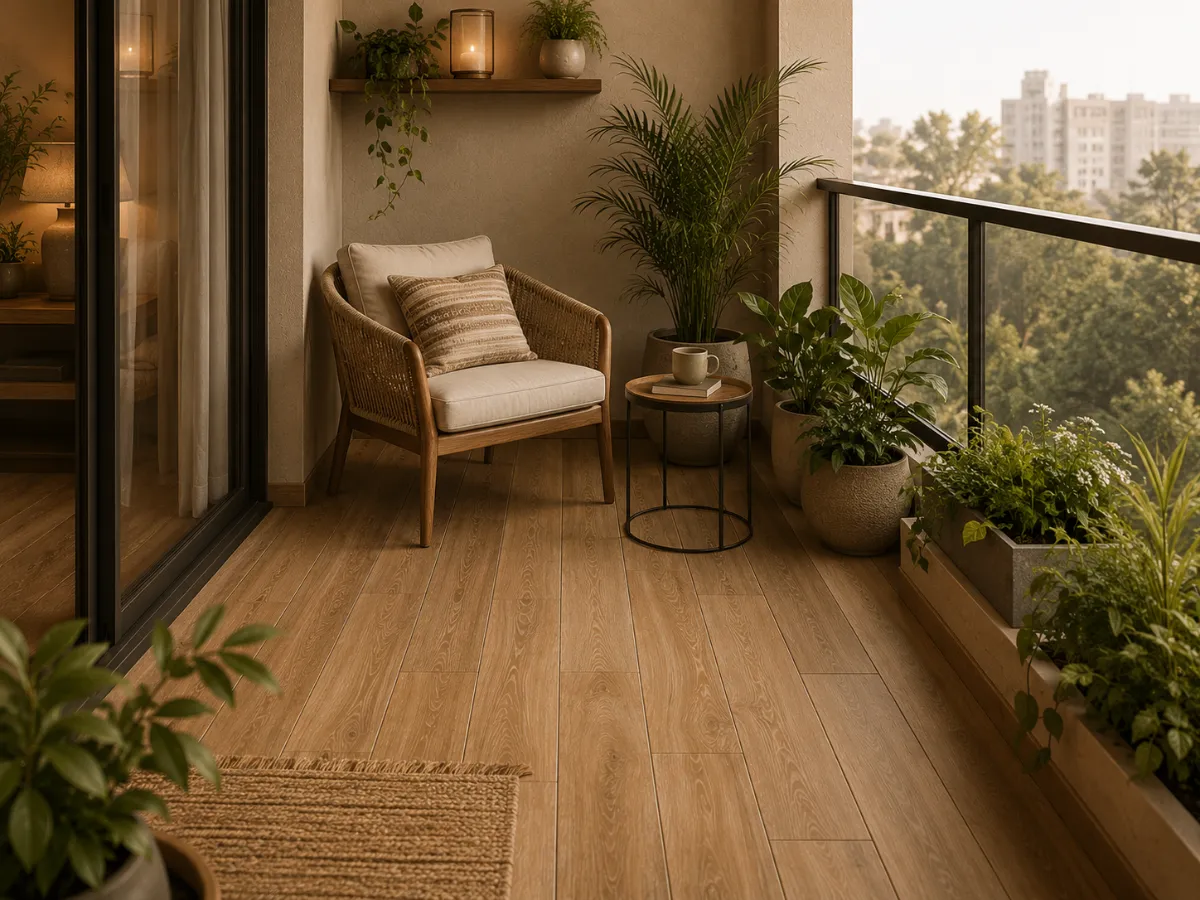
Even a narrow balcony can feel like a proper extension of home with the right wooden-look floor tile. Warm wood shades bring a grounded character to the space, turning a small space into a corner worth spending a few quiet minutes in.
In a compact space, pattern can either help or work against the room, and a straight-lay layout in wood-look tiles generally helps. It keeps the balcony feeling open rather than busy, leaving room for a chair, a few plants, or a woven mat to shape the corner instead.
Styling Notes for Wood-Look Tile Spaces
A few pairing choices can help a wood-look tile sit naturally within a room. Here are some of the styling ideas that you can consider for your space.
- Wall Color to Consider: Light wood tones suit warm white or sand-toned walls, keeping a room feeling open and airy. Deeper tones like walnut hold up well against richer backdrops such as olive, rust, or warm charcoal.
- Pairing Patterns with the Rest of the Room: A room with a bolder floor pattern, herringbone or chevron, generally looks best with a few statement pieces. With straight-lay or wide plank floors, there is more flexibility to layer in rugs, cushions, or additional furniture.
- Furniture and Textures: Natural materials, cane, and linen generally complement the grain and warmth of wood-look tiles. These textures have the same understated, organic quality the tiles bring to a space.
- Metal Fixtures: Brass and matte black fittings work across most wood tones, adding a small contrast without pulling focus away from the wood-inspired tiles.
Bringing Warmth Home with Wood-Look Tiles
Wood-look tiles offer a way to bring the warmth and grain of natural wood into a home without asking for the same level of upkeep real wood typically needs. From a herringbone living room to a cosy balcony corner, each layout and tone covered here works with a different part of the home, letting the overall look stay warm and considered throughout.
At MyTyles, you can explore a wide range of wooden-look tiles for Indian homes across shades, finishes, and sizes. Choose what suits your space, from herringbone and chevron patterns to warm walnut and honey oak tones. Visit the MyTyles experience centre or browse the wood-look tile designs online to find a design suited to your space.

Will Wood-Look Tiles Suit Modern Indian Homes?

Yes, wooden-look tiles for Indian homes work well across many interior styles because they combine the appearance of wood with the practicality of tile. They can suit apartments, villas, and contemporary homes alike. The final look depends on the wood shade, tile size, layout pattern, and how the tiles are paired with furniture and wall colors.
Which Wood-Look Tile Pattern Works Best For Different Rooms?
The pattern usually depends on the character you want to create in the space. Herringbone wood-look tiles often suit living rooms and open-plan areas where movement and visual interest are preferred. Straight-lay plank layouts generally create a calmer appearance, while chevron patterns can work well in entryways or feature areas.
Which Wood Shades Work Best For Different Spaces?
The right shade depends on the room size, lighting, and interior style. Light wood tones can make compact rooms feel brighter, while dark wood-look tiles often create stronger contrast in larger or well-lit spaces. Mid-tone wood shades are commonly selected because they pair easily with both modern and traditional furniture.
Can Wood-Look Tiles Be Used In Apartments?
Yes, wood-look tiles are commonly used in apartments for living rooms, bedrooms, kitchens, and balconies. Their wood-inspired appearance can help create a warm and consistent look throughout the home. Using similar tile shades across connected spaces may also help create a more visually continuous layout, depending on the overall design.
Where Do Wood-Look Tiles Work Best Inside A Home?
Wood-inspired tiles can be used in living rooms, bedrooms, kitchens, bathrooms, balconies, and selected wall applications, depending on the product suitability. Some spaces benefit from wood-look flooring, while others use the same finish on a feature wall. The choice usually depends on moisture exposure, the intended application, and the overall design style.
Can Different Wood-Look Tile Layouts Change How A Room Looks?
Yes, wood-look tile designs can influence how spacious or balanced a room appears. Wide plank layouts generally create a simpler visual flow, while patterned layouts such as herringbone or chevron add more movement to the floor. Choosing the layout according to the room size and furniture arrangement often creates a more balanced overall appearance.
Can The Same Wood-Look Tile Be Used Throughout The Home?
Yes, the same wood-look tiles may be used across multiple rooms when the selected product is suitable for each application. A consistent tile can help create visual continuity between connected spaces, while different laying patterns or orientations can give each room its own character without changing the overall wood look.

ABOUT THE AUTHOR
Nandana Priya
With a strong interest in design, creativity, and emerging tile trends, I enjoy turning ideas from the world of tiles and interiors into engaging, meaningful reads. My writing focuses on creating well-researched content that helps readers understand design choices with more clarity and confidence. I bring together research, design awareness, and digital marketing insights to craft content that is relevant, easy to follow, and thoughtfully written for todays homeowners and design-conscious readers.