.svg)


Common Tile Installation Mistakes and How to Avoid Them?
ByNandana Priya

Sun , Jun 14 , 2026

Read Time: 5 Min


 Copied!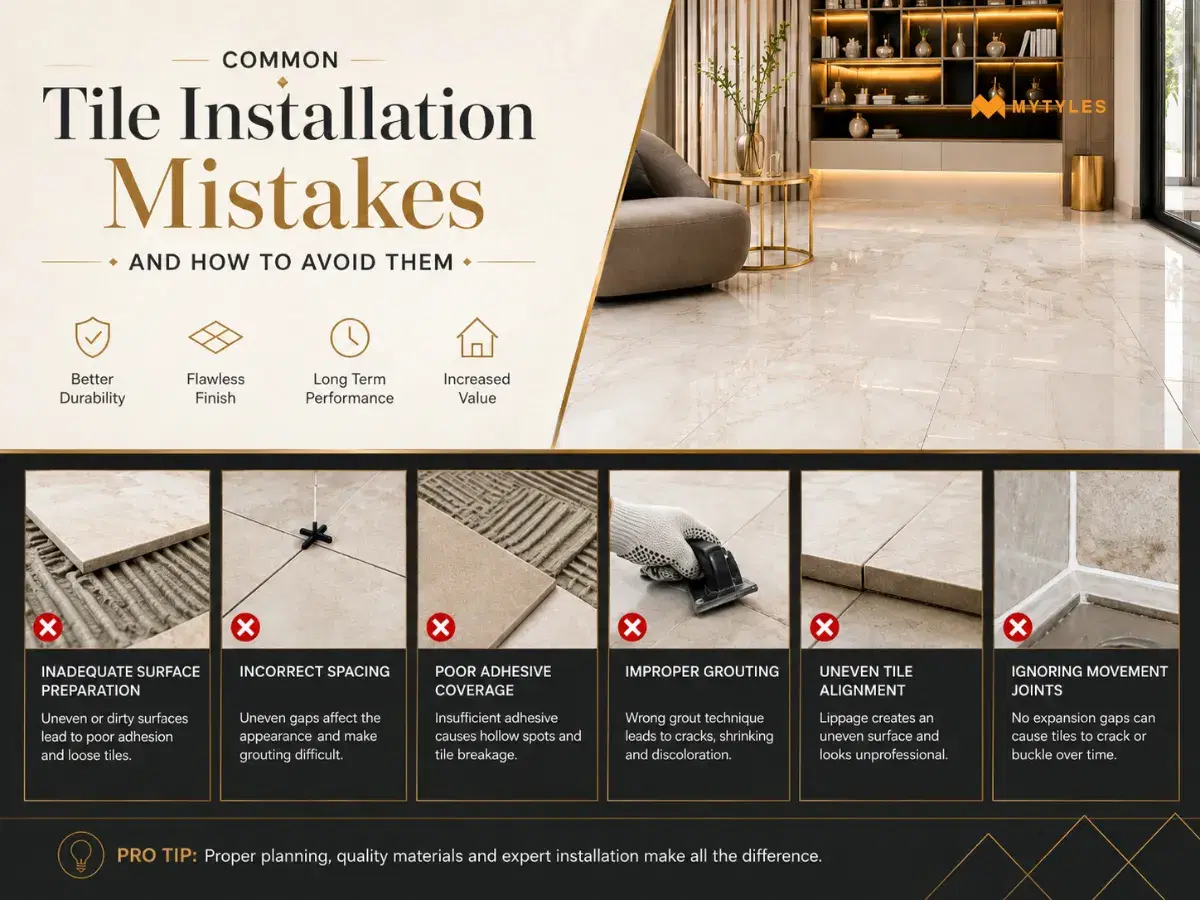
You got everything right from the tile design, color, material, and finish; it's just perfect for your space. However, the final take on the tiles' function and look depends on the installation. A tile that is chosen well but laid poorly will crack or look uneven within months. The work that happens before and during installation is what actually determines whether your floor or wall holds up the way it should.
Some tile installation mistakes are not visible right away, but they show up eventually, and by the time they do, fixing them means pulling tiles off and starting over. In this blog, we will walk you through what are the common tile installation mistakes and how they can be prevented.
Why Proper Tile Installation Matters
Picking the right tile is only the first step. Each stage in installation plays a role in how well the tiles hold up over time. This section explains why proper installation is equally important as choosing the right tile.
Protects Your Investment
Tiles are a long-term investment, whether it is a bathroom floor, kitchen wall, or outdoor patio. Shortcuts in installation do not save time; they just push the problem further and end up costing more to fix later. With proper installation, the tile remains perfectly in place and performs well in the long run.
Prevents Costly Failures
Most tile failures trace back to installation. Poor surface preparation, the adhesive that was applied too thinly, or joints that were not spaced consistently can all show up later. At this stage, the only solution remaining would be to remove the tiles and redo them. When the installation is done perfectly, it will prevent this scenario that might pop up later.
Fits The Room’s Needs
When tiles perfectly align with the requirements of the room, they perform well and last for a long time. A kitchen needs a tile that is stain-resistant, while a bathroom needs an anti-skid one, and living rooms focus more on aesthetics. With the right tiles, the room does not just look better; it also becomes more practical for everyday use.
Gives The Real Look
If installed properly, all of the uneven surfaces, visible lippage, uneven grout lines and inconsistent joint widths disappear. With no tile installation mistakes, the whole appearance becomes beautiful and completes the overall look.
.webp)
Mistake 1: Not Preparing The Surface Properly
An unprepared surface means the tile base is weaker. If the surface is uneven, dusty, or has moisture issues, the adhesive does not bond the way it should. Over time, tiles begin to hollow out underneath, meaning the bond between the tile and the surface starts breaking. The result would be chipped corners and cracked tiles after installation.
To Avoid This:
- Wipe the surface and clear out any dust or loose debris before you begin.
- Tap the surface or press against it. If it crumbles or feels weak, fix that first before any tile or adhesive goes on top.
- In wet areas and on ground floors, check for moisture. Where needed, do the waterproofing before anything else.
- Let the surface dry out fully. An adhesive applied over even slight dampness will not bond the way it should.
Mistake 2: Skipping The Tile Check Before Installation
A slight variation in size, thickness, color, or surface flatness might occur in batches. It is important to find them beforehand, as this tile installation mistake might create uneven joints, visible lippage, and surfaces that simply do not look flat. Replacing tiles after installation means taking them out without damaging the surrounding ones, which is time-consuming.
How To Avoid It:
- Open up all the boxes of tiles and lay them out on a flat surface to see if you can see any visible differences in size, shade, or thickness.
- Check each tile for warpage (tile with raised edges) by putting it on a flat surface and pressing each corner; if it moves, it’s warped.
- Check for surface defects like cracks, chips, pinholes, or glaze inconsistencies under good lighting.
Quick Tip: Always open and check tiles from at least three to four different boxes before starting. Variation is more common across boxes than within a single one.
Mistake 3: Using The Wrong Adhesive Or Mortar
Adhesive is what holds the tile to the surface. Using the wrong one does not show up on day one. The tile goes down, and then six months later it starts to hollow, crack, or lift. Every type of tile needs a different adhesive.
Thin tile adhesive coverage in a space where full coverage is needed will create air pockets underneath, leading to cracks later. Similarly, a standard wall adhesive used on a heavy porcelain floor tile will not hold long-term. The wrong adhesive for tiles, especially in wet areas, will break down with moisture over time and cause tiles to debond from the surface.
Prevention Tips:
- Match the adhesive to the tile material. Porcelain and vitrified tiles usually require a high-bond polymer-modified adhesive.
- For large-format tile installation, always use a full adhesive coverage method. Apply the adhesive onto both the surface and the back of the tile.
- Check that the adhesive is rated for that particular area, as the adhesive types differ across space
- Always follow the adhesive manufacturer's instructions for mixing ratio, open time, working time, and curing time.
Mistake 4: Ignoring Tile Lippage
Lippage, a height difference among tiles in small amounts, is normal. But when raised edges build up across the surface, it becomes uneven. This results in a floor tile installation mistake, leading to a trip hazard, while on the walls, it will make the surface poorly finished.
Simple Ways To Avoid It:
- Make sure the base surface is flat before starting the tiling process, as uneven surfaces also lead to tile lippage.
- For large-format tiles, take extra care during installation. Uneven substrates and narrow grout joints make lippage even more visible.
- Use tile levelling clips and wedges while you install to help keep the adjacent tiles even in height as the adhesive cures.
- Check lippage regularly with a straight edge across multiple tiles as work progresses for tile lippage prevention.
Quick Tip: With large format tiles, run a straight edge every 3 to 4 tiles to catch any lippage. The sooner you catch it, the more likely you are to correct it before the adhesive sets.
Mistake 5: Getting The Grout Joint Width Wrong
'Grout joint width' means the gap between two tiles after installation, and getting it wrong means uneven grout-tile spacing, visible gaps, and a messy finish. Joints that are too narrow lead to tiles pressing against each other. This causes a chip or a crack. When joints are too wide, they collect dirt more easily.
How to Prevent It:
- Do not install tiles with zero spacing unless the tile product and installation system specifically allow it.
- When you install the tiles, use tile spacers to make sure the joints are of even width. Smaller tiles are fine with narrower joints, but larger tiles often need wider joints.
- In wet areas, seal the grout after it dries. Grout that is left open pulls in moisture and slowly weakens from the inside.
Mistake 6: Poor Layout Planning
Layout planning is the step where you plan the tile placement, pattern, direction, cuts, grout joint width, expansion joints, and tile flatness before installation. An important part is visualising how the tile looks before installation.
Ways To Prevent It:
- Dry-lay tiles across the room before fixing anything down. This gives a clear picture of where cuts will fall and how the pattern sits.
- Mark out references on the floor with chalk before starting the installation.
- Always buy extra tiles. A good rule is to add 10% extra for standard straight layouts and up to 15–20% extra for diagonal or complex patterns.
- Plan expansion gaps at wall edges, corners, and large tiled areas. These small gaps allow slight movement and reduce the risk of tile stress or cracking.
A Quick Pre-Installation Checklist
Before fixing the tiles, run through this tile installation checklist to avoid common installation mistakes.
- The surface is flat, clean, and dry. No dust, no loose bits, nothing that will get in the way of the adhesive. Bathrooms, balconies, and wet areas have been waterproofed before any tiling starts.
- Walk the floor and run a check on the walls. Fix any dips or raised spots before the first tile goes down. In bathrooms, balconies, and utility areas, check that the floor tilts slightly toward the drain. Water should never sit flat.
- Before you commit to a tile, make sure it actually makes sense for that room. Not every tile works everywhere. Always keep extra tiles from the same batch.
- Open a few different boxes and compare. Look for size differences, warping, colour shifts, and anything that looks off on the surface.
- Adhesive and grout need time to set properly. Do not rush to the next step before that happens. The adhesive you are using should match the tile type and the specific area it is going into.
- Lay the tiles out on the floor without fixing them down first. Mark your reference lines before anything is set permanently. Expansion gaps have been planned for large areas and edges.
- Tile spacers and levelling clips are ready before work begins.
Get Tile Installation Right From The Start
Most tile installation mistakes can be avoided with proper surface preparation, the right adhesive, careful layout planning, and a basic tile check before fixing. Getting these basics right makes a real difference to how long the tiles last and how clean the finish looks. At MyTyles, you can browse tiles by material, finish, size, color, and application to find what works for your space. You can also find tile accessories like tile spacers, epoxy, and adhesive, and many more, under one roof. Before you buy, use the MyTyles Tile Calculator to get the right tile count and avoid over- or under-ordering.
Expert Reviewed by Biren Agrawalla
Biren Agrawalla, the Founder of MyTyles with over 10 years of experience across tile, retail, and home decor. Driven by a passion for tiles and a deep understanding of customer behaviour, he has spent his career transforming how people discover and buy tiles online. Biren combines practical retail insight with modern digital solutions to make tile shopping smarter, more intuitive, and design focused. At MyTyles, he champions a customer first approach, ensuring every experience from browsing to buying is reliable, seamless, and inspiring.

What Are Common Tile Installation Mistakes?

Common tile installation mistakes include installing tiles on an uneven surface, using the wrong adhesive, poor tile alignment, insufficient grout spacing, and skipping expansion joints. These errors can lead to cracked tiles, lippage, loose flooring, or moisture-related issues. Proper planning, accurate measurements, and following installation guidelines help ensure a durable and visually consistent finish.
Why Do Tiles Crack Soon After Installation?
Tiles can crack after installation due to an unstable subfloor, inadequate adhesive coverage, excessive weight, or movement beneath the surface. Cracks may also occur when expansion joints are not provided in larger areas. Ensuring proper substrate preparation and using suitable installation materials helps improve durability and reduce the risk of premature tile damage.
How Can You Avoid Uneven Tile Flooring During Installation?
Avoiding uneven tile flooring starts with preparing a level subfloor and checking tile flatness before installation. Proper adhesive application, tile spacers, and levelling systems also help maintain alignment. Taking time to check tile placement during installation reduces lippage and creates a smoother, more professional-looking floor that remains comfortable for everyday use.
What Happens If The Wrong Tile Adhesive Is Used?
Using the wrong tile adhesive can affect bonding strength and long-term performance. Tiles may become loose, develop hollow spots, or detach from the surface over time. Different tile materials and installation areas require specific adhesive types. Choosing the correct product helps improve stability, durability, and resistance to moisture or temperature changes.
Why Is Grout Spacing Important During Tile Installation?
Grout spacing allows tiles to accommodate slight movement and helps maintain a uniform layout. Insufficient spacing can lead to tile stress, edge damage, and an uneven appearance. Proper grout joints also make installation more accurate and support long-term performance by reducing pressure between tiles as they expand and contract naturally.
When Should Expansion Joints Be Included In Tile Installation?
Expansion joints should be included in large tiled areas, outdoor spaces, and locations exposed to temperature fluctuations. These joints allow surfaces to expand and contract without placing stress on the tiles. Without them, flooring may develop cracks, tenting, or loose sections over time, especially in areas experiencing regular environmental changes.
Why Should You Order 10% Extra Tiles During Installation?
Ordering around 10% extra tiles is important because cutting, breakage, pattern matching, and installation adjustments can reduce usable tile quantity. Extra tiles also help if a few pieces get damaged during work. Having spare tiles from the same batch ensures better color consistency and prevents delays if replacements are needed later.

ABOUT THE AUTHOR
Nandana Priya
With a strong interest in design, creativity, and emerging tile trends, I enjoy turning ideas from the world of tiles and interiors into engaging, meaningful reads. My writing focuses on creating well-researched content that helps readers understand design choices with more clarity and confidence. I bring together research, design awareness, and digital marketing insights to craft content that is relevant, easy to follow, and thoughtfully written for todays homeowners and design-conscious readers.