.svg)


Inlay Design Tiles: Types & Ideas for Indian Homes
ByHeena Dhiman

Sun , May 31 , 2026

Read Time: 5 Min


 Copied!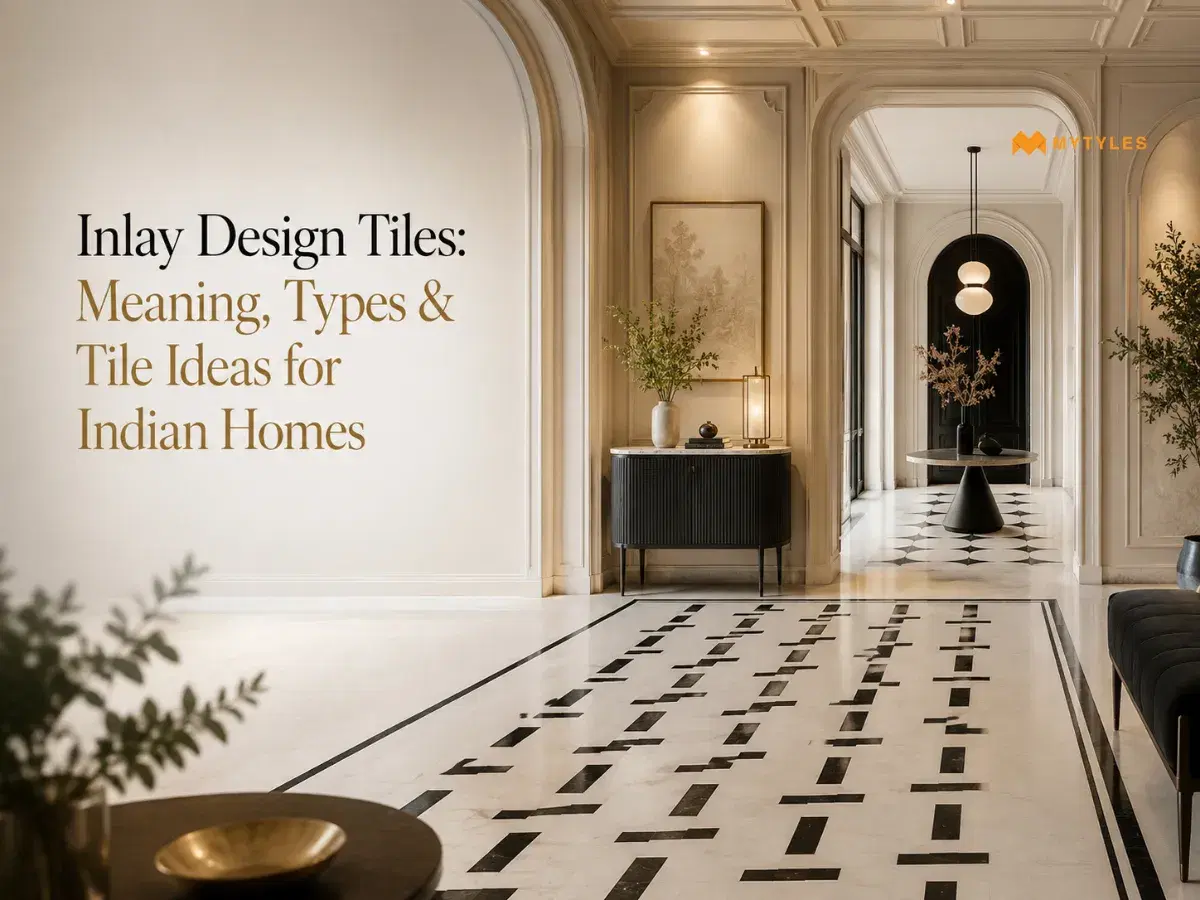
When we think of a grand old haveli, the first thing that comes to mind is the inlaid intricate patterns that seem almost too detailed to be true. Historically, artisans used to spend weeks, sometimes months, to carefully hand-cut and fit different stone pieces together. Doing such hard work with precision, the result that came out looks spectacular.
However, for most of us today, that level of craftsmanship feels out of reach. Traditional inlay design work is time-consuming, expensive, and needs skilled artisans to get it right. But here’s the good news: you no longer need any of that to get a floor that looks just as stunning.
Inlay tile designs are changing how we think about decorative flooring. They look like they took weeks to create, but they did not. So, whether you are building a new home or renovating, these tiles offer a smarter, more affordable path to a statement floor design.
Let’s start from the beginning.
What Are Inlay Design Tiles?
.webp)
The traditional style of inlay design is all about putting pieces together. This process involves cutting different pieces of marble, stone, or tile into specific shapes. Then, the artisans put those pieces together on the floor to make a decorative pattern.
But this traditional inlay work comes with a few challenges. It requires precision cutting, usually done with a process called waterjet cutting (or jet cutting), where a high-pressure stream of water cuts through stone or tile with great accuracy. However, it takes time, requires skilled talent, and demands money. Ultimately, the labour costs increase, the installation becomes more complicated, and the whole project budget can stretch considerably.
Inlay design tiles are a clever and practical solution to this problem. These are pre-made, 2x4 vitrified tiles, with a pattern inspired by inlay that is already printed or embedded directly on the surface of a large-format tile. The design is already there, fired into the tile during production.
There is no jet cutting needed on-site, no extra labour for fitting pieces, and no waiting weeks for the floor to be complete. These tiles are what we now call inlay pattern tiles without jet cutting. The result is a premium flooring design that looks handcrafted but installs like a standard tile. They are clean, efficient, genuinely impressive, and low-maintenance tiles.
The Difference Between Traditional Inlay and Inlay Design Tiles
Understanding this difference will help you make a much more informed decision, both for your budget and your timeline. Here is a side-by-side look at how the two compare:
Factor | Traditional Inlay Work | Inlay Design Tiles |
|---|---|---|
| What it is | Multiple pieces cut and fitted together on the floor | One tile with the ready-made inlay look |
| Cutting needed | Yes. Jet cutting or water jet cutting required for every piece | No. The design is printed and fired onto the tile at the factory |
| Labour | High. Skilled artisans needed to cut, fit and grout each piece individually | Low. Installs exactly like any standard floor tile |
| Time to install | Weeks, depending on the size and complexity of the pattern | Days. No extra steps beyond normal tile laying |
| Cost | Significantly higher due to cutting, labour and longer installation time | Much more affordable for the same visual result |
| Consistency | Can vary slightly since each piece is cut and placed by hand | Perfectly consistent across every tile since it is factory-made |
| Maintenance | Grout lines between many small pieces need regular attention | Fewer grout lines and a durable vitrified surface. Easy to clean |
Practical Benefits of Inlay Design Tiles That are Worth Knowing
Beyond how they look, inlay design tiles make a lot of sense for everyday Indian home life:
- Low maintenance: Vitrified inlay design tiles do not need sealing, polishing or special cleaning products. A regular damp mop keeps them looking sharp.
- Easy-to-install tiles: The design is already on the tile, so there is no complicated cutting or fitting on-site. Standard installation applies.
- Affordability: Since these tiles carry the look of traditional inlay work, they allow you to improve the space without overspending.
- Consistent pattern: Every tile comes with the same design, which means the floor looks clean, professional, and uniform from every angle.
Types of Inlay Design
.webp)
There is quite a variety available today, especially in 2x4 vitrified inlay design tiles. Here are the most popular types you will find for modern Indian homes:
Geometric Pattern
These tiles have clean lines, repeated shapes, such as squares, diamonds, and hexagons, arranged to mimic traditional inlay patterns. Living rooms and hallways are popular places for geometric tile patterns when you want the floor to be a statement piece.
Marble-look tile design
These tiles combine the softness of a marble finish with a decorative inlay motif at the centre, often a medallion surrounded by detailed borders. Marble-look tile design has always been a favourite in Indian homes for drawing rooms, pooja rooms, and foyers. These tiles give you that luxury hotel feel without the cost or upkeep of real marble.
Centre Floor Design
A dedicated centre floor design tile is placed at the heart of a room, creating a focal point. Everything else is arranged around it. This style draws directly from traditional Indian aesthetics, where the centre of a room often carries the most decorative attention. Living rooms and drawing rooms are the best places for such designs as the floor is open and visible enough to get the right spotlight.
Border Tile Design
Not every room needs a dramatic centre piece. Sometimes, a well-chosen border tile design running along the edges is all a space needs. A border in an inlay pattern adds a clean, finished frame to the floor and gives it a sense of intention without going overboard. These tiles work really well in dining rooms, bedrooms, and pooja rooms, where you want the subtle look.
Full Floor Inlay Design
These tile designs have repeating inlay patterns across the entire surface. They were designed to be laid across the whole floor for an immersive, luxurious effect. Think of palace floors, but practical. These work well in large rooms, open-plan homes, or premium residential projects.
Why Vitrified Tiles are the Best Base for Inlay Designs
The quality of an inlay-inspired tile design depends heavily on the material it is printed on. And vitrified tiles are the best choice for such flooring. They are made by mixing clay with silica and quartz and firing everything at very high temperatures. This process makes them extremely hard, dense, and non-porous. So, due to which water does not seep in, and stains do not settle easily.
Also, as they are strong, vitrified tiles can take a lot of foot traffic without losing their finish. For Indian homes where floors go through daily mopping, seasonal wetness, and constant use, that kind of durability is not a luxury. It is a necessity, making vitrified tiles a practical, lasting solution.
When an inlay design is applied to a vitrified base, the result is a decorative floor tile that is not just beautiful but also genuinely durable. You get the premium flooring design without the fragility that sometimes comes with purely decorative tiles.
The 2x4 format (2 feet by 4 feet, i.e., large format vitrified tiles) is particularly popular because the larger surface area means the design has more room to breathe and show its full detail.
Create Statement Spaces with Inlay Tiles
There is something deeply satisfying about a floor that tells a story. The inlay design tiles carry that story, of craftsmanship, of heritage, of beauty, carefully composed. And they bring it to everyday Indian homes in a way that is practical, affordable, and genuinely elegant.
So, whether you are drawn to a bold geometric tile pattern for your living room, a soft marble medallion for your bedroom or a traditional motif for your pooja room, there is an option that fits both your space and your taste.
At MyTyles, we are able to bring this past craftsmanship within your reach. We have a well-curated collection of inlay design tiles, available in beautiful 2x4 vitrified tiles, crafted for modern Indian homes. So, head over to MyTyles experience centre to find the tile that feels like it was made for your home.
Expert Reviewed by Biren Agrawalla
Biren Agrawalla, the Founder of MyTyles with over 10 years of experience across tile, retail, and home decor. Driven by a passion for tiles and a deep understanding of customer behaviour, he has spent his career transforming how people discover and buy tiles online. Biren combines practical retail insight with modern digital solutions to make tile shopping smarter, more intuitive, and design focused. At MyTyles, he champions a customer first approach, ensuring every experience from browsing to buying is reliable, seamless, and inspiring.

What are Inlay Design Tiles?

Inlay design tiles are ready-made tiles with a decorative inlay-inspired pattern already on the surface. Instead of cutting and fitting multiple tile pieces on-site, the design is built into the tile during manufacturing, giving you a premium floor look with standard installation.
How are Inlay Design Tiles Different from Traditional Inlay Flooring?
Traditional inlay uses jet cutting to shape different tile or stone pieces, which are then fitted together by hand. Inlay design tiles skip all of that; the pattern is printed or embedded directly on a single vitrified tile. Same visual effect with much less time, labour, and cost.
Are Vitrified Inlay Design Tiles Durable?
Yes. Vitrified tiles are fired at high temperatures, making them hard, dense, and non-porous. They resist stains and water while handling heavy foot traffic, making them a practical and long-lasting choice for modern Indian homes.
Can Inlay Design Tiles be Used in All Rooms?
Absolutely. They work well in living rooms, foyers, bedrooms, dining areas, and pooja rooms. The key is choosing the right pattern scale and finish for each space; bold designs for larger rooms and subtle ones for compact spaces.
What Size are Vitrified Inlay Design Tiles?
The most popular format is 2x4 feet (also called 2x4 vitrified tiles or large format vitrified tiles). This larger size gives the inlay design more space to display its full detail and creates a seamless, premium look on the floor.
Are Inlay Design Tiles Easy to Maintain?
Yes. Vitrified inlay design tiles are low-maintenance. They do not require sealing, polishing, or specialised cleaning. A regular damp mop is enough to keep them looking fresh, which makes them ideal for busy Indian households.
Do Inlay Design Tiles Need Jet Cutting During Installation?
No. That is the biggest advantage of these tiles. The inlay pattern is already part of the tile, so there is no jet cutting or waterjet cutting needed on-site. They install like standard floor tiles, straightforward, faster, and more affordable.

ABOUT THE AUTHOR
Heena Dhiman
I started out in fashion design before finding my true calling in writing. My background taught me to look at spaces differently, with a keen eye for details and aesthetics. With over 5 years of experience, I have written content across diverse niches, from lifestyle, finance, and home improvement to project and resource management. Along the way, I discovered an interest in tiles and home design, where my creative background comes in handy. Currently, I am working towards making home design decisions less overwhelming and more enjoyable through my content pieces.