.svg)


Louver Panels for Modern Walls and Partitions
ByAditi Bardhan

Mon , Jun 22 , 2026

Read Time: 5 Min


 Copied!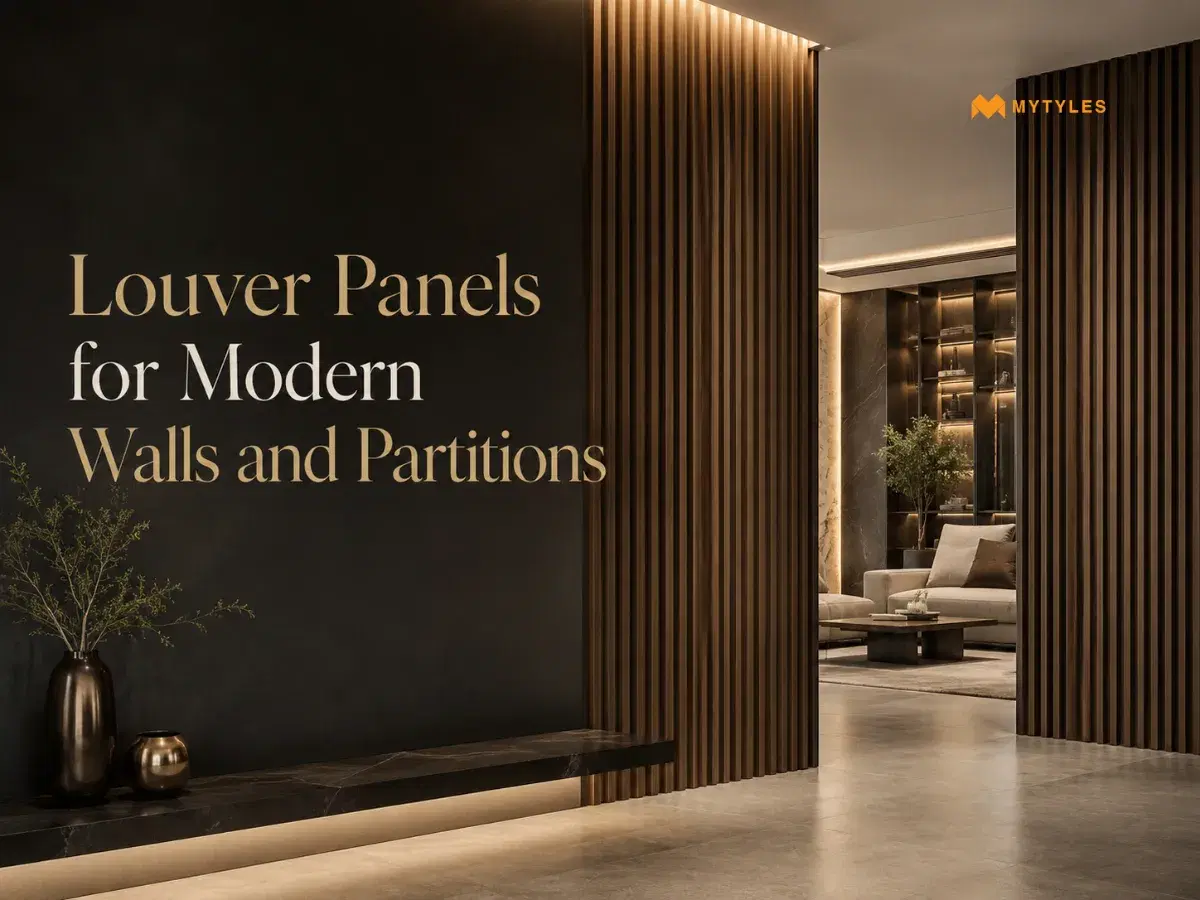
Some walls look flat even after paint, furniture and lighting. The room may be complete, but one side still feels empty. This is where louver panels work well. They add vertical lines, shadow and structure without making the room heavy. They can be used as decorative wall panels, TV wall panels, room divider panels or even feature wall panels.
For Indian homes, they are useful because they give a finished look without major civil work. They also pair well with tiles, marble-look surfaces, stone finishes and warm lighting. This guide explains louver wall panels, where to use them, which designs work best, and what mistakes to avoid before buying.
What Are Louver Panels?
Louver panels for walls are decorative panels made with repeated vertical or horizontal slats. These slats create a lined effect on the wall. They may be made from WPC, PVC, wood, MDF or other interior materials. The finish can look wooden, white, black, charcoal, metallic or stone-matched. People use them when they want:
- More texture on plain walls
- A cleaner TV wall
- A soft room divider
- A richer backdrop
- A modern interior finish
Decorative louver panels are not only for looks. They also help define areas in open homes without building a full wall.
Why Louver Wall Panels Are Popular in Modern Interiors
Modern homes often have open living and dining areas. Plain walls can look too empty, while heavy partitions can make the room feel smaller. That is why modern louver panels have become popular. They add design without blocking the room fully.
- Adds Texture and Depth: Flat paint can look dull on a large wall. Modern wall panels add lines, shadows and depth. This works well behind sofas, beds and TV units. The wall starts looking designed, even with simple furniture.
- Creates a Premium Look: Premium wall panels provide the room with a more finished look. The slim lines appear neat, particularly when combined with warm lights. Typically, wood, charcoal and beige finishes are more refined than bold colors.
- Makes Walls Look Taller: Vertical lines can make a wall look taller. This is helpful in flats where ceiling height may feel limited. Vertical wall panels are especially useful behind TV units, beds and foyer mirrors.
- Helps Define Spaces Without Heavy Construction: Louver wall panels can be used for partitions for use in open layouts. For instance, they can partition the bedroom, separating study and sleeping spaces without closing the space completely. They also allow light and air to pass, depending on the design.
Where to Use Louver Panels in Modern Homes
Louver panels work best when placed with purpose. One good wall is better than using them everywhere. Here are the most practical places to use them.
Living Room Statement Walls
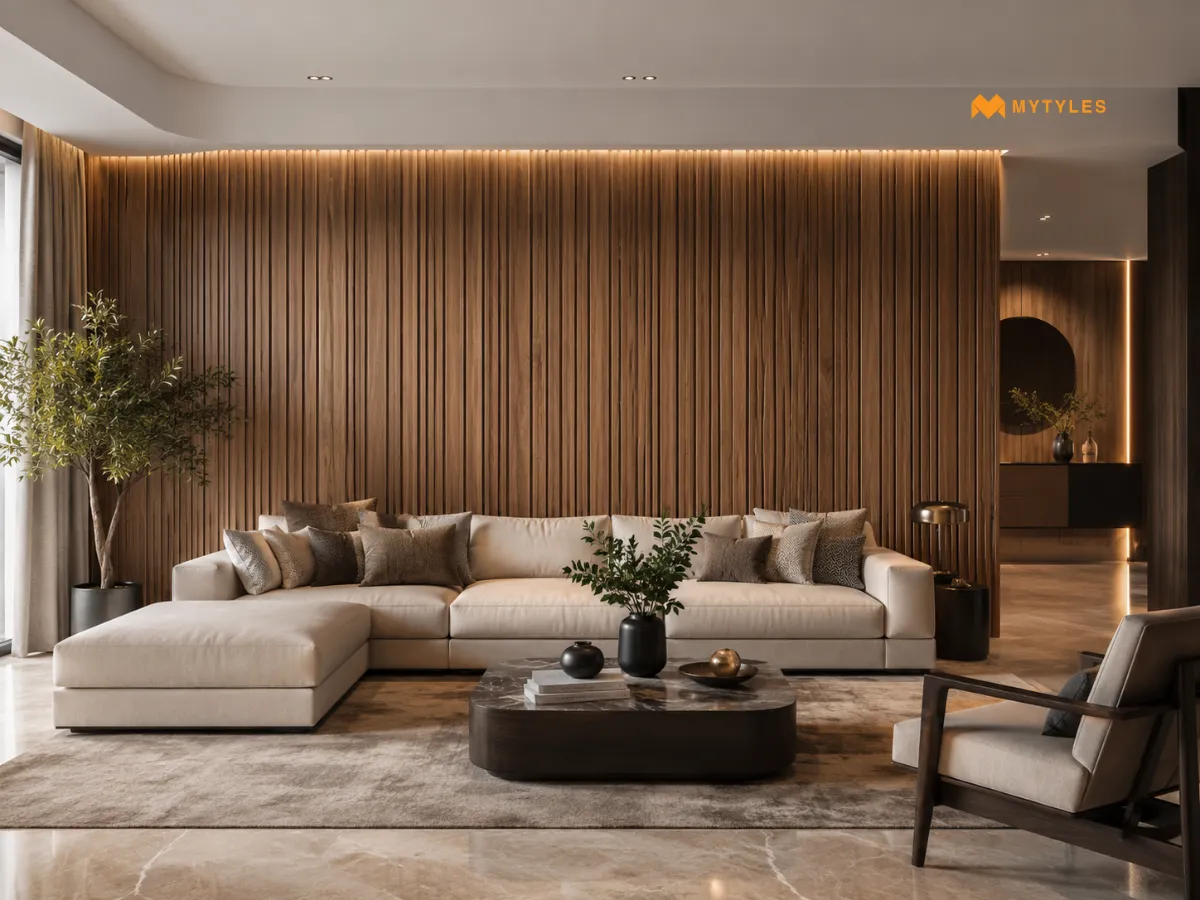
A living room statement wall can look more polished with feature wall panels. Use them behind a sofa or on the main wall facing the entrance. Pair wood-finish panels with beige tiles or stone-look flooring for a calm look.
TV Unit Backdrops
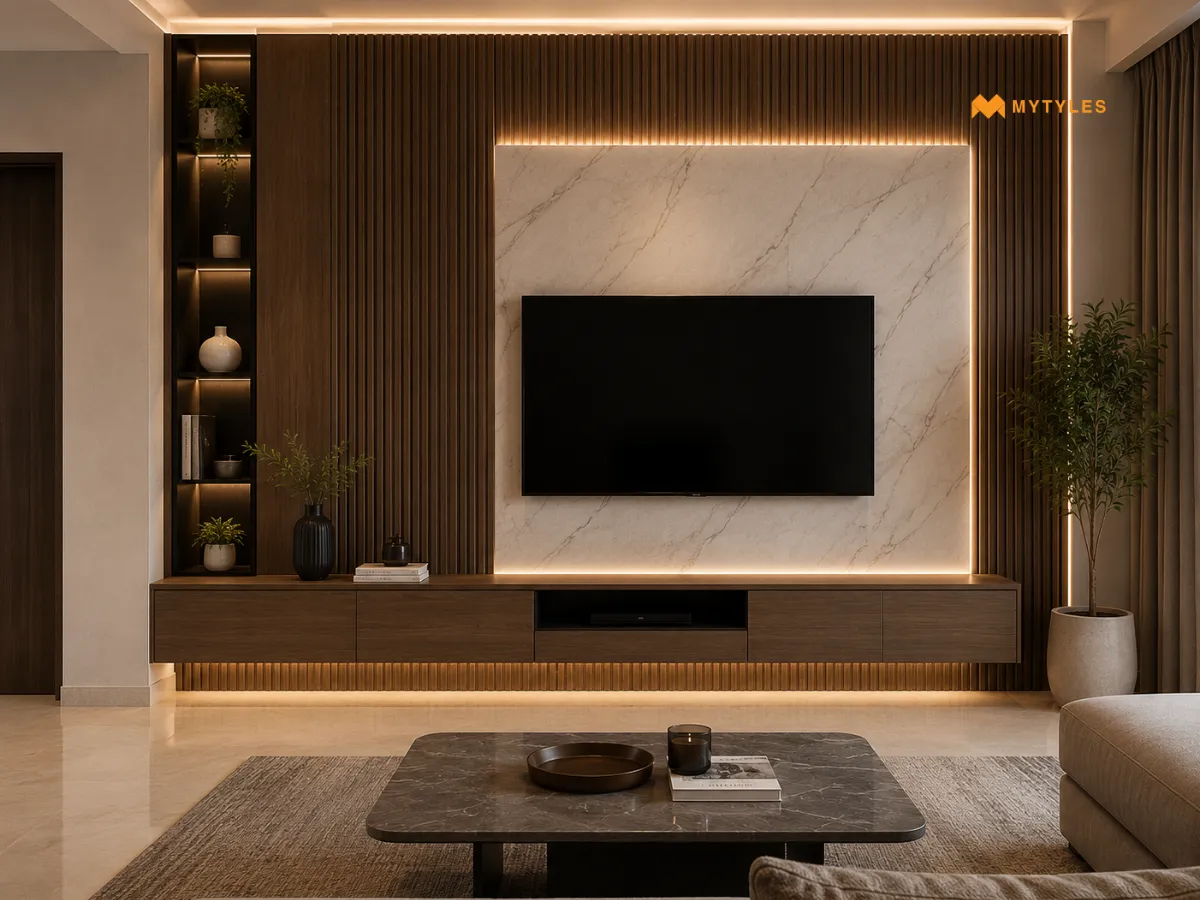
TV wall panels help hide plain walls and make the TV area look planned. They work well with floating cabinets, marble-look tiles and hidden LED strips. Do not overfill the wall with shelves. Let the panel lines remain visible.
Bedroom Headboard Walls
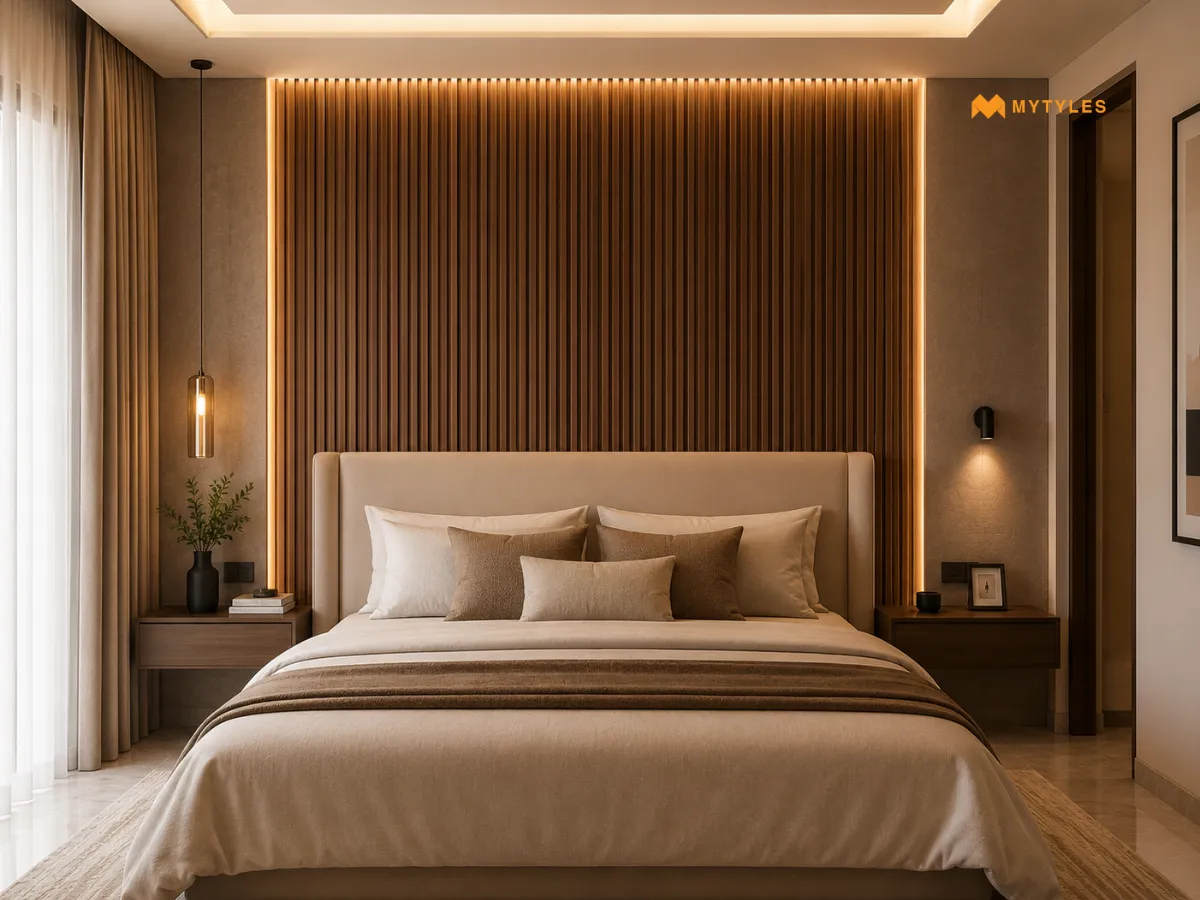
A bedroom headboard wall can use panels behind the bed. This creates a hotel-like backdrop without using too much furniture. Warm wood shades work well with cream, grey, brown and beige bedding.
Foyer and Entrance Corners
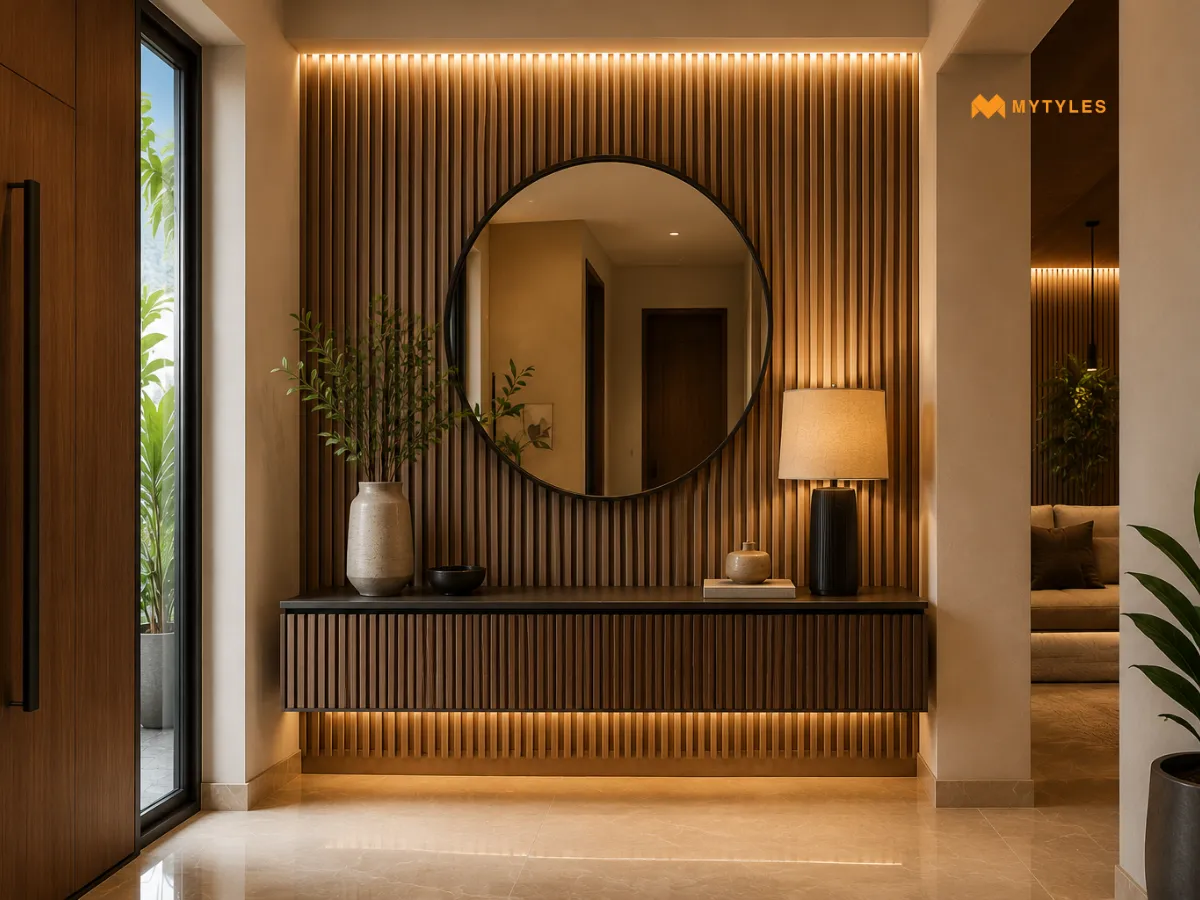
A foyer needs a strong first view. Louver panels can be used behind a mirror, console table or shoe cabinet. A narrow wall can look taller with vertical lines and soft lighting.
Living and Dining Partitions
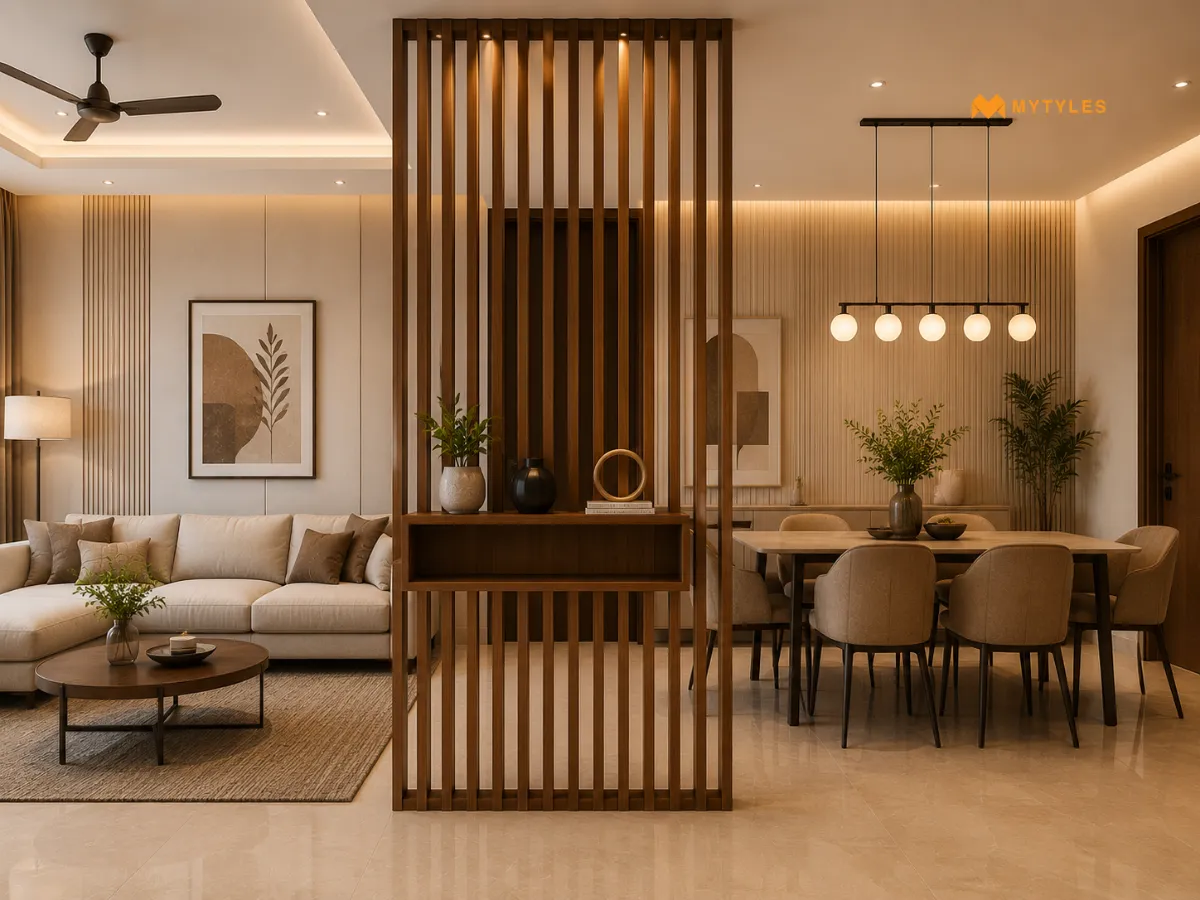
Partition wall panels can separate living and dining spaces gently. They are useful in open apartments where a full wall would look too heavy. You can also use room divider panels between seating and dining areas.
Pooja Room Backdrops and Dividers
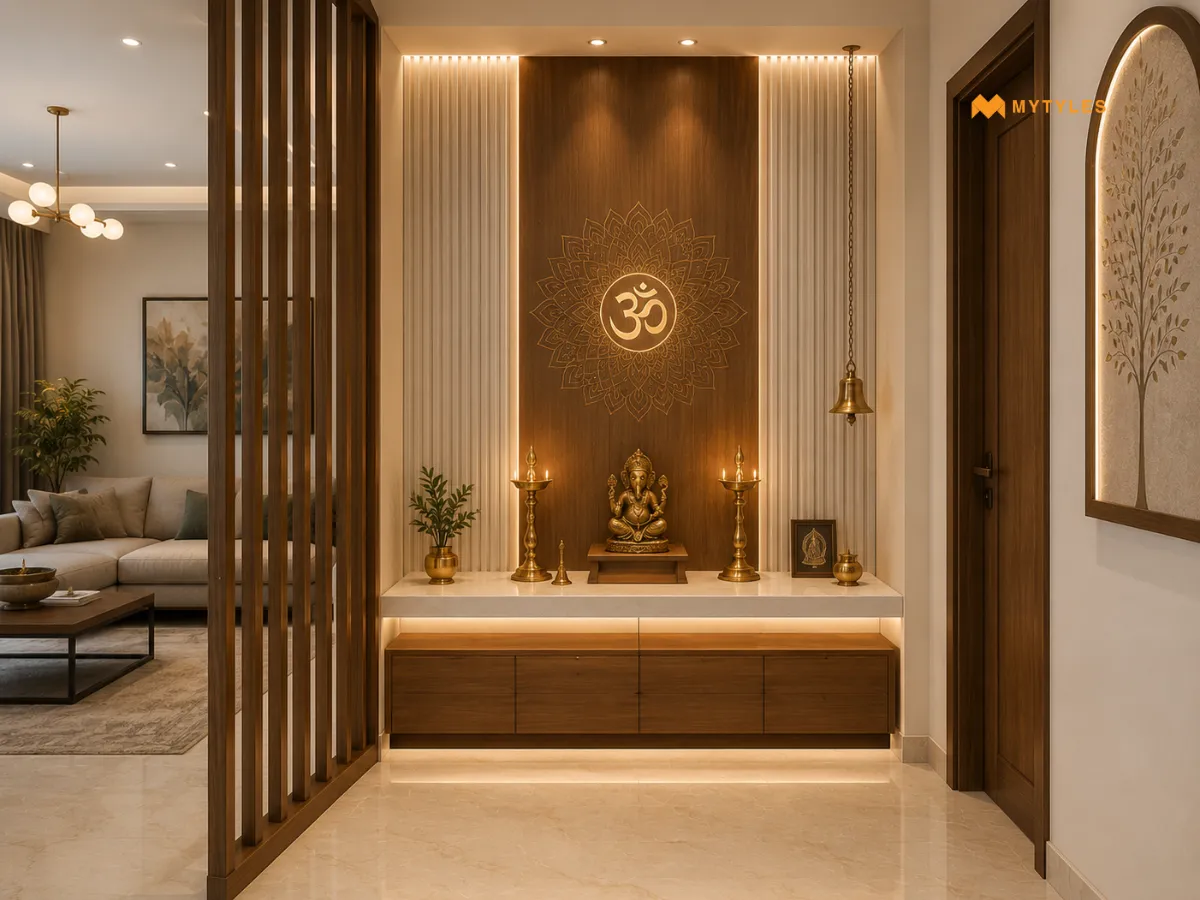
A pooja room backdrop looks neat with warm wood or white panels. They can also be used as a soft divider between the pooja space and living area. Keep the design simple so the space does not look crowded.
Caution: Oil lamps, incense smoke and open flames can impact surrounding surfaces and decor. Use fire resistant materials and proper ventilation.
Home Office Backgrounds
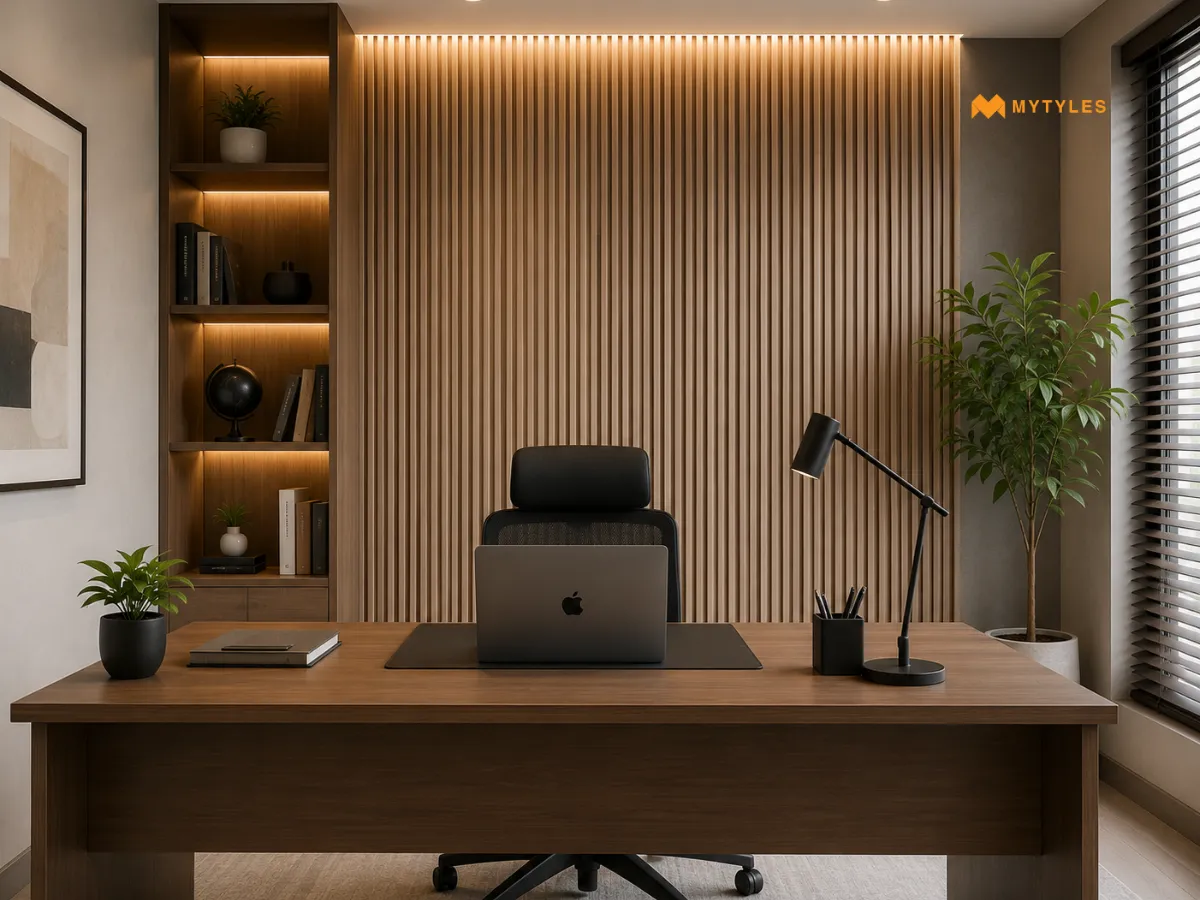
A home office background should look clean on video calls. Louver panels add structure without looking too busy. Use neutral finishes and avoid too many decor items on the same wall.
Kitchen and Dining Separators
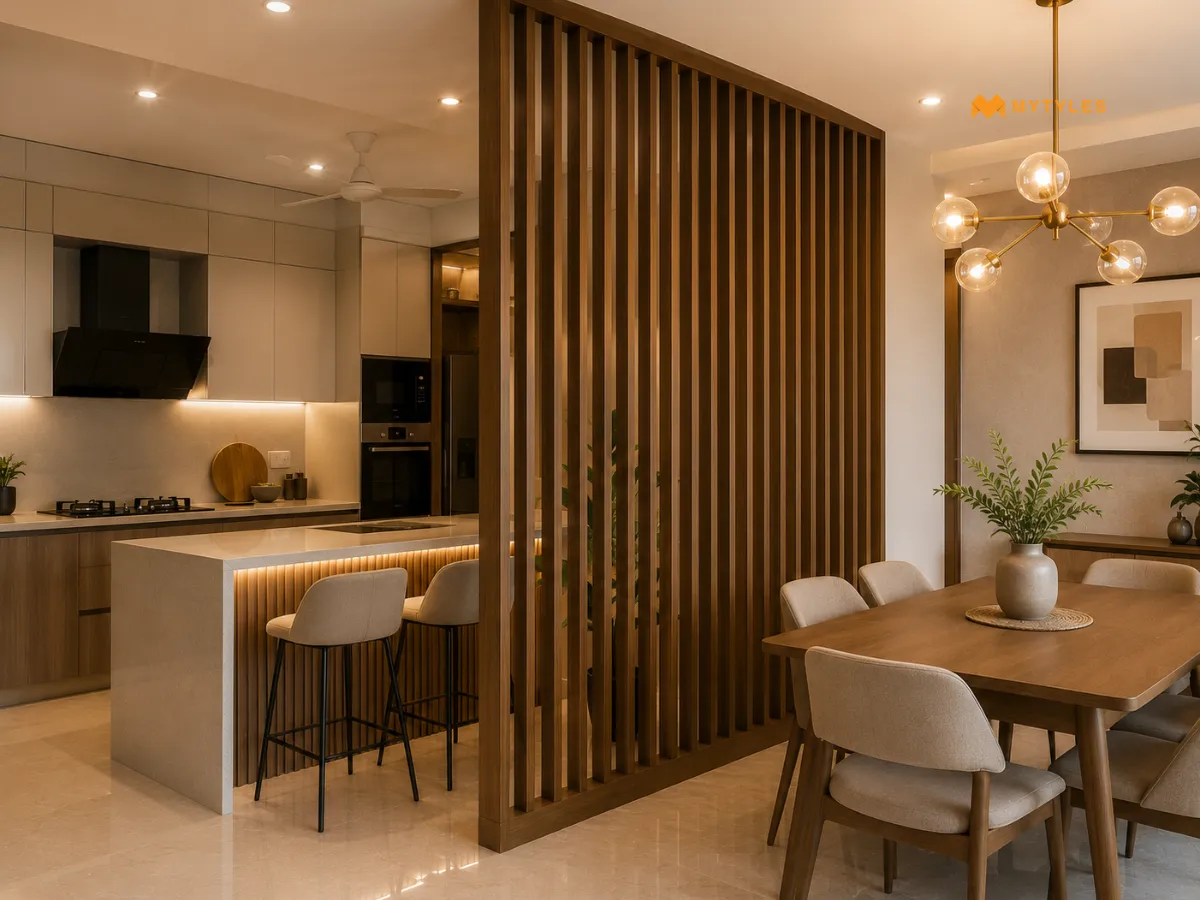
Open kitchens sometimes need a light division from the dining area. Louver partitions can help without blocking the full view. Choose finishes that are easy to clean if the panel is near cooking areas.
Caution: Make sure to select heat and moisture-resistant materials because cooking fumes, grease and heat can have an impact on the partition surfaces over time.
Popular Louver Wall Panel Design Ideas
The best design depends on the room size, wall color, lighting and nearby tiles. Pick the finish after checking the full room, not only the catalogue image.
Wooden Louver Panels
Wooden louver panels are the safest choice for many Indian homes. They bring warmth and work well with cream, beige, grey and marble-look tiles. They are good for living rooms, bedrooms and TV walls.
White Louver Panels
White panels suit small rooms because they keep the wall light. They work well in compact flats and narrow foyers. Pair them with light flooring and simple furniture.
Black or Charcoal Louver Panels
Black and charcoal panels look bold, but they need good lighting. They work best on one selected wall. Use them with brass accents, grey tiles or warm wood furniture.
Half-Wall Louver Panels
Half-wall panels cover only the lower or side part of the wall. They are good when you want detail without making the room heavy. They work well in dining areas and passage walls.
Ceiling-to-Wall Louver Panels
A ceiling-to-wall design makes the wall look taller. It also creates a strong focal point. Use this behind beds, TV units or foyer walls.
Louver Panels with LED Lighting
LED lighting brings out the shadows between the slats. This makes the louver panels look richer at night. Use warm light for living rooms and bedrooms.
Louver Panels with Marble-Look Tiles
Louver panels and marble-look tiles make a strong pair. The tile gives a smooth surface, while the panel adds lines. This works well for TV walls and living room backdrops.
Louver Panels with Stone-Look Tiles
Stone-look tiles add texture, and louver panels add rhythm. Together, they make the wall look layered but not messy. This pairing works well in foyers, balconies and TV units.
Louver Panels vs Fluted Panels
Both louver and fluted panels add lines to a wall, but they do not give the same look. Louver panels feel sharper and more structured, while fluted panels look softer and smoother. The right choice depends on how bold or calm you want the room to feel.
Factor | Louver Panels | Fluted Panels |
|---|---|---|
Basic Look | Slatted, sharp and more defined | Grooved, soft and more rounded |
Line Depth | Deeper lines with stronger shadow | Softer grooves with lighter shadow |
Best For | Partitions, TV walls, foyer corners and bold feature walls | Bedroom walls, calm living rooms and simple backdrops |
Design Feel | More architectural and structured | More subtle and smooth |
Room Divider Use | Better for open partitions and semi-private spaces | Not usually preferred for partitions |
Small Room Suitability | Use light colors and slim slats | Easier to use in small rooms |
Tile Pairing | Works well with marble-look, stone-look and plain tiles | Works well with plain, soft and minimal tiles |
Best Choice If | You want depth, partition effect and stronger wall detail | You want a soft wall finish without heavy lines |
Louver Panel Mistakes to Avoid Before Installation
Louver panels can look expensive when used well. They can also make a room look busy if overdone.
- Using Louver Wall Panels on Too Many Walls: Do not put louver panels everywhere. One main wall or one partition is enough in most rooms. Too many slats start looking busy, and the room can feel smaller.
- Choosing Very Dark Panels for Small Rooms: Dark louver panels can make small rooms feel tighter. Use them only if the room has enough light. For small homes, lighter wood or white finishes are safer.
- Ignoring Lighting: Lighting is very essential for depth within panels. The wall could appear flat if it is not illuminated. Install spotlights, wall lights or LED strips as necessary.
- Not Matching with Tiles or Flooring: Louver panels should match the tiles and floor. Always compare panel samples with tile samples under the same lighting before finalising.
- Overcrowding the Wall with Decor: Do not cover the panel wall with too many frames, shelves or hangings. The lines are already part of the design. Keep decor limited and well-spaced.
- Ignoring Wall Condition Before Installation: Louver panels can only be installed on smooth, dry and structurally sound walls. The alignment, durability, and finish of the installation can be impacted by uneven surfaces, dampness, or loose plaster.
A Practical Upgrade for Modern Walls and Partitions
Louver panels are a smart choice when you want modern walls and light partitions without heavy construction. They add texture, height and structure to rooms that otherwise look plain. Use them for TV walls, headboard walls, foyers, pooja backdrops, office backgrounds and living-dining partitions. Match the finish with your tiles, flooring and lighting for a cleaner result. For a more complete wall design, pair louver wall panels with marble-look tiles, stone-look tiles or neutral floor tiles from MyTyles. Browse MyTyles for tile ideas that work well with louver panel walls, partitions and modern interior wall design.

Are Louver Wall Panels Good For Modern Walls?

Yes, louver panels are good for modern walls because they add lines, texture and depth without making the room too heavy. They work well behind sofas, TV units, beds and foyer corners. Choose the finish based on room size, lighting and nearby tiles for a cleaner wall design.
Can Louver Wall Panels Be Used As Partitions?
Yes, louver panels for partitions work well in open homes. They can divide living and dining areas without building a full wall. They are also useful near pooja corners, foyers and kitchen-dining spaces. Choose sturdy partition wall panels if the divider needs to handle daily use.
Which Color Is Best For Louver Panels?
Wood, white, beige, black and charcoal are common choices for louver wall panels. Wood works well for warm homes, while white suits small rooms. Black or charcoal looks better on one feature wall with good lighting. Match the color with flooring, furniture and wall tiles.
Are Louver Panels Suitable For Small Homes?
Yes, louver panels can suit small homes if used carefully. Pick light shades, slim slats and one selected wall. Avoid dark panels on too many surfaces. Vertical wall panels can make a wall look taller, which helps compact rooms feel more open and better planned.
What Tiles Go Well With Louver Wall Panels?
Marble-look, stone-look, cement-look and plain neutral tiles go well with louver panels. Wood finishes pair nicely with beige or cream tiles. Charcoal panels suit grey or marble-look tiles. For a richer interior wall design, use panels on one side and tiles as the main backdrop.
What Is The Difference Between Louver Panels And Fluted Panels?
Louver panels have stronger slats and deeper lines, while fluted wall panels have softer grooves. These panels look more structured and work well for partitions. Fluted panels look smoother and suit simple feature walls. Choose based on whether you want a bold or subtle wall effect.
Are Louver Panels Easy To Maintain?
Yes, most of these panels are easy to maintain with regular dusting. The grooves need cleaning because dust can settle between the slats. Use a soft cloth or vacuum brush. Avoid excess water on wood-based panels. Low maintenance wall panels are best for busy homes.

ABOUT THE AUTHOR
Aditi Bardhan
Aditi Bardhan is a professional content writer with over five years of experience creating SEO-focused, research-backed content across diverse industries. She specialises in the tile and surface materials space, writing for homeowners, architects, interior designers, and trade professionals. Her work combines technical research, design awareness, and a strong understanding of customer needs, helping readers make clearer and more confident choices. Through her content, Aditi simplifies complex material concepts, highlights practical design benefits, and helps brands build trust and authority in the tile and construction industry.