.svg)


Terracotta Jali Designs for Ventilation & Aesthetics
ByNandana Priya

Wed , May 20 , 2026

Read Time: 5 Min


 Copied!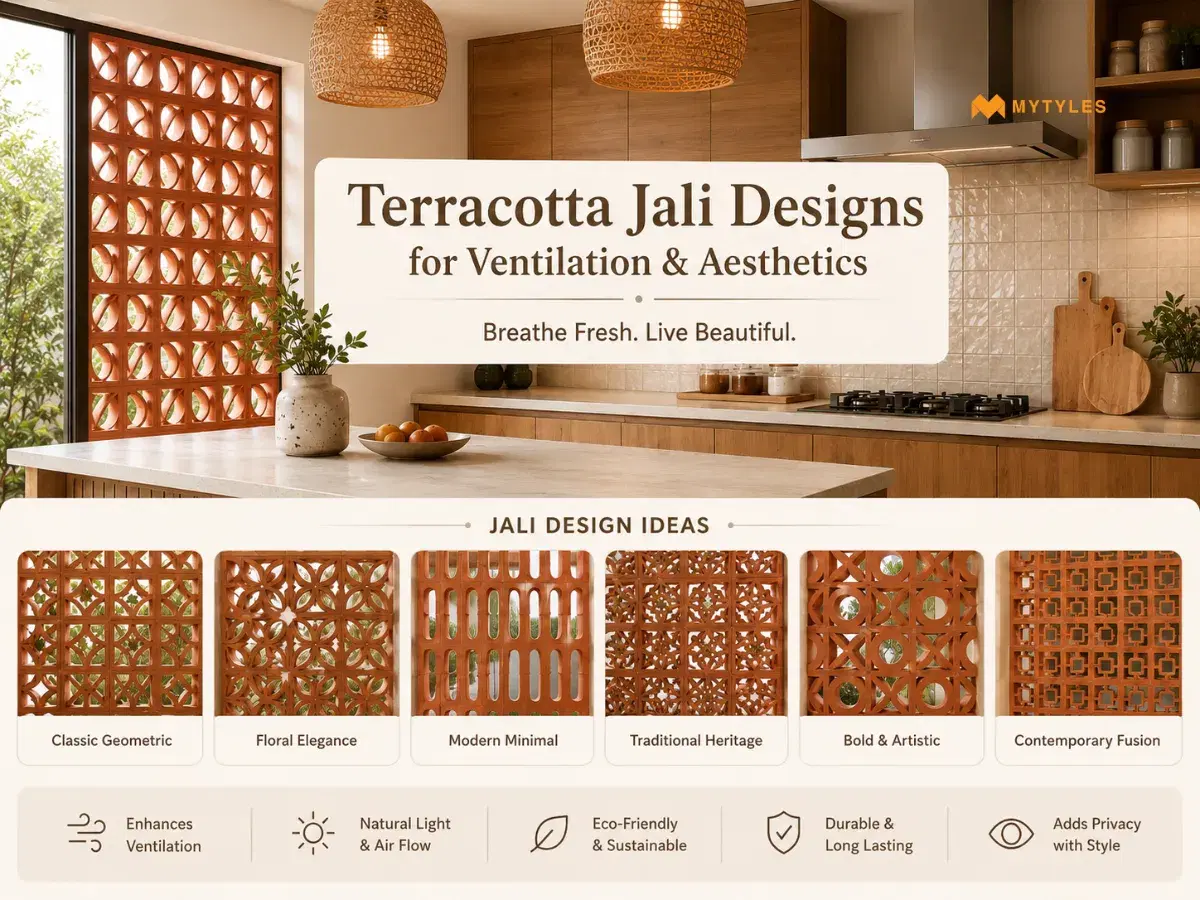
There is a quiet comfort in walls that breathe. Terracotta jali designs allow just that, letting the air move, light filter through, and spaces feel alive. You’ll spot them in older homes, temples, and even in modern builds. What makes them interesting isn’t just how they look. It’s how they solve everyday problems like heat, ventilation, and privacy. Made from natural clay, they can soften harsh sunlight, create shifting shadows through the day, and keep the room cool, all at once. And that’s why terracotta jalis are finding their way back into design conversations today.
What Is Terracotta Jali And Why Is It Still Relevant Today?
Terracotta jali is basically a screen made out of baked clay, designed with patterns that allow air and light to pass through. Those patterned walls aren’t quite solid but are not fully open either. That in-between quality is kind of the whole point.
The material itself is simple. They are natural clay shaped into blocks or panels and then fired to make them durable. What makes it stand out is how it’s used. A jali creates a passive way for spaces to breathe. Air flows through the openings, sunlight gets filtered, and you get a bit of privacy.
As for why it’s still relevant, it hasn’t really gone out of use, just evolved. With rising temperatures being a common concern among people, terracotta jalis help reduce heat, improve airflow, and cut down the need for constant cooling.
How Terracotta Jali Helps With Ventilation And Natural Light
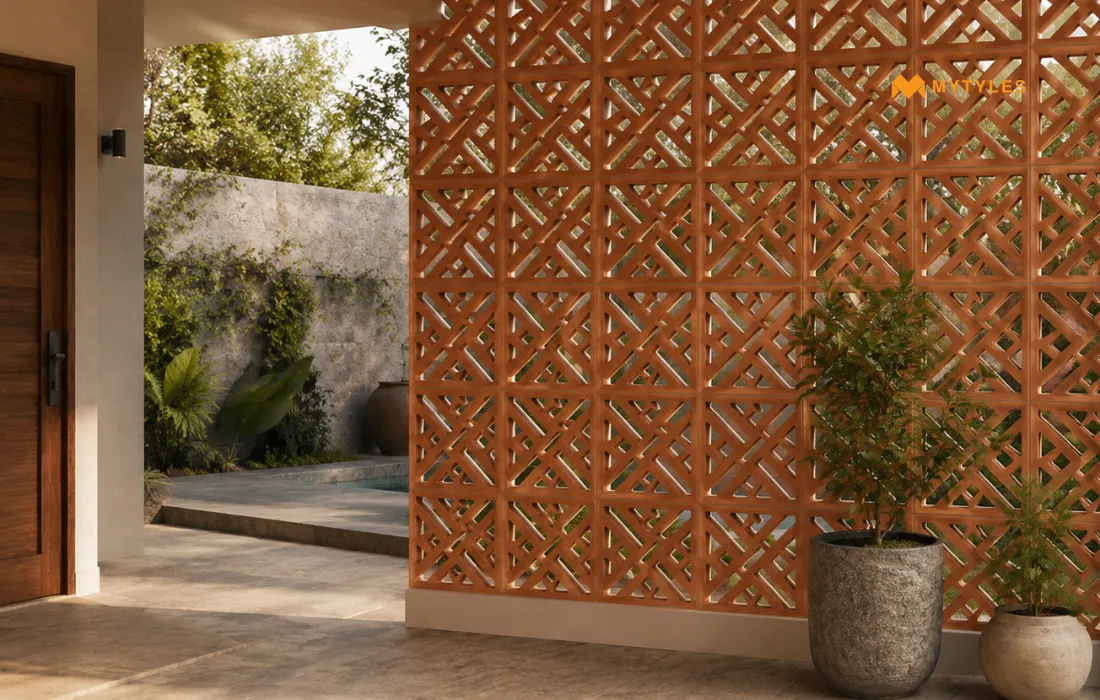
Terracotta jalis are useful because they don’t just sit there as a design detail. The gaps, the clay, and the pattern all work together to make a space more comfortable.
- The openings let air move in and out, so the space doesn’t feel closed in.
- The airflow is usually steady and gentle.
- Terracotta jali blocks don’t trap heat like glass or metal can, so they help keep the space cooler.
- This sort of natural ventilation can reduce the need for fans or AC.
- Sunlight gets filtered through the patterns rather than coming in harshly.
- You still have privacy while letting air and light pass through.
Why Terracotta Jali Designs Work Well In Modern Homes
Wondering how much the terracotta jali designs contribute to the overall look and functions of modern homes? They usually don’t try to dominate the space; instead, they add a layer of texture and depth that plain walls often lack, while still keeping the overall look clean and uncluttered.
They also fit into modern homes because they solve small, everyday problems. A jali can bring in airflow, cut down harsh sunlight, and add a bit of privacy.
At the same time, terracotta jali doesn’t feel artificial. It has a slightly raw, natural quality that works well in today's modern homes. So, it doesn’t feel out of place; it just blends in and adds a bit more character.
Best Places To Use Terracotta Jali In A Home
Some spaces of the home need air, light, and a little privacy at the same time; the terracotta jali wall can be used here. It doesn’t have to be used everywhere; even one well-planned wall or partition can make the space feel more interesting.
- Balcony: Use terracotta jali for exteriors when the balcony feels too open or directly faces another home. A simple square grid or slim vertical pattern works well here because it gives privacy without blocking the air.
- Living Room: Place a light terracotta partition design between the living and dining areas or near a window where the wall looks too plain. Diamond, hexagon, or brick-style jali designs suit modern living rooms better than very heavy floral patterns.
- Facade: Introduce terracotta jali on the outside wall where the sun hits strongly. Smaller repeated patterns work better here because they cut down harsh light and still keep the elevation interesting.
- Staircase Wall: Install jali along a staircase if you want light to pass through without leaving the side fully open. Circular cut-outs or neat geometric repeats of terracotta ventilation blocks can make this area look less empty.
- Pooja Area: Use decorative terracotta jali behind the pooja unit or as a small side partition. Go for smaller, closer patterns so the space feels calm and slightly enclosed.
Popular Terracotta Jali Patterns And Design Styles
Terracotta jali patterns mostly fall into familiar styles but they do vary quite a bit. Some feel more traditional, while others are simpler and easier to fit into modern spaces.
Geometric Patterns
Squares, diamonds, hexagons, or straight-line grids are the geometric patterns. These are the most commonly used patterns because they look clean and don’t overwhelm the space. Geometric patterns are usually the safest choice if you want something that works across different rooms.
Lattice (grid-style)
Lattice style is basic, with criss-cross or repeated square openings. Very functional, good for airflow, and works almost anywhere without drawing too much attention. This style is often chosen more for function than for making a visual statement.
Floral Motifs
These are the terracotta jali wall designs inspired by leaves, vines, or flowers. These feel more decorative and are usually used where you want the jali to stand out a bit. They work better in smaller sections rather than covering an entire wall.
Circular Designs
Repeating circles or curved cut-outs are the common circular designs. They soften the look of a wall and create a different kind of shadow pattern compared to straight lines. This type of terracotta jali design can make a space feel a little less rigid and more relaxed.
Mughal-Inspired Patterns
More detailed geometry, like stars, interlocking shapes, and symmetry-heavy design, are the Mughal-inspired patterns. These are traditional styles but still work if used in smaller sections. This pattern is usually chosen when you want a slightly heritage or classic touch.
Things To Consider Before Installing Terracotta Jali
There are a few things to consider before installing terracotta jali. It's not too complicated, but these choices will affect the appearance and performance of jali.
- Placement: Think about where you want ventilation, light and privacy. Jali works best in places like balconies, facades, or staircases but doesn’t have to be on every wall.
- Patterns: If the wall is exposed to direct sun, opt for more closed patterns to reduce heat. Open-patterned terracotta jali designs are preferred if ventilation is of more importance.
- Maintenance: Intricate patterns can collect dust, especially in kitchens or outdoors. Choose a simpler pattern of terracotta jali for ventilation and for easier cleaning.
- Structural Support: Jali panels need framing or support, especially when used in large areas or outdoors. Good fixing will ensure the stability of the terracotta jali even through temperature changes.
A Simple Terracotta Detail That Makes A Difference
Terracotta jali isn’t something you add just for the looks; it ends up doing more than that. It lets spaces breathe a little, softens light, and adds just enough detail without feeling overdone.
What makes it work is how simple it is. No heavy maintenance, just clay, pattern, and placement. And depending on where and how it’s used, it can either blend into the background or quietly stand out. MyTyles has terracotta jali designs that fit just right in your everyday spaces; have a quick glance at the website and find the perfect ones.
Expert Reviewed by Biren Agrawalla
Biren Agrawalla, the Founder of MyTyles with over 10 years of experience across tile, retail, and home decor. Driven by a passion for tiles and a deep understanding of customer behaviour, he has spent his career transforming how people discover and buy tiles online. Biren combines practical retail insight with modern digital solutions to make tile shopping smarter, more intuitive, and design focused. At MyTyles, he champions a customer first approach, ensuring every experience from browsing to buying is reliable, seamless, and inspiring.

What Is Terracotta Jali And Where Is It Used In Architecture?

Terracotta jali refers to perforated clay blocks used in walls to allow airflow and filtered light. They are commonly used in facades, balconies, staircases, and partition walls. These elements help improve ventilation while maintaining privacy. In architecture, they are valued for their natural appearance and ability to reduce heat, making spaces more comfortable.
What Are The Popular Terracotta Jali Designs For Modern Homes?
Modern terracotta jali designs include geometric patterns, linear grids, floral motifs, and abstract cut-outs. These designs suit both traditional and contemporary homes. Minimal and symmetrical patterns are often preferred for modern spaces, as they create a clean look while still allowing airflow. The right design enhances visual appeal without making the structure feel heavy.
How Much Does Terracotta Jali Cost Per Square Foot In India?
The cost of terracotta jali per square foot varies depending on design, thickness, and finish. Simple patterns are generally more affordable, while intricate designs may cost more. Prices can also change based on location and supplier. Comparing different options helps you select jali that fits both your design preferences and overall budget requirements.
What Is The Price Range Of Terracotta Jali Blocks?
Terracotta jali blocks are available in a wide price range starting from ₹93/Piece to ₹125/Piece depending on their size, pattern complexity, and quality. Basic blocks are more economical, while designer pieces with detailed patterns cost more. Bulk purchases may also affect pricing. Understanding these variations helps buyers choose options that balance cost, durability, and visual appeal.
What Is The Difference Between Terracotta Jali And Cement Jali?
Terracotta jali is made from natural clay, offering a warm, earthy look and better breathability. Cement jali, on the other hand, is heavier and provides higher structural strength. Terracotta is preferred for ventilation and aesthetics, while cement jali is often chosen for durability in heavy-duty applications. The choice depends on design and functional requirements.
How Can You Install Terracotta Jali For Ventilation In Apartments?
Installing terracotta jali involves fixing the blocks within a framed opening using mortar or support structures. Proper spacing ensures consistent airflow and light entry. It is important to align the blocks correctly for stability and visual balance. Professional installation is recommended to ensure durability and effective ventilation in apartment settings.
Why Is Terracotta Jali Preferred For Natural Ventilation?
Terracotta jali is preferred because it allows air to circulate freely while reducing direct sunlight and heat. Its perforated design improves airflow without compromising privacy. This helps maintain a cooler indoor environment, especially in warm climates. It is a practical solution for reducing dependency on artificial cooling while enhancing comfort.

ABOUT THE AUTHOR
Nandana Priya
I have a strong interest in design and creativity, and I enjoy translating the world of tiles and their trends into engaging reads. Focusing on creating well-researched content that feels meaningful to readers has always been my first priority. I bring a growing understanding of research, design, and digital marketing into my writing, with a focus on clarity, relevance, and thoughtful storytelling.