.svg)


What Are Nano Vitrified Tiles? Benefits, Uses and Price Range
ByAditi Bardhan

Thu , Jun 11 , 2026

Read Time: 5 Min


 Copied!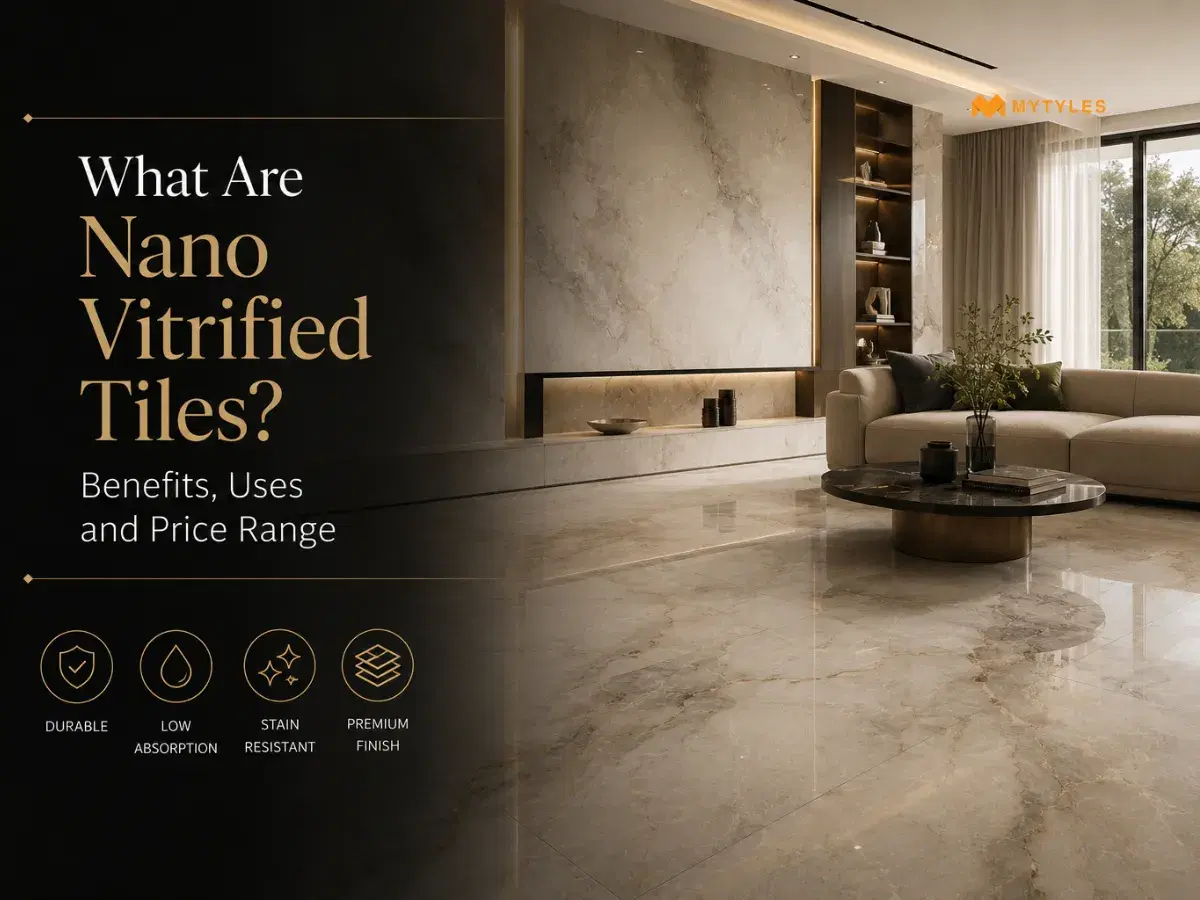
Flooring is usually a 10–15 year decision, so the tile you choose should handle more than first-day shine. It should manage daily dust, frequent mopping, food spills, furniture movement and regular foot traffic without making cleaning difficult. This is why many homeowners compare nano vitrified tiles for dry indoor areas. Their main appeal comes from 3 things: a glossy polished surface, easier maintenance and a more practical cost than many natural stone floors. This blog explains what nano vitrified tiles are, their benefits, applications, price factors and where they should be used carefully.
What Are Nano Vitrified Tiles?
Before choosing any tile, it helps to understand what makes it different from other flooring options. Nano tiles are not just shiny tiles. Their surface treatment is the reason behind their smooth finish and easier maintenance. Nano vitrified tiles meaning refers to vitrified tiles that are treated with a nano-level polish on the surface. This polish helps fill tiny surface pores, making the tile smoother, glossier and less likely to absorb stains quickly. In most homes, they are used as nano vitrified floor tiles for dry indoor areas. Their shine reflects light, which can make compact rooms look brighter and cleaner.
Nano vs Double Charge vs Glazed Vitrified Tiles
.webp)
Nano tiles and other vitrified tiles can look almost the same at first glance, but they do not behave the same on the floor. The main difference in nano vitrified tiles vs regular vitrified tiles is the surface. Nano coating vitrified tiles have a polished top layer that gives them more shine and makes daily cleaning a little easier. Other vitrified tiles, on the other hand, come in matt, rustic, textured, glossy or anti-skid finishes. The table below will describe the difference between these tiles in depth.
Feature | Nano Vitrified Tiles | Double Charge Vitrified Tiles | Glazed Vitrified Tiles |
|---|---|---|---|
| Surface finish | Glossy and polished | Smooth, strong and usually polished | Available in matt, glossy, rustic, textured, carved and decorative finishes |
| Manufacturing difference | Treated as nano coating vitrified tiles, where a fine polish helps fill tiny surface pores | Made with two layers of pigment for better surface strength | Has a glazed printed layer on top, allowing more designs |
| Best used for | Dry indoor floors | High-traffic indoor floors | Floors and walls, depending on finish and product suitability |
| Slip resistance | Can be slippery when wet | Can be slippery if polished | Depends on finish; matt and textured options offer better grip |
| Stain resistance | Good due to nano surface treatment | Good for regular use | Good, but depends on glaze quality and surface finish |
| Durability | Suitable for regular indoor residential use | Stronger for heavy foot traffic | Durable, but performance depends on tile body, glaze and finish |
| Maintenance | Easy to clean | Easy to maintain | Easy to maintain; textured finishes may need slightly more cleaning |
| Price positioning | Usually budget-friendly to mid-range | Usually mid-range to premium | Available from affordable to premium, depending on design and finish |
Key Benefits of Nano Vitrified Tiles
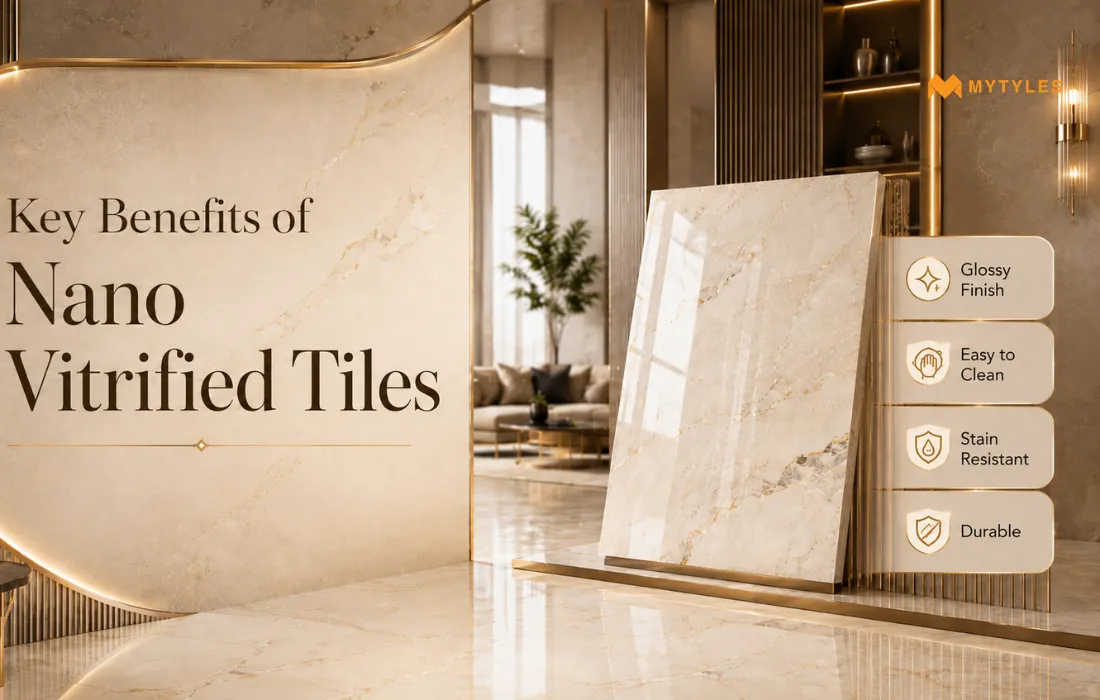
The main reason homeowners choose nano tiles is that they balance appearance, cleaning comfort and cost. They are useful when you want a bright floor without heavy maintenance.
Glossy and Premium Appearance
One of the biggest nano vitrified tiles benefits is their glossy surface. These tiles reflect light and can make a room look more open. They are a good choice for people looking at high gloss floor tiles for living rooms, bedrooms and dining areas. Light shades such as ivory, beige, cream and grey work well in compact homes. Their polished look also makes them suitable as premium floor tiles for buyers who want a clean indoor finish without choosing expensive natural stone.
Easy to Clean
Nano tiles are often chosen as easy to clean floor tiles because dust, footprints and light spills can be removed with regular sweeping and mopping. The smooth surface does not trap dirt easily. This makes them practical for homes where floors are cleaned every day. For better care, use a soft mop and mild cleaner.
Stain Resistance
Nano tiles are useful as stain resistant vitrified tiles because the surface polish helps reduce quick staining. This can be helpful in dining areas, living rooms and other high-use spaces. Spills such as tea, coffee, oil and turmeric should still be cleaned quickly. No polished tile should be treated as completely stain-proof.
Durable for Daily Use
Good-quality nano tiles can work as durable floor tiles for regular indoor movement. The vitrified body gives strength, while the polished surface supports everyday residential use. They are suitable for spaces that see normal family movement, furniture use and daily cleaning. Installation also matters.
Cost-Effective Flooring Option
Nano tiles are often seen as affordable vitrified tiles because they offer a polished look at a practical cost. They are useful for buyers who want to shine without stretching the flooring budget too much. Nano vitrified tile prices depend on brand, finish, thickness, size, location and delivery cost. The nano vitrified tile price per sq ft should always be checked along with installation expenses.
Best Uses of Nano Vitrified Tiles

Nano tiles work best in dry indoor spaces where cleaning ease and polished appearance matter. Their use should depend on how much water, dust and foot movement the area receives.
Living Room Flooring
Nano vitrified tiles for flooring are a good option for living rooms because they make the space look brighter and more polished. They work well with sofas, TV units, centre tables and open layouts. Light colors can also make the room feel larger.
Bedroom Flooring
Bedrooms need flooring that is easy to maintain and comfortable for daily use. Nano tiles work well because they are smooth, simple to clean and visually neat. Soft shades such as cream, beige and light grey are common bedroom choices.
Dining Area
Dining areas need floors that can handle spills and chair movement. Nano tiles are useful here because the surface can be wiped quickly after meals. Quick cleaning is important, especially for oil, turmeric, tea and coffee spills.
Offices and Showrooms
Offices and showrooms need floors that remain presentable through the day. Polished vitrified tiles work well here because they look clean, handle regular movement and need only simple mopping.
Corridors and Indoor Passage Areas
Corridors connect rooms and take daily foot traffic. Nano tiles suit these areas when the floor stays dry. Using the same tile across rooms and passages can create a neat, consistent floor layout.
How to Choose the Best Nano Vitrified Tiles
Choosing the best nano vitrified tiles should not depend only on shine. The right tile should match the room, safety needs, color plan, budget and cleaning routine.
- Check the Finish: Use glossy nano tiles only in dry indoor areas. They are suitable for living rooms, bedrooms, dining spaces, offices and indoor passages. For bathrooms, balconies and outdoor floors, choose matt or anti-skid surfaces instead.
- Check Slip Resistance: Always check surface grip before buying. This is important for homes with children, elderly family members or pets. Do not use glossy tiles in areas where water, oil or soap is common.
- Compare Price per Sq. Ft.: Do not finalise tiles only by the displayed price. Compare thickness, finish, box coverage, design, wastage and installation cost. The wider vitrified tiles price range changes based on finish, body type and brand. For accurate budgeting, calculate 5–10% extra tiles for cutting and future replacement.
- Buy from a Trusted Tile Platform: When you buy nano vitrified tiles online, check product images, size, finish, thickness, box coverage and suitable applications.
Finding The Right Nano Vitrified Tiles
Nano vitrified tiles are a sensible choice for dry indoor floors where shine, easy cleaning and practical pricing matter. They suit living rooms, bedrooms, dining areas, offices and indoor passages, but they are not ideal for wet or slippery areas. Before you buy, check how glossy the tile is, how much grip it offers, and what the final laying cost will be. At MyTyles, you can choose glossy nano tiles with Pan-India delivery and find matching wall tiles for a coordinated room design.
Expert Reviewed by Biren Agrawalla
Biren Agrawalla, the Founder of MyTyles with over 10 years of experience across tile, retail, and home decor. Driven by a passion for tiles and a deep understanding of customer behaviour, he has spent his career transforming how people discover and buy tiles online. Biren combines practical retail insight with modern digital solutions to make tile shopping smarter, more intuitive, and design focused. At MyTyles, he champions a customer first approach, ensuring every experience from browsing to buying is reliable, seamless, and inspiring.

What Are Nano Vitrified Tiles?

Nano vitrified tiles are polished vitrified tiles treated with a nano-level surface coating for a smoother, glossier and less porous finish. They are commonly used for indoor flooring in living rooms, bedrooms, passages and offices. Their shine, effortless cleaning and practical pricing make them popular for Indian homes that need smart, polished floors.
What Is Nano Coating In Vitrified Tiles?
Nano coating in vitrified tiles is a fine surface treatment applied after polishing. It helps fill tiny pores on the tile surface, which improves shine and reduces stain absorption. This coating makes the tile easier to clean and more suitable for dry indoor flooring where a bright, polished look is preferred.
Are Nano Vitrified Tiles Good?
Yes, nano vitrified tiles are good for indoor residential and light commercial flooring. They offer a glossy look, easy maintenance, stain resistance and good durability for daily use. They are best used in dry areas such as living rooms, bedrooms, dining spaces and offices rather than wet zones or outdoor floors.
Are Nano Vitrified Tiles Slippery?
Nano vitrified tiles can be slippery when wet because they usually have a glossy polished surface. They are safer in dry indoor spaces where water does not stay on the floor. For bathrooms, balconies, ramps or outdoor areas, matt, textured or anti-skid tiles are usually a better and safer choice.
Where To Use Nano Vitrified Tiles?
Use nano vitrified tiles in living rooms, bedrooms, dining areas, study rooms, corridors, offices, showrooms and reception areas. These tiles work well where you want a clean, glossy and easy-to-maintain floor. Avoid using them in wet bathrooms, balconies, pool areas and outdoor spaces unless the tile has suitable slip resistance.
What Is Nano Vitrified Tiles Price In India?
Nano vitrified tiles price in India depends on brand, size, finish, thickness, location and stock availability. Basic options may be more budget-friendly, while branded polished tiles cost more. Always check price per sq. ft., box coverage, delivery, adhesive, grout, labour charges and wastage before finalising your flooring budget.
How To Clean Nano Vitrified Tiles?
Clean nano vitrified tiles by sweeping dust daily and mopping with a mild floor cleaner. Wipe spills quickly to avoid marks, especially on light glossy shades. Avoid acid-based cleaners, metal scrubbers and harsh chemicals because they can damage the polished surface. A soft mop and regular cleaning routine are usually enough.

ABOUT THE AUTHOR
Aditi Bardhan
Aditi Bardhan is a professional content writer with over five years of experience creating SEO-focused, research-backed content across diverse industries. She specialises in the tile and surface materials space, writing for homeowners, architects, interior designers, and trade professionals. Her work combines technical research, design awareness, and a strong understanding of customer needs, helping readers make clearer and more confident choices. Through her content, Aditi simplifies complex material concepts, highlights practical design benefits, and helps brands build trust and authority in the tile and construction industry.