.svg)


Terracotta Jali Mistakes That Can Make Your Home Look Old-Fashioned
ByHeena Dhiman

Tue , Jun 16 , 2026

Read Time: 5 Min


 Copied!
You finally added a terracotta jali to your elevation. It looked stunning in the reference photo. But the moment it was installed, you stepped back and instantly felt that this is not what the photo looked like. The colour seems too heavy. The pattern clashes with everything around it. And suddenly, the house that was supposed to look fresh and contemporary just looks dated.
This is more common than you think. The problem here is not the material. Terracotta clay jali has been used in Indian homes for centuries, and it still works beautifully today. What goes wrong is the way it is used. Small decisions, like which pattern to pick, where to place it, or what materials to pair it with, can make all the difference between a home that looks modern and one that looks stuck in time.
Here are the most common terracotta jali mistakes homeowners make and exactly how they can steer clear of them so your home looks the way you actually envisioned it.
The Most Common Terracotta Jali Mistakes to Avoid
Mistake 1: Picking an Outdated Jali Pattern

One of the most frequent terracotta jali design mistakes is choosing a pattern that is too ornate or too traditional for the rest of the house. Heavy floral motifs and dense Mughal-inspired carvings look stunning in heritage properties. Yet, if you put them on a flat, modern concrete home, they read as old-fashioned terracotta jali design.
So, not every pattern ages well with every building type. Outdated terracotta jali patterns are usually ones that do not match the scale or vocabulary of the rest of the facade. A very intricate cut-out design on a minimal, clean-line home will always create visual confusion.
Solution:
Look at the best terracotta jali patterns for modern homes: clean geometry, simple repeating shapes, and grids with breathing room. Geometric squares, hexagons, and straight-line perforations are the go-to for contemporary elevations. The simpler the architecture, the more restrained the jali pattern should be.
Mistake 2: Using It on Every Wall

More is not always better. Overuse of terracotta jali is one of the fastest ways to make a home look overwhelming. When jali covers every surface, every boundary wall, every balcony railing, and every exterior panel, the eye has nowhere to rest.
The result? The house loses depth. Instead of looking layered and thoughtful, the house looks like someone simply ran out of ideas and filled every surface with the same element.
Solution:
Consider using terracotta jali for the home in one or two deliberate spots. A single jali wall on the elevation or a terracotta jali for the balcony section is usually enough to make a strong visual statement. Let other materials breathe around it. Contrast is what makes jali stand out, not repetition.
Mistake 3: Pairing It with the Wrong Materials
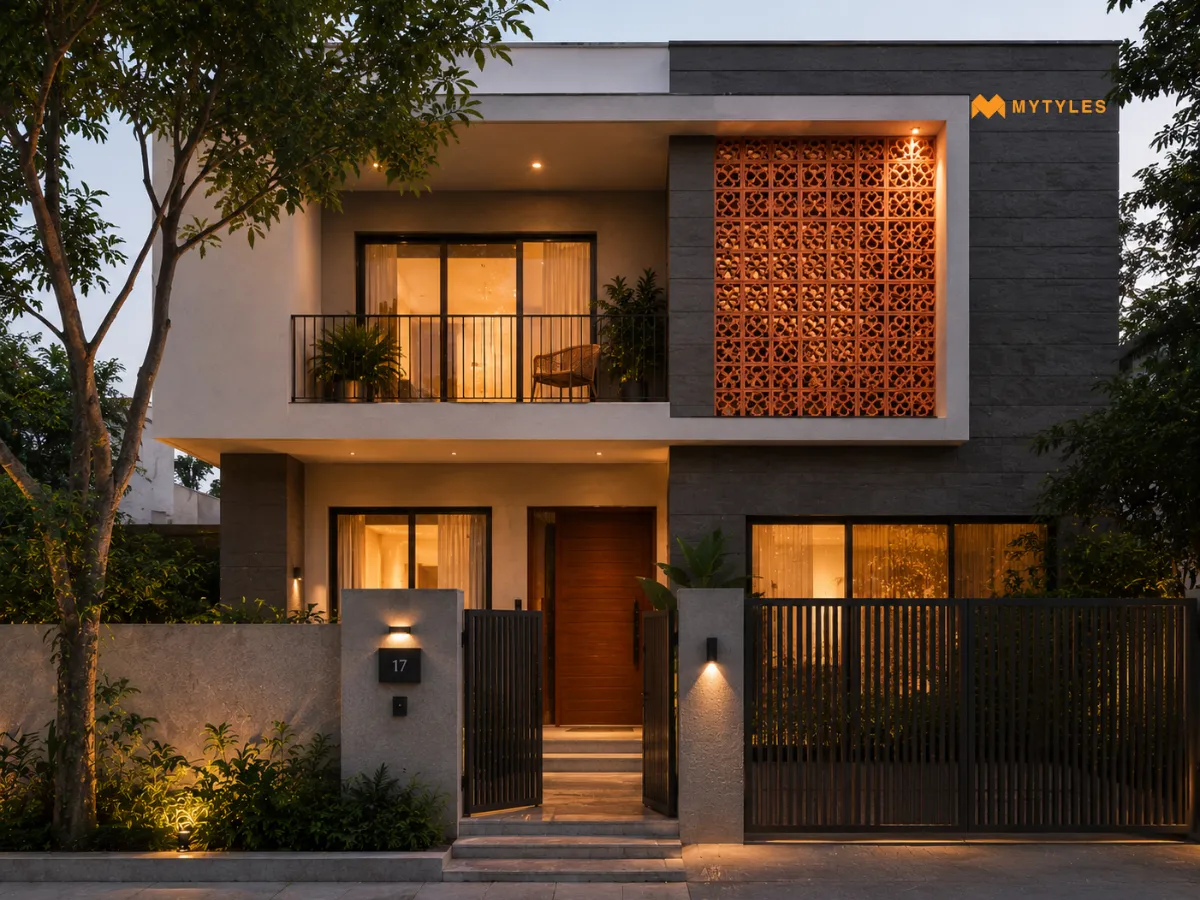
Mismatched exterior materials are a quiet but serious problem. Terracotta carries warmth. It is earthy, textured, and grounded. If you pair it with cold grey stone cladding or glossy ceramic tiles, the combination just does not sit well. The two textures fight each other instead of working together.
This is especially common in facade jali design where different contractors handle the structural work and the decorative layer separately. What looks good on paper or as separate samples can look jarring once it is all assembled on a wall.
Solution:
Pair terracotta jali with stone cladding that has warm undertones, like sandstone or textured concrete in beige and brown tones. Exposed brick, weathered wood accents, and sandy plaster all work naturally with terracotta. For a modern Indian home elevation, the goal is material harmony, where everything on the facade feels like it belongs to the same family.
Mistake 4: Placing It in the Wrong Spot
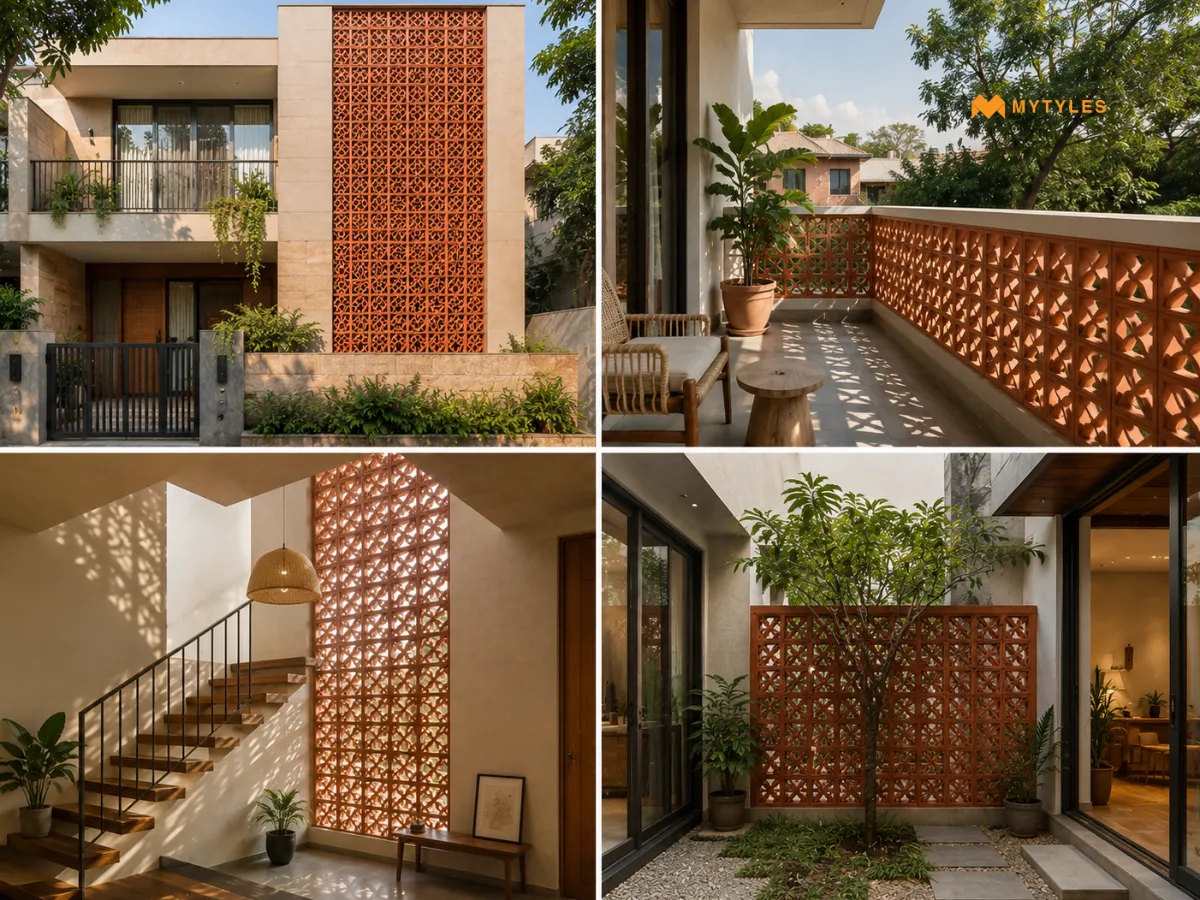
Poor terracotta jali placement is about putting the jali where it has no functional or visual role to play. A jali installed on a wall that gets no sunlight does nothing for heat reduction. Also, a jali placed in a corner no one sees does nothing for aesthetics either.
Thus, knowing where to use terracotta jali at home is as important as knowing which jali to pick. Placement should always have a purpose, whether that is ventilation, light filtering, privacy, or creating a visual focal point.
Solution:
The best spots for terracotta jali wall placement are sun-facing elevations, terracotta jali for balcony railings, staircase side walls, and courtyard dividers. These are areas where the jali can do real work: block harsh light, allow airflow, and add privacy while still letting the space feel open.
Mistake 5: Ignoring Scale and Proportion
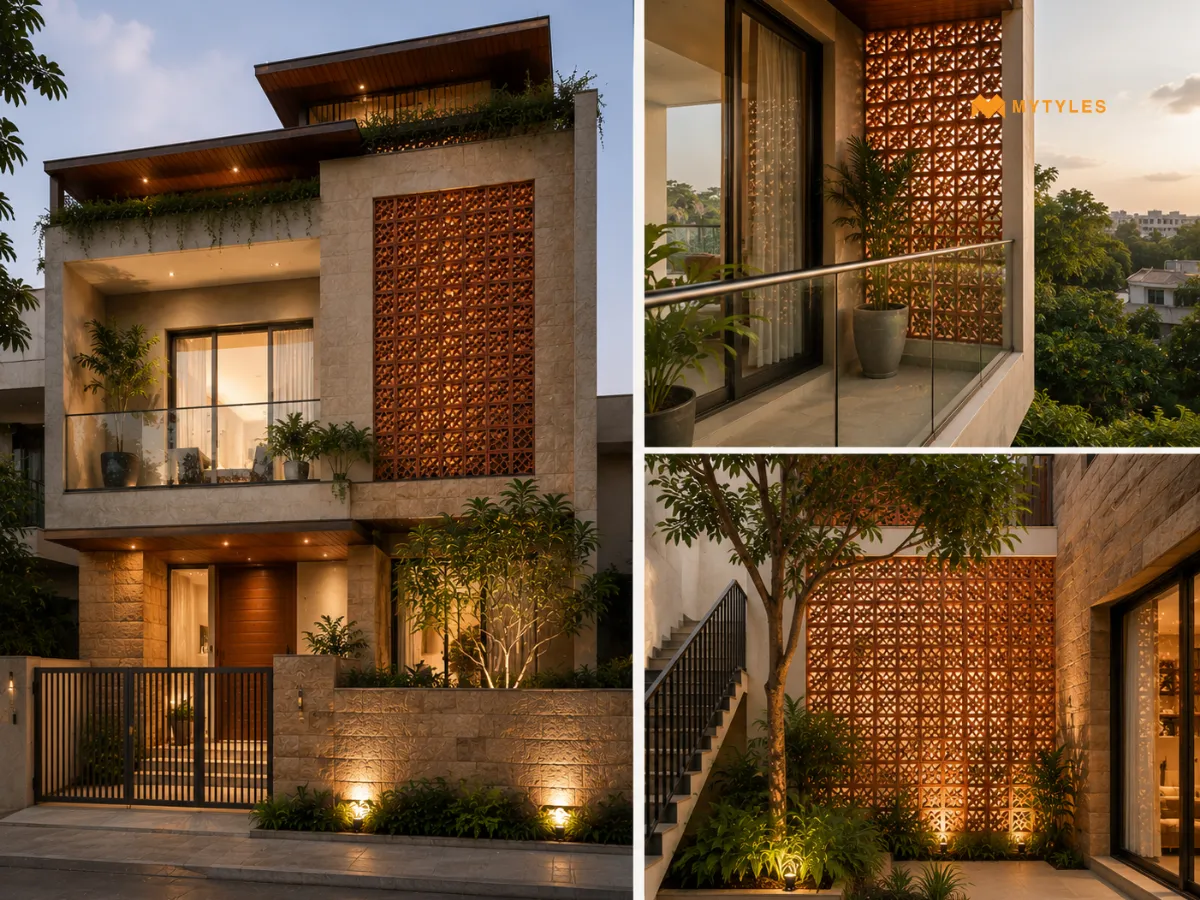
This is a subtle terracotta jali design mistake, but it shows up very clearly. A large, oversized jali panel on a small, compact home looks heavy and out of place. At the same time, a tiny jali block pattern spread across a large, multi-storey facade looks weak and unconvincing. Neither reads as intentional design.
So, scale matters in every architectural decision, and jali is no different. The size of the pattern openings, the thickness of the blocks, and the total area covered all need to be in proportion with the building around it.
Solution:
Smaller repeating patterns work well for compact homes or exterior jali design on lower floors. For double-height elevations or large terracotta jali facade walls, bigger, bolder geometry carries better from a distance. Always visualise the jali at the actual scale of the wall before finalising.
Mistake 6: Skipping Structural Support During Installation
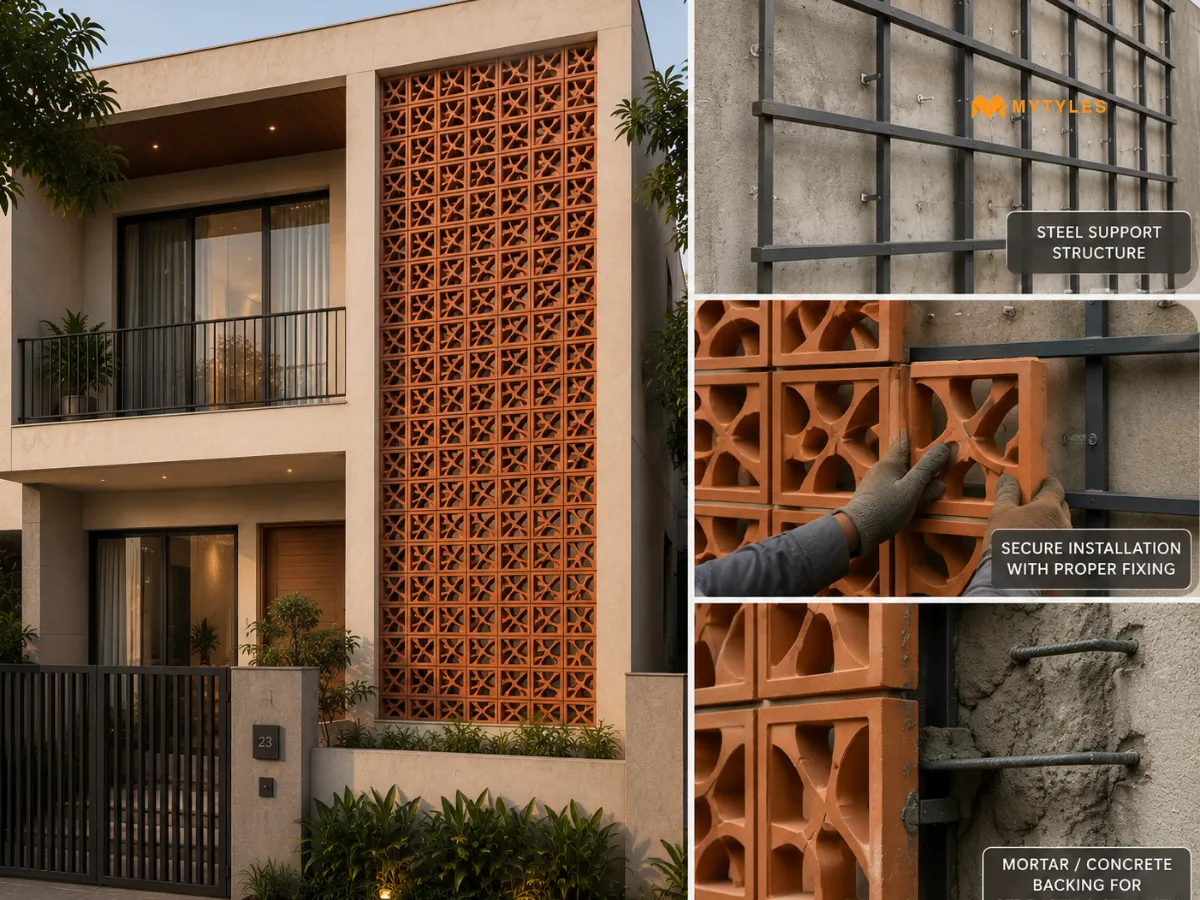
A beautiful terracotta jali for elevation can fall apart, sometimes literally, if the installation is not handled properly. Jali blocks are heavier than they look, especially across large spans. Without the right support framework, they crack, shift, or sag over time.
Many homeowners only realise this after the fact. A jali that looked fine in the first year starts showing cracks or settlement gaps by the second. Poor terracotta jali installation is one of those mistakes that costs far more to fix later than to do correctly from the start.
Solution:
Always use a proper support structure behind the jali, whether that is a steel grid, RCC framework, or correctly anchored mortar-based fixing. For large facade installations, get a structural engineer or experienced mason involved. The installation should be as strong as the design is beautiful.
Mistake 7: Neglecting Maintenance
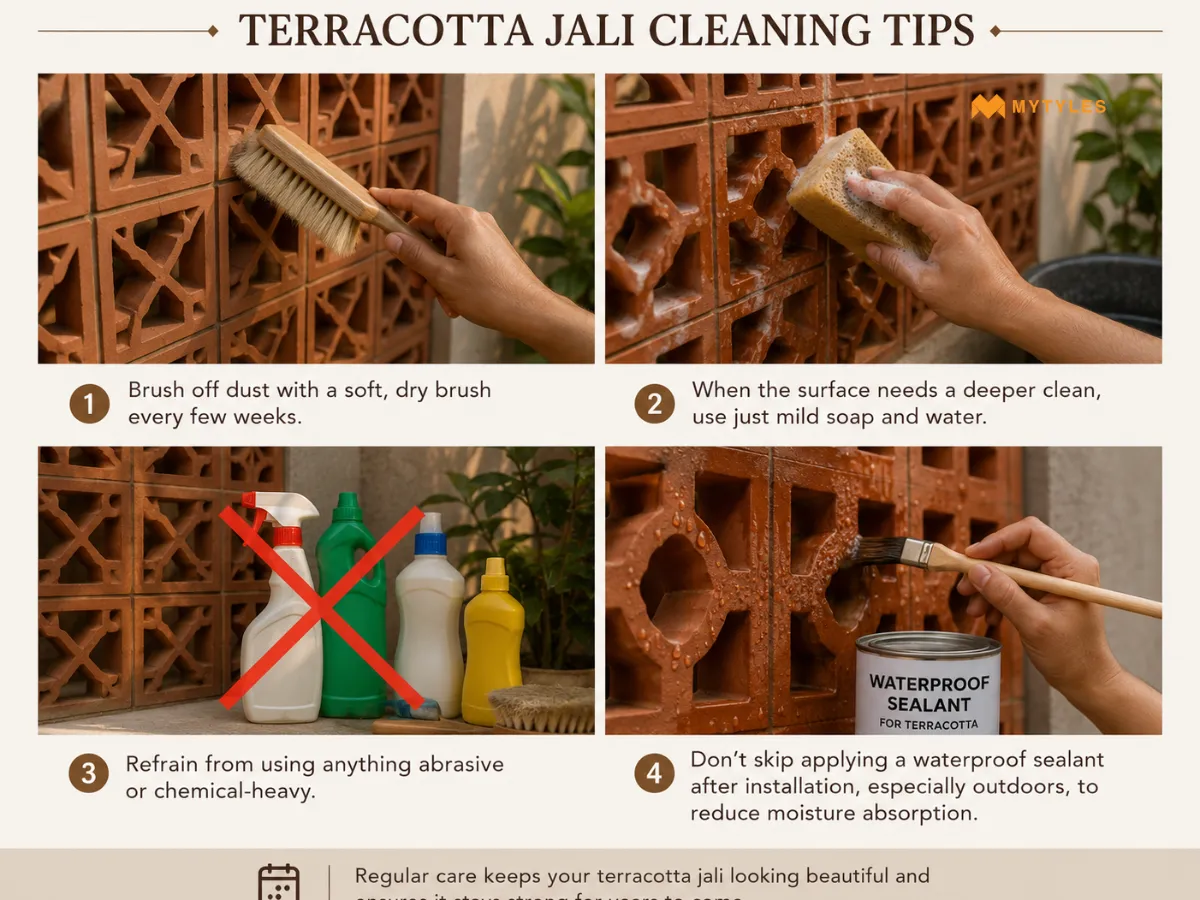
Terracotta jali maintenance is simpler than most people expect, but neglecting it entirely is what makes jali look old and tired within a few years. Dust settles into the perforations. Moisture causes mineral deposits, a white powdery residue called efflorescence, which builds up on the surface. In humid or coastal climates, algae can begin to form in the gaps.
The result is a jali that looked rich and earthy when installed but now just looks grimy and neglected. These are classic signs of old-fashioned terracotta jali design that could have been avoided entirely with basic upkeep.
Solution:
Follow these simple terracotta jali cleaning tips:
- Brush off dust with a soft, dry brush every few weeks.
- When the surface needs a deeper clean, use just mild soap and water.
- Refrain from using anything abrasive or chemical-heavy.
- Don’t skip applying a waterproof sealant after installation, especially outdoors, to reduce moisture absorption.
These small habits keep the jali looking as good in year five as it did on day one.
Give Your Home the Jali It Deserves
Terracotta jali for Indian homes is one of the most versatile and rewarding design choices you can make. But like any strong design element, it only works when the details are right. The pattern, the placement, the material pairing, the scale, and the upkeep all play a role in whether your jali looks fresh and considered or heavy and dated. Getting those details right is easy when you start with the right product.
At MyTyles, you will find an expansive range of modern terracotta jali design options built for Indian homes, in patterns that work for both traditional and contemporary elevations. Whether you want to buy terracotta jali online or explore designs in person, MyTyles has the range and guidance to help you make a choice you will be happy with for years to come. Explore the collection today and find the jali that makes your home look exactly the way you imagined.
Expert Reviewed by Biren Agrawalla
Biren Agrawalla, the Founder of MyTyles with over 10 years of experience across tile, retail, and home decor. Driven by a passion for tiles and a deep understanding of customer behaviour, he has spent his career transforming how people discover and buy tiles online. Biren combines practical retail insight with modern digital solutions to make tile shopping smarter, more intuitive, and design focused. At MyTyles, he champions a customer first approach, ensuring every experience from browsing to buying is reliable, seamless, and inspiring.

What Are The Most Common Terracotta Jali Design Mistakes?

The most common terracotta jali mistakes include choosing patterns that clash with the architecture, overusing jali on every surface, poor material pairing, wrong placement, ignoring proportion, skipping structural support during installation, and neglecting basic maintenance.
How Do I Make Terracotta Jali Look Modern?
To make terracotta jali look modern, choose simple geometric patterns over heavy floral motifs, use it in one or two deliberate spots, pair it with warm-toned natural materials, and keep the overall facade clean and uncluttered. Proportion and restraint are key.
Where Should I Use Terracotta Jali At Home?
The best places for terracotta jali for home are sun-facing elevations, balcony railings, staircase side walls, courtyard dividers, and pooja room partitions. These spots allow the jali to perform its dual role of ventilation and aesthetics most effectively.
What Materials Pair Well With Terracotta Jali?
Terracotta jali pairs best with warm, natural materials such as sandstone, exposed brick, weathered wood, textured beige or brown plaster, and warm-toned concrete. Avoid cold grey stone or glossy tiles, as these create a visual clash with the earthy warmth of terracotta.
How Do I Clean And Maintain Terracotta Jali?
For terracotta jali maintenance, dust regularly with a soft brush and clean with mild soap and water when needed. Apply a waterproof sealant to prevent moisture damage. Avoid harsh chemicals. Remove white mineral deposits with gentle scrubbing. These simple terracotta jali cleaning tips keep jali looking good for years.
Can Terracotta Jali Be Used On Balconies And Facades?
Yes. Terracotta jali for balcony railings and terracotta jali facade walls are among the most popular applications. They allow airflow, filter sunlight, and add privacy while giving the exterior a warm, textured look. Ensure proper structural support is in place for large facade installations.
What Is The Difference Between Modern And Outdated Terracotta Jali Patterns?
Modern terracotta jali design uses clean geometry: grids, hexagons, squares, and simple repeating perforations that suit contemporary homes. Outdated terracotta jali patterns tend to be heavy, overly ornate floral or Mughal motifs that feel mismatched on flat, minimal facades. The right pattern depends on your home's architectural style.

ABOUT THE AUTHOR
Heena Dhiman
With a background in fashion design and over 5 years of writing experience, I bring a creative and detail-oriented eye to home and design content. My journey began with aesthetics, colours, and visual storytelling, which gradually led me to writing across lifestyle, finance, home improvement, and resource management. Over time, I discovered a strong interest in tiles and interiors, where my design background helps me understand how small choices can shape the feeling of a home. Through my content, I aim to make home design decisions easier, clearer, and more enjoyable for readers, helping them feel confident while creating spaces that reflect their style and everyday needs.